



Tsrs ETF: What It Is, How It Works, Risks, Costs, and How to Evaluate It Like a Pro

Tsrs: The ticker in search bars is often just a starting point. What investors actually need is the mechanism: what the fund must own, what it must avoid, how tsrs weighted, what it costs to hold, and which risks are structural versus temporary. This guide is built around that practical reality—so you can read it once, understand the moving parts, and then verify what matters in the official documents.
Before we begin, one important framing point: this is an educational breakdown of a real product and its methodology, not individualized financial advice. If you decide to act on anything here, treat it like you would a research note—use it to build better questions, then validate your answers in the prospectus and index guide.
What “tsrs” refers to in markets right now
In market context, tsrs is commonly used to refer to the Truth Social American Red State REITs ETF—an exchange-traded fund listed on NYSE Arca that targets U.S. equity REIT exposure using a politically themed revenue screen.
The core idea is simple to say but nuanced to evaluate: the fund seeks to track an index of REITs that earn a majority of revenue (or related measures) from U.S. states that voted for a Republican presidential candidate, subject to specific thresholds and exclusions. Whether that screen adds investable value depends less on the headline and more on the mechanics underneath.
The origin story: Truth.Fi and the first wave of Truth Social ETFs
The ETF sits inside a broader “Truth.Fi” branded initiative connected to Trump Media & Technology Group, with Yorkville America Equities acting as sponsor and investment advisor for the initial launch set. That context matters because brand-linked products can experience flow dynamics that are different from “plain vanilla” index ETFs, particularly in their early months.
As the launch announcement put it, “America-First Themed Equity Funds Now Available on NYSE,” a positioning statement that signals the funds are meant to be both investment vehicles and identity-aligned products. That dual nature can influence liquidity, media cycles, and investor behavior—variables you should treat as part of the risk model, not as background noise.
Investment objective and benchmark in plain English
The fund’s objective is not discretionary stock-picking. It is designed to provide returns that, before fees and expenses, correspond generally to the price and yield performance of the MarketVector iREIT Red State REITs Index. That single sentence tells you the “job” of the ETF: minimize divergence from the benchmark, accept market cycles, and deliver systematic exposure.
Practically, that means the most important research artifact is not a marketing page or a chart it’s the index rulebook plus the prospectus language that describes how the fund implements those rules, what it may do when replication is impractical, and which risks are designated as “principal.” Those details define how the product behaves when conditions are messy, which is exactly when investors tend to be surprised.
How the “red state” revenue screen actually works
The benchmark definition is explicit: the index tracks REITs that earn the majority of their revenue from states that voted for a Republican presidential candidate, and the inclusion screen uses threshold logic tied to state-level revenue, income, or property exposure. That is not a vibe-based filter; tsrs a data-driven gate that either qualifies a company or excludes it.
In the SEC filing language, initial inclusion requires at least 65% of revenues or net operating income from—or 65% of properties in—qualifying states (as defined by the “two of the last three elections” rule), while existing constituents can remain with at least 50%. That distinction matters because it reduces turnover pressure while still enforcing the theme over time.
What gets excluded and why it matters
Exclusions are not cosmetic; they shape rate sensitivity, credit exposure, and volatility. The benchmark methodology excludes Mortgage REITs and Timber REITs, and it also excludes American Depositary Receipts—decisions that tilt the exposure toward equity REIT business models rather than mortgage-spread or specialty structures.
From an investor’s standpoint, this is critical: equity REITs tend to be driven by property-level fundamentals (rent growth, occupancy, cap rates), while mortgage REITs are often dominated by leverage, yield-curve moves, and funding spreads. If you expected the ETF to behave like a high-leverage rate trade, the exclusion set makes that a misconception you should correct early.
The role of iREIT data and how revenue attribution is estimated
The methodology relies on state-based revenue data provided by iREIT as a data contributor, which is how the index operationalizes a concept that most public-company financial statements don’t present in a single clean line item. In other words, the screen is built on an attribution model, not a one-click field pulled from a standard SEC table.
That introduces an important analytical posture: treat the “red state share” as a measured estimate with governance around it, not as a perfect fact like shares outstanding. Attribution systems can be robust and consistent while still being imperfect at the margin, so the right question is whether the model is stable enough to support index construction and investability—not whether it is metaphysically precise.
Weighting mechanics: dividend-yield tilt with guardrails
A major nuance many readers miss is that the index is not simply market-cap weighted. At rebalance, components are weighted in proportion to a “Final Dividend Yield Score,” which is built using dividend-yield normalization concepts (including z-scores and winsorization) and then transformed into positive scoring weights.
Guardrails matter as much as the scoring: the methodology describes a maximum security weight as the lesser of 8% or a trading-volume-based limit, and it also applies an additional concentration control so that the aggregate weight of holdings at or above 5% does not exceed 50%. Net effect: a systematic income tilt, capped to reduce single-name dominance and improve tradability.
Replication approach: how the fund holds the index
The portfolio management posture is described as passive, using a full replication strategy in which the fund generally holds all securities in the underlying index in substantially the same proportions. That’s the cleanest possible implementation style for an index ETF because it reduces model risk and “mystery meat” deviations.
At the same time, the prospectus language is realistic: when full replication is impractical due to liquidity, corporate actions, or operational frictions, the adviser may use optimization, sampling, or temporary substitutes while maintaining substantial exposure. That is standard ETF plumbing, and it is one reason tracking error exists even when everyone is acting in good faith.
Fees, spreads, and the real all-in cost of owning the ETF
The headline expense is straightforward: the management fee and total annual operating expenses are listed at 0.65%, with no 12b-1 fees, and the adviser covers many fund expenses outside the advisory fee itself. This is the “drag” you must earn back through exposure benefits, yield, or diversification value.
But early-stage ETFs often have a second cost bucket: trading frictions. A published 30-day median bid/ask spread is a useful proxy for execution cost in the secondary market, and the fund’s materials disclose such a metric alongside basic stats like shares outstanding. If you are building a position gradually, spread and liquidity can matter as much as the stated expense ratio.
Liquidity and size: what “new ETF” mechanics mean for execution
As of early February 2026, the fund’s site disclosed net assets around $3.96 million, 150,000 shares outstanding, and 28 holdings—numbers that signal a product still in the market-discovery phase. That’s not inherently bad, but it should change how you trade it: use limit orders, avoid illiquid time windows, and respect that spreads can widen during volatility.
For research, liquidity is not just volume; tsrs also the liquidity of the underlying holdings and the efficiency of the creation/redemption mechanism. REIT constituents are typically liquid, but thematic and politically branded funds may see flow bursts around news events, which can temporarily increase premiums/discounts to NAV and widen spreads.
Under-the-hood exposures: property types, tenant mix, and economic drivers
To evaluate the ETF intelligently, you should think in property sectors, not slogans. Equity REIT exposure usually means some blend of industrial logistics, residential (single-family or apartments), retail, data centers, health care, self-storage, office, and specialty categories, each with distinct demand drivers and lease structures. A “red state revenue” screen does not eliminate those sector mechanics; it overlays a geographic revenue attribution lens on top of them.
Tenant quality and lease duration often matter more than people expect. A REIT with long leases to investment-grade tenants behaves differently from a short-lease operator whose cash flow resets rapidly with the economy. When you analyze this ETF, translate index methodology into real-economy exposures: which tenants ultimately pay rent, how quickly rents reprice, and which local economies the properties depend on.
Interest-rate sensitivity and the REIT financing channel
REITs sit at the intersection of real assets and capital markets, so rates matter through multiple channels: discount rates applied to cash flows, cap rates used to value properties, and financing costs for acquisitions and development. When rates rise quickly, REIT prices can fall even if property operations remain stable, because the market reprices the cost of capital and the implied value of future cash flows.
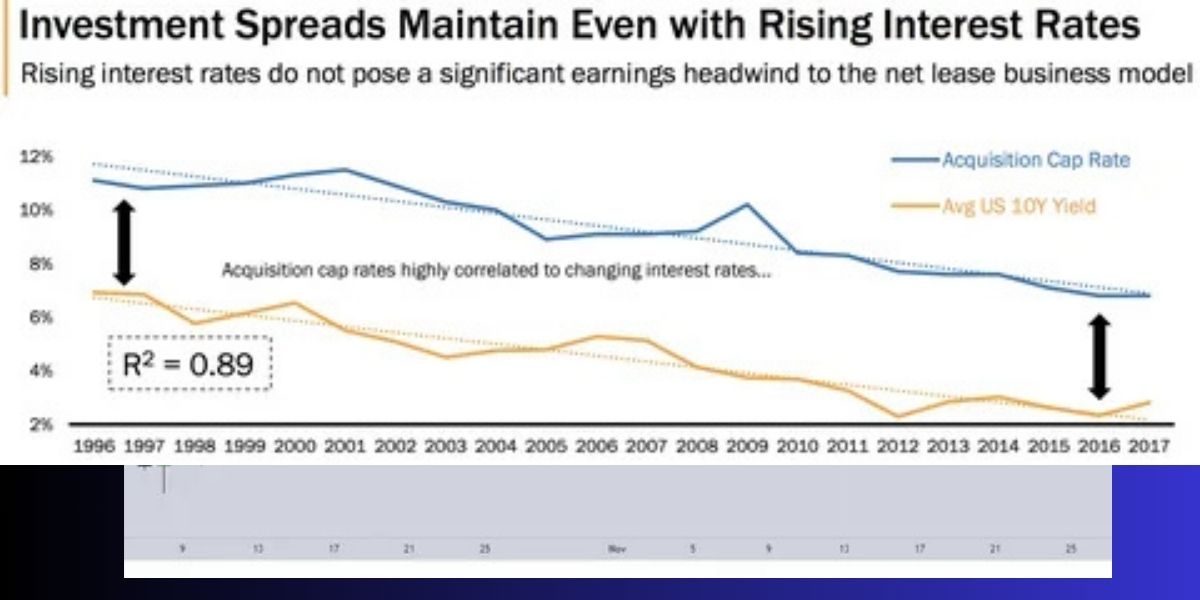
tsrs also worth separating “rate level” from “rate volatility.” Many REIT drawdowns are less about absolute yields and more about uncertainty—how quickly financing costs change, whether credit spreads widen, and whether transaction markets freeze. The ETF’s index constraints may cap single names, but they do not immunize the portfolio from macro-driven repricing.
Income profile: distributions, dividend seasonality, and reinvestment
REIT ETFs are often bought for yield, but “income” is not a single number. Distribution amounts can vary due to portfolio changes, REIT dividend policy shifts, and capital gains distributions in certain environments. For a newer fund without long distribution history, a better approach is to study constituent REIT yield characteristics and the index’s yield-tilt weighting logic, then set expectations conservatively.
Reinvestment strategy is another under-discussed lever. Investors seeking compounding may prefer automatic dividend reinvestment and periodic rebalancing, while investors using the ETF for cash flow may prioritize distribution stability and tax efficiency. Your “best” approach is the one consistent with your objective; the worst approach is chasing trailing yield without understanding the drivers.
Taxes and accounts: what to expect at year-end
Most investors should expect ordinary ETF tax reporting, but the underlying REIT dividends often include a mix of ordinary income, qualified dividend components (sometimes limited for REITs), capital gains, and return-of-capital elements depending on the constituents’ reporting. The practical implication: holding a REIT ETF in a taxable account can create a different after-tax outcome than holding broad equity index funds, even if the pretax returns look similar.
Account placement matters. Many investors prefer to hold REIT exposure in tax-advantaged accounts to simplify after-tax yield math, but that’s not a universal rule—it depends on your marginal rate, your investment horizon, and whether you need current income. Treat taxes as part of portfolio design, not an afterthought you deal with in April.
Concentration, “non-diversified” status, and portfolio fit
The fund is classified as non-diversified under the Investment Company Act of 1940, and the benchmark itself focuses on a single sector: real estate. Those two facts imply higher sensitivity to sector-specific drawdowns, even if there are multiple holdings and weighting caps.
Portfolio fit is therefore about role definition. If you already have meaningful real estate exposure through private real estate, home equity, or concentrated factor bets, adding a REIT ETF can increase correlated risk. If, on the other hand, you have an equity-heavy portfolio with limited real asset sensitivity, a REIT sleeve can add a different cash-flow profile and inflation-linked characteristics—though it still behaves like equities under stress.
Political branding risk: narrative shocks and investor flows
This ETF is explicitly linked to a political brand ecosystem, and that creates a unique risk category: narrative volatility. News cycles, regulatory headlines, platform controversies, and political events can change investor flows independent of property fundamentals. Those flows can matter for short-term pricing, spreads, and premiums/discounts—especially while assets remain relatively small.
The right way to handle this risk is not to moralize it, but to model it. If you are an investor who may panic-sell during a media storm, you should not own products with built-in headline sensitivity. If you can hold through noise, you may still decide the structural REIT exposure is what you want, but you should enter with eyes open about the behavior of politically themed funds in modern markets.
How to compare against mainstream REIT ETFs without fooling yourself
Comparing any thematic REIT ETF to a broad REIT benchmark requires discipline. The first trap is comparing short windows of performance when the ETF is new and the market regime is changing. The second trap is assuming a “red state revenue” filter predicts returns; it may simply be a different slice of the same underlying property economy with different geographic and tenant concentrations.
A cleaner comparison framework is factor-based: measure differences in property type exposure, leverage sensitivity, dividend yield tilt, and concentration constraints. Then ask whether those differences align with your thesis. If you can’t articulate a thesis beyond “this is interesting,” you’re not investing—you’re collecting tickers.
Risk management: position sizing, rebalancing, and stop-loss thinking
For most long-horizon investors, risk management starts with position size, not clever trading. A sector ETF sleeve can be meaningful without being dominant; the goal is to benefit from diversification and income characteristics while keeping drawdowns survivable. Rebalancing cadence is your second lever: periodic rebalancing forces buy-low/sell-high behavior, but it also requires emotional tolerance when the sector is out of favor.
Stop-loss thinking is often misapplied to REIT ETFs. Because REITs can gap on rate shocks, a mechanical stop can convert volatility into realized loss at exactly the wrong time. If you want downside control, consider sizing smaller, staggering entries, and setting thesis-based exit rules (for example: rate regime shift plus deterioration in property fundamentals) rather than purely price-based triggers.
Due diligence checklist before you buy
A professional-grade checklist is simple but strict. Confirm the benchmark and the key index rules, then verify the fee structure and the implementation approach (replication versus sampling). Use the official prospectus and index guide, not third-party summaries, for anything that could affect behavior during stress.
Then evaluate execution realities: bid/ask behavior, reported spreads, assets under management, and how the ETF traded relative to NAV during volatile sessions. If you can’t trade it efficiently, the “theory” return is not your return. Finally, decide the role it plays in your portfolio—income sleeve, real-asset diversifier, thematic satellite—and size it accordingly.
Common misconceptions that trip up first-time buyers
A frequent misconception is that the political screen makes the ETF behave like a political prediction market. It doesn’t. It is still a REIT portfolio, and REIT portfolios tend to be dominated by rates, credit conditions, property fundamentals, and equity risk premia. The screen changes the composition, not the asset class.
Another misconception is assuming the ETF’s yield is “free money.” Yield is part of total return, and higher yield often comes with higher sensitivity to downturns or higher leverage in the underlying companies. The index’s yield-weighting logic can be attractive, but it is not a substitute for understanding why a given REIT yields what it yields.
Monitoring framework: the KPIs that actually matter
If you want a monitoring dashboard that improves decisions, focus on a handful of metrics. Track premium/discount to NAV and bid/ask spread to understand trading quality. Track distribution history and composition once available, but interpret it through constituent fundamentals rather than treating it like a bank interest rate.

Then follow macro signals that predict REIT stress: rate volatility, credit spreads, commercial real estate transaction volumes, and sector-specific fundamentals such as rent growth and occupancy in the major property types represented. You don’t need a hundred indicators; you need a few that map cleanly to REIT valuation and financing conditions.
TSRS at-a-glance table: benchmark, costs, mechanics, and use-cases
The purpose of this table is not to “sell” the ETF; tsrs to compress decision-relevant facts into a single view so you can sanity-check your thesis before you deploy capital. It also highlights which characteristics are structural (benchmark rules, exclusions, fee schedule) versus dynamic (liquidity, spreads, premiums/discounts).
If you only read one section twice, read this one. In thematic ETFs, investors often remember the theme and forget the mechanics. The mechanics are what drive outcomes.
| Dimension | What it means in practice | Why it matters for investors |
|---|---|---|
| Product identity | A U.S. equity REIT ETF built around a politically themed, state-level revenue attribution screen | Explains why headlines can influence flows even when property fundamentals haven’t changed |
| Benchmark | MarketVector iREIT Red State REITs Index | Defines what the fund must own and what it must exclude |
| Eligibility thresholds | Higher threshold for new entrants, lower for existing constituents | Reduces churn while keeping the theme enforced over time |
| Key exclusions | Mortgage REITs, Timber REITs, ADRs | Tilts away from leveraged rate-spread trades and niche exposures |
| Weighting logic | Dividend-yield score approach with issuer caps and concentration controls | Pushes income tilt while limiting single-name dominance |
| Implementation style | Passive, generally full replication with practical exceptions | Sets expectations around tracking error and operational reality |
| Fee level | Stated annual operating expenses (management fee) | The permanent hurdle your exposure must justify |
| Trading realities | Spread, premiums/discounts, and AUM can be meaningful early | Determines whether your execution matches “paper” performance |
| Best-fit portfolio role | Satellite real-estate sleeve or thematic diversifier | Helps prevent over-allocation and correlation surprises |
| Primary risk clusters | Rates, real estate cycles, concentration, narrative/flow shocks | Frames what can go wrong and how to size responsibly |
Where to find official documents, updates, and performance data
For any ETF—especially a new one—official sources matter. The fund’s website posts key product statistics (including expense ratio, holdings count, and assets) and links to formal documents like the prospectus and statement of additional information.
For rules and methodology, the index provider’s guide is the definitive reference: it documents eligibility logic, exclusions, and weighting constraints, including the revenue threshold rules and the dividend-yield-based weighting scheme. If your investment thesis depends on how the screen works, this is the document that should anchor your understanding.
Outlook: what could change in 2026 and beyond
The real estate cycle will do what it always does: it will force investors to rediscover the cost of capital. In that environment, the ETF’s outcomes will be driven mostly by REIT fundamentals and rate regimes, not by marketing language. What can change, however, is product scale: if assets grow, liquidity tends to improve; if assets stagnate, spreads can remain stubbornly wide and the fund can remain flow-sensitive.
On the business side, the sponsor has discussed additional ETF launches beyond the initial set, and news coverage has pointed to continued expansion efforts within this branded lineup. Whether that expansion ultimately stabilizes the complex or dilutes investor attention is an open question, and tsrs one more reason to monitor this product as a living vehicle rather than assuming its early-state characteristics are permanent.
Conclusion
The investor-grade way to evaluate this ETF is to separate headline from structure. The structure is clear: a passive U.S. equity REIT portfolio that tracks a benchmark using state-level revenue attribution rules, defined exclusions, and dividend-yield-based weighting with caps. When you understand those components, you can predict behavior across rate regimes and real estate cycles with far more confidence than you can from performance snapshots.
If you’re considering tsrs, focus on three decision points: whether you want incremental REIT exposure at all, whether the index screen meaningfully matches your thesis, and whether the fund’s trading realities (fees plus spreads plus liquidity) fit your execution style. Those are the levers that determine whether this becomes a useful portfolio tool or just another interesting ticker.
FAQ
These are the questions real investors tend to ask once they move past the label and start thinking operationally. Use them as prompts for your own due diligence, and validate any decision-critical details in the prospectus and index guide.
What is the fund behind tsrs, in one sentence?
tsrs is commonly used to refer to an NYSE Arca-listed ETF that seeks to track an index of U.S. equity REITs whose revenue or property exposure is primarily attributed to Republican-voting states, with defined thresholds and exclusions.
Does it invest in mortgage REITs for higher yield?
No—its benchmark methodology excludes mortgage REITs, which generally reduces exposure to highly leveraged rate-spread dynamics and shifts the portfolio toward property-operating equity REIT business models.
How is the “red state” screen determined?
The index uses state-level attribution thresholds tied to revenue, net operating income, or property exposure, with different thresholds for initial inclusion versus ongoing eligibility, based on states that voted for a Republican presidential candidate in two of the last three elections.
Where should I verify the methodology and fees?
The most reliable sources are the SEC-filed prospectus for fees, risks, and implementation language, and the index guide for screening and weighting rules; both are linked through official channels.