



Poland Flag: History, Meaning, Design, and Cultural Power
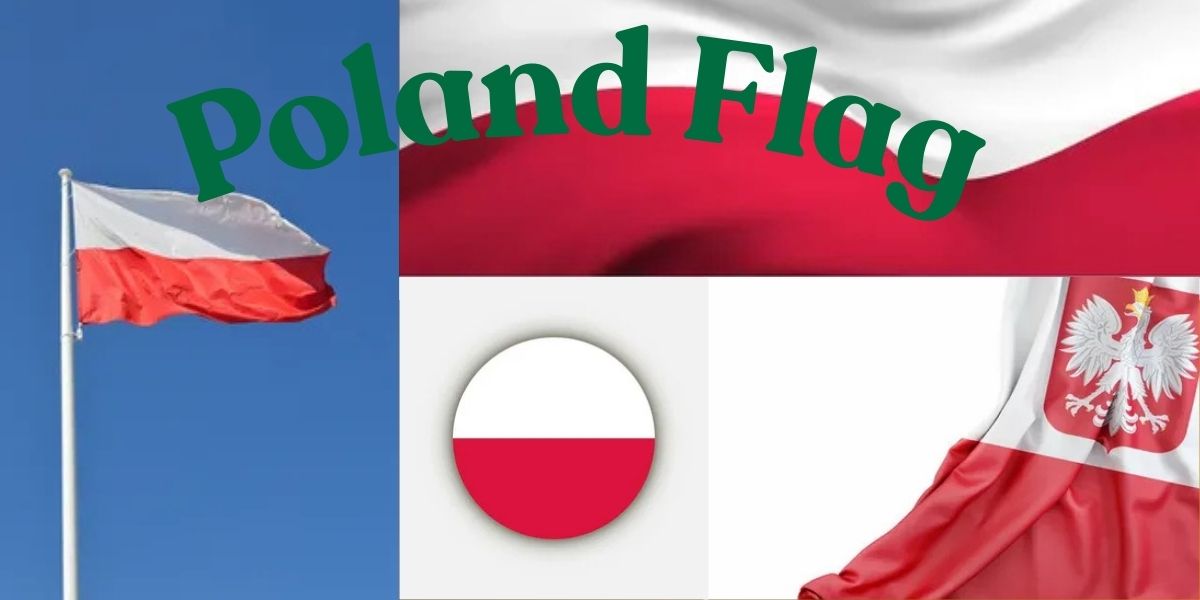
Poland Flag: looks simple at a glance, but it’s one of those national symbols where the “simple” design carries a lot of law, history, and identity. The white and red bands are instantly recognizable across Europe, yet details like exact shade, official proportions, and when the eagle emblem is permitted matter in real life from schools and sports to embassies and formal ceremonies.
This guide is built as a definitive resource: you’ll get the design specs, symbolism, common misconceptions, and practical display rules, plus an at-a-glance table you can use for design, education, and compliance.
Design basics: what the Poland flag is, in precise terms
The poland flag is a horizontal bicolor with two equal stripes: white on top and red on the bottom. Its standard proportions are defined as a 5:8 ratio, a detail that becomes important when printing, stitching, or creating digital assets that must match official geometry.
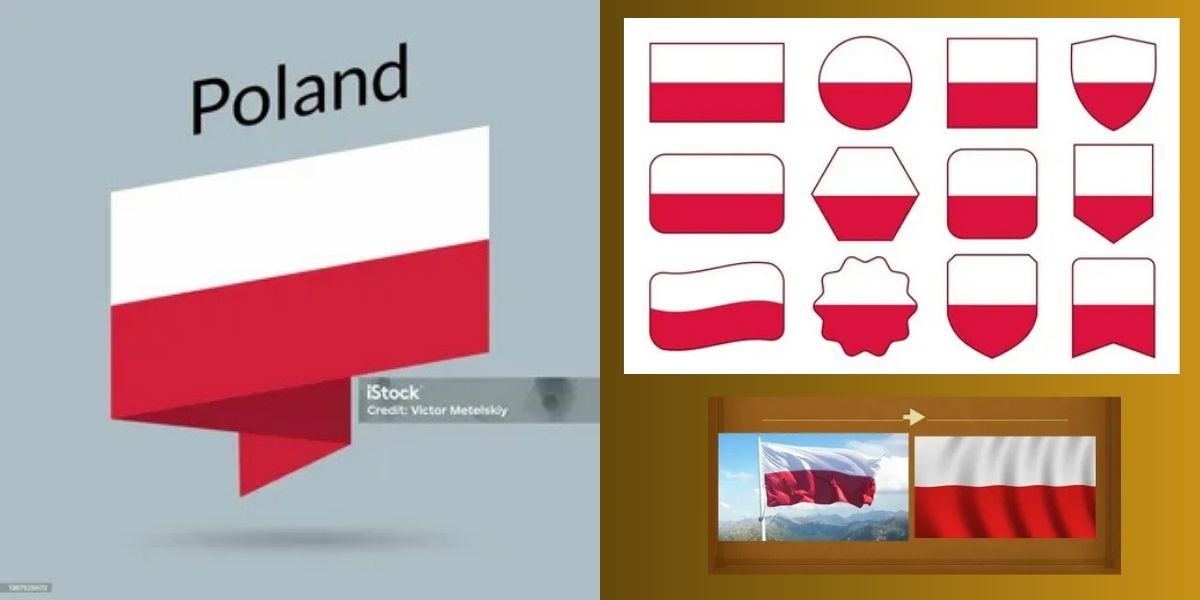
That “equal-width stripes” point is the anchor of the entire system. If either band is visually heavier, if the flag is stretched into an odd ratio, or if the red is pushed too dark or too bright, the result often looks like a different country’s banner or like an unofficial derivative rather than Poland’s national symbol.
Meaning and symbolism: why white and red matter
The poland flag draws its national colors from Poland’s heraldry, especially the White Eagle associated with the Polish coat of arms, traditionally shown as a white eagle on a red field. That link is why the palette isn’t arbitrary: it’s tied to state symbolism that predates the modern flag format.
A practical way to think about the symbolism is that Poland’s flag is a distilled version of Poland’s heraldic identity. Rather than placing a complex emblem on every civilian flag, the state uses a minimal two-color system that is easy to reproduce, hard to misread at distance, and still tightly connected to national iconography.
Legal status: what Polish law actually defines
The Constitution of Poland specifies the national colors as white and red, and Polish law further defines their arrangement as two horizontal stripes with white on top and red on the bottom. This is not just tradition; it’s codified identity.
One line captures the idea cleanly: “The Poland Flag national colours of the Republic of Poland are white and red.” That statement is short, but it explains why the flag’s palette is treated as a protected national symbol rather than a mere design choice.
Color accuracy: the official shades and why screens confuse people
If you’ve ever seen Poland’s red look cherry-bright in one graphic and deep crimson in another, you’ve run into the “display translation” problem. Statutory color specifications can be rendered into sRGB values for web display, but what you see still varies by device, brightness, and surrounding colors.
For practical design work, a widely cited web rendering of the statutory colors uses white #E9E8E7 and red #D4213D, and Pantone equivalents are often given as 656 C and 1795 C. Designers should treat these as an accuracy-focused baseline and then test across screens and print proofs, especially if the flag will appear next to strong whites or heavy blacks that shift perception.
Flag variants: plain bicolor versus the version with the eagle
The poland flag most people know is the plain white-over-red bicolor, used broadly by citizens and institutions in Poland. There is also a variant featuring the national coat of arms (the White Eagle) placed on the white stripe, and that version is primarily associated with specific official uses, especially abroad or in defined contexts.
In practice, the emblem-bearing version is commonly described as a state or official-use variant. Sources summarizing Polish rules note it is used at diplomatic missions and can function as an ensign in particular civilian or maritime settings; the plain flag remains the default symbol for general national display.
Where you’ll see it: public buildings, civic moments, and everyday pride
Poland’s flag is not confined to government rituals. In modern usage it appears on public buildings, during national commemorations, at cultural events, and in everyday expressions of identity—especially when Poles want a symbol that reads instantly and universally, without any language barrier.
This everyday visibility is part of why design accuracy matters. A Poland Flag that looks “almost right” is still noticed as “not quite,” particularly in official settings like school ceremonies, municipal events, or international gatherings where flags are displayed side-by-side and differences in ratio and color become obvious.
Etiquette and correct display: respect, orientation, and presentation
When discussing the poland flag, etiquette is not about being overly strict—it’s about avoiding unintentional disrespect. Orientation is a core rule: white belongs on top in horizontal display, and when the flag is displayed vertically, the white should typically be positioned to the viewer’s left (so the “top” becomes “left” in a vertical orientation).
Another key principle is condition and context. Poland Flags should be clean, undamaged, and handled in a way that signals reverence rather than casual disposal. That’s not just social expectation; sources summarizing Polish law emphasize respect for national symbols and outline penalties for intentional acts of public disrespect or destruction.
Common confusions: Poland vs. Indonesia, Monaco, and “wrong red”
The poland flag is famously easy to confuse with Indonesia and Monaco if the colors are inverted. Poland is white over red; Indonesia and Monaco are red over white. In a fast-moving environment—sports broadcasts, social posts, event photos Poland Flag is the most common mistake, and it’s often amplified by casual cropping that hides the “top/bottom” cue.
The second big source of confusion is shade. Many simplified graphics use pure white and pure red because they’re easy defaults, but official specifications and widely cited normative renderings show more nuanced tones. If your red is too bright, the flag can look like a generic bicolor; if it’s too dark, it can look ceremonial or misidentified, especially when compared to properly specified flags nearby.
History in brief: from heraldic banners to the modern flag
The roots of Poland’s national colors are tied to heraldry, with the White Eagle appearing in Polish symbols as far back as the medieval period. Historically, flags often worked as “armorial banners,” translating the coat of arms directly into a field design, which helps explain why white and red became so central.
In the modern era, the bicolor format and Poland Flag proportions became formalized with the development of the Polish state in the twentieth century. Cultural histories of the flag commonly place the official consolidation of red and white and the standardized 5:8 format in the period after Poland regained independence, aligning the flag with a renewed national legal framework and civic identity.
Flag Day and national moments: why May matters
Poland has an official day dedicated to the flag that reinforces civic familiarity with national symbols. It is widely observed on 2 May, a date that sits close to major spring holidays and often becomes a visible moment for public flag display, education, and civic storytelling.
For organizations, schools, and publishers, that calendar moment is also a practical planning cue. Content, campaigns, and educational resources that explain Poland Flag proportions, color meaning, and correct display tend to perform well around national observances because audiences are already primed to learn, share, and engage with cultural symbols.
Identity in motion: sports, diaspora communities, and public culture
The flag becomes especially powerful when it travels. In international sports, the colors function like instant identity shorthand—broadcast-friendly, emotionally resonant, and easy to reproduce on scarves, signage, and digital overlays without losing legibility.
Outside Poland, diaspora communities often use the flag to maintain a visible connection to heritage, particularly at cultural festivals and community events. Poland Flag In these contexts the bicolor’s simplicity is a strength: it scales from a lapel pin to a parade banner, remains recognizable across languages, and still points back to the deeper heraldic system anchored by the White Eagle.
Using it in design, branding, and UX: how to be accurate and tasteful
If you’re incorporating the poland flag into a design—an event poster, a product page, a museum label, an infographic—the first job is fidelity: correct stripe order, correct ratio, and a defensible color choice tied to recognized standards. This is where teams often slip, not out of disrespect but out of convenience, especially when they grab “red/white” from a default palette instead of a tested match.

The second job is context. A flag is not just decoration; it signals nationhood, public authority, and collective identity. In editorial and brand work, it’s usually best used when it genuinely adds meaning—location context, cultural coverage, national observances, international relations—rather than as a generic “Europe” motif. When you treat it as a meaningful symbol, audiences feel the difference immediately.
Specifications and variants at a glance: a practical reference table
Teams often waste time debating details that should be standardized upfront. This section gives a single, reusable reference Poland Flag useful for publishers, teachers, event organizers, product designers, and anyone creating accurate visuals.
The table below focuses on what you typically need in real workflows: design elements, intended contexts, and the quickest “sanity checks Poland Flag” to avoid common mistakes.
| Item | Visual elements | Typical context of use | Quick accuracy checks |
|---|---|---|---|
| National flag (plain bicolor) | Two equal horizontal stripes: white over red | Broad civilian display; public events; general national representation | White must be on top; stripes equal height; ratio commonly 5:8 |
| Flag with coat of arms variant | Same bicolor with the White Eagle emblem placed on the white stripe | Diplomatic missions and defined official contexts; often used abroad | Emblem sits on white; avoid treating it as interchangeable in formal contexts |
| Color guidance for digital assets | Statutory shades rendered for web display as #E9E8E7 (white) and #D4213D (red) | Websites, apps, slides, broadcast graphics | Test on multiple screens; avoid pure #FF0000 unless intentionally simplified |
| Proportions | 5:8 ratio (height:width) widely referenced for the national flag | Print production, uniforms, signage, official documentation | Don’t stretch to fit; keep a consistent master template |
Practical scenarios: travel, classrooms, events, and publishing
In travel and photography, accuracy is usually about capture and framing rather than manufacturing. If you’re documenting cultural sites, embassies, or national commemorations, show enough of the flag to preserve orientation cues; tight crops can accidentally invert meaning and create avoidable confusion.
In education and events, the flag becomes a teaching object. The simplest high-value lesson is to connect form to meaning: explain why the colors relate to heraldry, why the order matters, and why a nation standardizes proportions. That turns a “two stripes” banner into a real gateway to history, civic culture, and visual literacy.
Conclusion
The poland flag succeeds because it is disciplined: two colors, equal bands, and a stable geometry that holds up across centuries of history and across modern screens. That simplicity isn’t emptiness; it’s clarity, and it’s why the flag remains so legible in diplomacy, public life, and everyday patriotism.
If you remember only a few rules, make them these: white stays on top, proportions should be respected when you create assets, and color should be chosen deliberately rather than by default. Get those right and you’re not just “using a design”—you’re representing a national symbol with the precision it deserves.
FAQ
What do the colors on the Poland flag mean?
The poland flag uses white and red, historically linked to Poland’s heraldry—especially the White Eagle associated with the national coat of arms—making the colors a condensed expression of national identity.
What is the correct ratio of the Polish flag?
The Poland Flag standard proportions are commonly given as 5:8, which matters for printing and digital templates because stretching the flag can make it look unofficial or visually incorrect.
How is Poland’s flag different from Indonesia’s or Monaco’s?
Poland’s flag is white over red, while Indonesia and Monaco use red over white; the most common mistake is inversion, especially when images are cropped or displayed vertically without clear orientation.
Does Poland have a flag with an eagle on it?
Yes, a variant exists that places the national coat of arms (White Eagle) on the white stripe, and it is associated with specific official or diplomatic contexts rather than everyday civilian use.
What are the official color codes used online for Poland’s flag?
A widely cited web rendering of the statutory colors uses #E9E8E7 for the white and #D4213D for the red, and designers often test these across devices because screens can shift perceived brightness and saturation.