


Neal Dunn Explained: Why Everyone’s Talking About Him Right Now
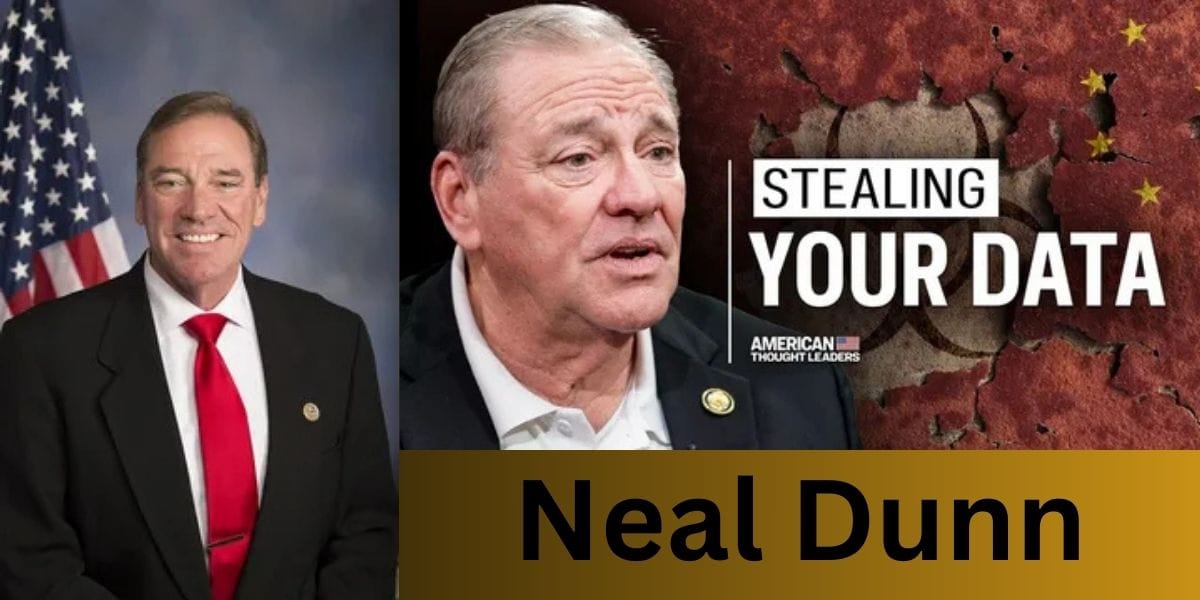
Neal Dunn Explained: In Florida politics, few House members built a brand as tightly tied to “doctor + veteran + conservative lawmaker” as Neal Dunn. Serving Florida’s 2nd Congressional District since 2017, he became a recognizable figure in North Florida not just for votes, but for the way he framed issues—healthcare, veterans, national security, broadband, and small-business economics—through a physician’s lens and a military family story. That combination matters in Washington because a member’s credibility often determines where leadership places them and which coalitions take their calls seriously.
In early 2026, public interest spiked again after he announced he would not seek re-election, and then national outlets reported controversy around a public disclosure of serious health information that had not been widely shared. If you’re searching for a definitive, readable guide, this article breaks down his biography, committee footprint, priorities, legislative style, the retirement choice, and the real-world implications for Florida’s 2nd District going forward.
Why Neal Dunn Matters in Florida and in Congress
A House member’s influence is rarely about celebrity. Neal Dunn about committee placement, jurisdiction, relationships, and the ability to turn district needs into federal action. In that respect, Florida’s 2nd District has had an unusually “committee-relevant” representative someone positioned where big policy levers move, especially on energy, commerce, telecommunications, and health. That’s a practical advantage for constituents: the right committee seat can accelerate a local priority from “nice idea” to “funded project.”
Another reason he draws attention is narrative clarity. Many politicians struggle to explain their “why.” His biography—urologist, Army medical officer, long-time Florida resident gives him a consistent identity that is easy for voters to understand and for reporters to summarize. That clarity can be politically valuable in both calm periods and crisis moments, because it reduces the gap between who a politician says they are and what their resume already implies.
Early Life, Education, and the Making of a Physician-Lawmaker
The official biography describes a life shaped by a multi-generational Army family, frequent moves, and early achievement—Eagle Scout and National Merit Scholar—before college and medical school. He earned a degree from Washington and Lee University and an M.D. from George Washington University, then completed urology residency training linked to Walter Reed. That background is unusually specific among members of Congress, and it informs how he talks about healthcare delivery, medical regulation, and veterans’ medicine.
This kind of formation tends to produce a “Neal Dunn systems” mindset: diagnose the problem, identify constraints, choose an intervention, measure outcomes. In legislative terms, it can show up as emphasis on implementation details—how rules affect clinics, how reimbursement affects rural care access, how broadband affects telehealth, and how VA policy affects real patients. Even if a reader disagrees with his conclusions, understanding the professional frame helps explain why certain issues stayed central to his agenda.
Military Service and the Leadership Style It Encouraged
Public profiles describe him as serving in the Neal Dunn U.S. Army Medical Corps for years and reaching the rank of major. Whether you view military experience as credential or simply biography, it typically shapes how lawmakers talk about readiness, medical capacity, disaster response, and national security threats. It also tends to influence language: duty, risk, chain-of-command clarity, and operational priorities rather than abstract ideals.
That matters for North Florida because the district includes many veterans and military families, and because defense and security issues often land differently in communities with direct ties to service. The combination of physician training and military structure can create a “triage” style of politics—prioritize what is urgent, protect what is fragile, and demand accountability in operations. That approach can be popular in a district where voters often want tangible outcomes over rhetorical experimentation.
Florida’s 2nd District and the Local Priorities That Drive the Agenda
Florida’s 2nd Congressional District covers a large swath of North Florida and includes communities with very different economic profiles—coastal areas, rural towns, and parts of Tallahassee. District-level policy needs often revolve around disaster resilience, agriculture, veterans’ services, rural health access, and jobs tied to small business and regional development. A representative who can speak to those priorities in a coherent theme tends to earn longevity, especially when the message aligns with local identity.
The district’s size and diversity also make constituent services unusually important. When voters are spread across many counties, the operational side of representation—federal agency help, disaster assistance guidance, and accessibility of district offices Neal Dunn becomes part of the political brand. Even readers who don’t follow congressional procedure usually feel the impact when a district office helps with a VA case, passport issue, or FEMA-related problem after storms.
Committee Power: Energy and Commerce as a Serious Leverage Point
One of the most significant elements of his House career is service on the House Committee on Energy and Commerce, with his official site describing him as vice chair. That committee’s jurisdiction is wide—telecommunications, consumer protection, public health, food and drug safety, and energy policy—making it a high-impact place for lawmakers who want to shape national rules that also affect local economies. In Washington terms, this is not a “Neal Dunn backbench” assignment; it’s where major regulatory and industry-facing decisions often run.
The Clerk of the House listing also shows subcommittee assignments within Energy and Commerce that include Commerce, Manufacturing, and Trade; Communications and Technology; and Health. Those subcommittees map cleanly onto his public identity: physician focus on health policy, plus broadband/telecom interest relevant to rural connectivity. For Florida’s 2nd District, the practical implication is simple: a representative with the right jurisdiction can be more than a voter; he can be a negotiator on the language that becomes the law.
A Second Platform: China Competition and Strategic Policy Messaging
The Clerk’s record also lists him on the Select Committee on the Strategic Competition Between the United States and the Chinese Communist Party. Select committees do not write law the same way standing committees do, but they shape narratives, frame risks, and influence how other committees prioritize legislation. For voters, that often translates into louder emphasis on supply chains, technology security, and national competitiveness.
This role connects to themes he highlighted in his retirement statement—explicitly naming threats from Communist China and Russia. That matters because many constituents evaluate representatives through “threat perception Neal Dunn” as much as through domestic policy: border security, foreign policy posture, and economic resilience. In a content strategy sense, that’s why searches about his career often mix biography terms with national security language: the committee assignment reinforces the brand story.
Healthcare Policy Through a Doctor’s Lens
For any lawmaker who is also a physician, healthcare isn’t just an issue category—it’s a credibility domain. His official biography and public communications repeatedly foreground medicine, and that tends to shape how he talks about innovation, bureaucracy, and access. Even the way a physician frames regulation is different: the questions become “Does this improve outcomes?” and “Does it create unintended harm?” rather than only “Is Neal Dunn popular?”
That lens is increasingly relevant in rural and semi-rural districts, where healthcare access often depends on a limited number of facilities and specialists. When reimbursement changes or staffing shortages hit, communities can feel it fast. A representative with credibility in medicine can sometimes translate those on-the-ground realities into persuasive arguments inside the committee rooms where health policy text is drafted and amended.
Broadband, Telecom, and “Connectivity as Infrastructure”
Broadband policy is no longer a niche issue. It is infrastructure for education, work, telehealth, and emergency coordination—especially in districts with rural stretches and storm risk. His official press area highlights broadband funding updates, and his committee footprint includes Communications and Technology, which is where much of the federal framework for networks and spectrum governance is debated.

One practical example in his recent work is the push around FirstNet reauthorization, reflected in his official news feed and in legislative tracking sources that show related bill activity moving through subcommittee. For a district-level audience, the relevance is direct: first-responder communications and resilient networks are not abstract; they affect response time, coordination, and safety during hurricanes and emergencies.
A Structured Look at Neal Dunn’s Policy Footprint
Different readers want different kinds of clarity. Some want ideology; others want a quick map of issues to committees and real-world relevance. The table below is designed for skimmability while still grounded in official assignments and public statements.
| Policy area | What he emphasized publicly | Where his influence showed up | Why it mattered locally |
|---|---|---|---|
| Health policy | Innovation, reducing bureaucracy, physician-driven decisions | Energy & Commerce Health subcommittee work | Rural access, Medicare/health system impacts |
| Broadband/telecom | Expanding connectivity; improving communications infrastructure | Communications & Technology subcommittee; broadband updates | Rural internet, telehealth, business growth |
| National security | Threats from China/Russia; strategic competition framing | China competition select committee | Supply chain, technology security narratives |
| Veterans/military | Support for military and veterans | Veteran-focused messaging; service background | Large veteran presence in district |
A table can’t capture everything, but it reveals a key point: his brand wasn’t scattered. It was a tight cluster around health, connectivity, defense/veterans, and conservative governance themes. That coherence is why his media coverage frequently reads like a consistent “portfolio,” not a grab bag of unrelated positions, and it’s why many searches about Neal Dunn show unusually stable intent patterns over time.
Legislative Style: What “Workhorse” Looks Like in Practice
Not every lawmaker becomes a viral speechmaker. Many become influential by drafting, negotiating, and attaching language to larger packages that leadership can move. Public committee listings and legislative tracking suggest a pattern of involvement in practical bills and committee processes—often the less glamorous but more consequential side of Congress. When you read member news pages, you see an emphasis on tangible deliverables: reauthorizations, markups, district-relevant funding updates, and policy items that map to committee jurisdiction.
This is also where a physician-lawyer difference shows up. A physician-lawmakers’ instinct can be to focus on process and measurable improvement, because medicine trains you to treat systems as well as symptoms. In Congress, that can translate into a preference for policy tools that can be evaluated—funding streams, program reauthorization, regulatory adjustment—rather than purely symbolic measures. Whether that’s “better” politics depends on your values, but it is a recognizable governing style.
Public Messaging Themes: Conservatism Anchored in Biography
In his January 2026 statement announcing he would not seek re-election, he framed his tenure as grounded in “life, liberty, and conservative values,” highlighting lower taxes, military and veterans, the unborn, healthcare innovation, and threats from geopolitical rivals. That statement is useful because Neal Dunn compresses his self-defined priorities into one place, without the distortion of partisan commentary. It also shows how he wanted his record understood: as a values-driven portfolio rather than a single-issue brand.
That message also underscores how modern congressional careers are built on identity coherence. In an attention economy, voters often remember “the doctor,” “the veteran,” “the entrepreneur,” or “the prosecutor.” Those labels can be reductive, but they’re powerful. His statement explicitly connected physician and military identity to his voting priorities, which is a deliberate way of telling constituents: “My positions are not random; they come from who I am and what I’ve done.”
A Quote That Captures the Retirement Moment
The most cited line from his retirement statement is straightforward and personal. Neal Dunn avoids policy detail and instead emphasizes decision, family, and a closing chapter. In high-profile political exits, that tone is typical: it lowers temperature and limits speculation.
“After much prayerful consideration and discussion with my family, I have decided not to seek re-election…”
That quote matters because it sets a baseline narrative: the exit was framed publicly as a family-focused choice. Later reporting added new context around health, which created a different interpretive lens for readers. But if you’re trying to understand the information flow honestly, Neal Dunn starts with the statement he chose to issue when he controlled the messaging.
The 2026 Retirement Announcement and Its Political Meaning
When a long-serving member steps aside, the consequences go beyond a single seat. Committee seniority and relationships vanish faster than many voters realize. Even if the district remains the same party, a new member starts at the beginning of the influence ladder. That is why retirements are often treated as “soft shocks” inside Congress: they change who can get quick answers, who can shape markup language, and who leadership trusts in negotiations.
His statement also explicitly mentioned “passing the torch,” which signals an orderly transition rather than a sudden exit. For Florida’s 2nd District, the near-term reality is a wide-open contest to define the next representative’s agenda and identity. For national observers, the retirement mattered because the House majority math is often tight, and every seat becomes strategically meaningful, particularly when leadership is counting votes.
March 2026 Health Disclosure: What Was Reported and Why It Became Controversial
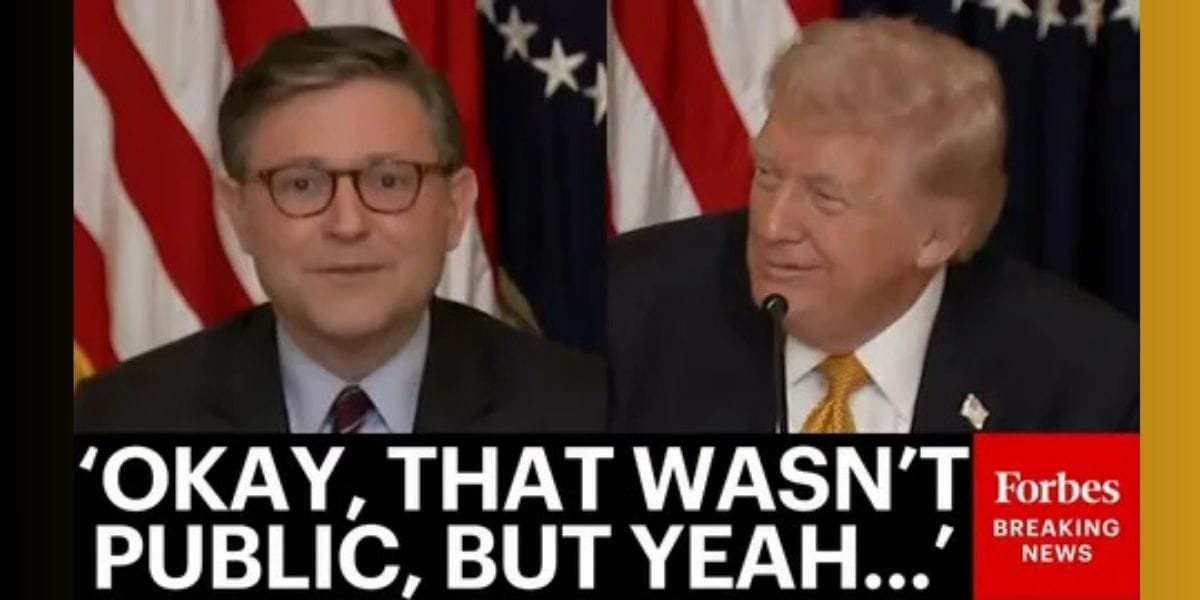
On March 16, 2026, multiple national outlets reported that President Donald Trump publicly disclosed that Rep. Dunn had a terminal heart-related diagnosis and had been told he might not live past June—information described as not previously public in that form. Coverage indicated that House Speaker Mike Johnson reacted in a way that suggested the disclosure was unexpected and not intended for broad release at that moment. The story spread quickly because Neal Dunn combined politics, privacy norms, and institutional power dynamics in a single episode.

For readers trying to interpret this responsibly, two things can be true at once. A serious medical condition can help explain why a member would retire, and public officials’ health can be relevant to governance. But the ethics of disclosure who controls the information and how Neal Dunn revealed—matters, especially when the individual has not publicly detailed the condition. That tension is a major reason searches for Neal Dunn spiked in mid-March 2026, with many people looking for clarity rather than rumor.
How Health, Service, and Privacy Collide in Political Coverage
There is a long tradition of the public wanting to know whether leaders can serve. There is also a long tradition of leaders wanting medical privacy. The collision happens when a third party controls the microphone. In the March 2026 coverage, the controversy was not only about health status; Neal Dunn was about disclosure authority and the social expectation that private diagnoses should be shared by the patient, not by political allies or opponents.
This matters for civic trust. When voters believe health information is used as a political instrument—whether to secure sympathy, explain retirement, or influence House vote-count narratives—public confidence can erode. That’s why the story resonated beyond Florida. Neal Dunn became a national discussion about norms, and it prompted people who rarely follow committee work to search for the basics: who he is, what he does, and what the timeline really is.
The Elections Context: What Changes When an Incumbent Steps Away
According to Ballotpedia’s election page for the district, the 2026 election calendar includes a primary in August and general election in November. Those dates matter because open-seat races shift incentives: candidates compete to “own” the district narrative, donors reassess, and party organizations invest differently than they would in a standard incumbent run. Voters often notice this as a sudden flood of messaging and candidate positioning.
The deeper change is representation risk. A new member might focus on different priorities—perhaps more culture-war messaging, perhaps more local economic development, perhaps a sharper national security posture. The district will still need the same practical outcomes—agency help, storm recovery coordination, infrastructure attention—but the style and committee ambitions of the next representative will determine how effectively those needs translate into federal leverage.
What Constituents Typically Want From a Member Like Neal Dunn
Most constituents want three things, even if they describe them differently. They want someone who votes in alignment with district values, someone who can deliver tangible help to individuals and communities, and someone who can communicate clearly during emergencies. Official district-office information and services pages are not glamorous content, but they are often the most “real” measure of representation because they touch people’s lives in direct ways.
In North Florida specifically, the priorities tend to show up repeatedly: veterans’ needs, healthcare access, local jobs, and response to disasters. A representative with medical and military credibility can build trust quickly in those domains. That trust doesn’t guarantee agreement, but Neal Dunn does explain why his profile remained durable across multiple terms and why many voters evaluated him as a pragmatic conservative rather than as a purely performative politician.
How to Evaluate a Congressional Record Without Getting Lost
Many readers make a basic mistake: they treat politics like sports—wins, losses, personalities—rather than like governance. A better approach is to evaluate the “levers” a member had access to and what they did with them. Committee assignments are levers. Subcommittee jurisdiction is a lever. Relationships with agencies are levers. If you’re judging impact, look at those structures first, then look at how the member used them through bills, hearings, and district-focused problem solving.
Neal Dunn also helps to distinguish between symbolic actions and durable outcomes. Votes are visible, but drafting and negotiating are often where policy becomes real. Even if you disagree with a member’s ideology, you can still assess competence: Does the member understand the policy domain? Do they operate effectively inside committee systems? Do they show consistency between stated priorities and legislative behavior? Those are the questions that separate serious analysis from headline-chasing.
What Comes Next for Florida’s 2nd District
When a representative leaves, the district does not just replace a person; it replaces a set of relationships and a level of institutional familiarity. The next representative will have to rebuild influence on committees and prove value to leadership. In the short term, that means Florida’s 2nd may experience a transition phase where local priorities require more persistence to reach the same federal decision-makers who already recognized the prior member’s name and committee role.
The upside of an open seat is possibility. Voters can choose a representative who better matches emerging priorities—whether that’s stronger focus on rural healthcare, more aggressive pursuit of infrastructure funding, or a different approach to national security messaging. The key is to demand specificity from candidates: not just slogans, but how they intend to secure committee assignments, what coalitions they can join, and what concrete outcomes they can deliver for a geographically large district.
Conclusion
A full understanding of Neal Dunn requires looking beyond party labels and into the machinery of influence: committee jurisdiction, issue coherence, and biography-driven credibility in health and military matters. His public record and official statements show a consistent portfolio emphasizing healthcare innovation, conservative governance themes, support for veterans and the military, and attention to communications infrastructure and national competitiveness. Those are not random talking points; they map directly to his professional background and committee footprint.
The 2026 retirement announcement and the later national controversy around public health disclosure made his name newly searchable, but the bigger civic story is what happens next for Florida’s 2nd District. Representation is not only about ideology; it’s also about competence, leverage, and continuity. As the district moves toward a new election, the most valuable voter mindset is practical: demand clear plans, evaluate committee ambition, and prioritize candidates who understand how to convert district needs into federal results.
FAQ
Neal Dunn-related searches tend to cluster around biography, committees, retirement, and the March 2026 headlines. The answers below are intentionally short and skimmable, with the most useful facts placed upfront.
If you want this article adapted for a specific search intent—“biography,” “health disclosure,” “district issues,” or “committee power”—you can split the same research into separate pages and interlink them for stronger topical authority.
Who is Neal Dunn?
Neal Dunn is a Republican U.S. Representative for Florida’s 2nd Congressional District who has served in Congress since 2017 and is also a physician with prior Army Medical Corps service.
What committees is Neal Dunn on?
Neal Dunn serves on the House Committee on Energy and Commerce and is listed on the Select Committee on the Strategic Competition Between the United States and the Chinese Communist Party, with subcommittee assignments including Health and Communications and Technology.
Did Neal Dunn announce retirement from Congress?
Yes—Neal Dunn stated on January 13, 2026 that he would not seek re-election, describing the decision as made after discussions with family and noting his intent to return home and spend more time with loved ones.
What happened in March 2026 involving Neal Dunn’s health news?
Reports on March 16, 2026 said President Trump publicly disclosed that Neal Dunn had a terminal heart-related diagnosis and had been given a dire prognosis, prompting controversy because the information was described as not previously public in that form.
Why do people associate Neal Dunn with healthcare policy?
Because Neal Dunn is a medical doctor and sits on Energy and Commerce subcommittees that include Health, he is often linked to healthcare-related debates and physician-driven policy framing.
When is the next election for Florida’s 2nd District after Neal Dunn steps aside?
Ballotpedia lists a primary in August 2026 and a general election in November 2026 for Florida’s 2nd Congressional District, which will choose the next representative after Neal Dunn does not run again.