



NATO Members Map: 13 Powerful Facts That Instantly Clarify Europe’s Security Picture
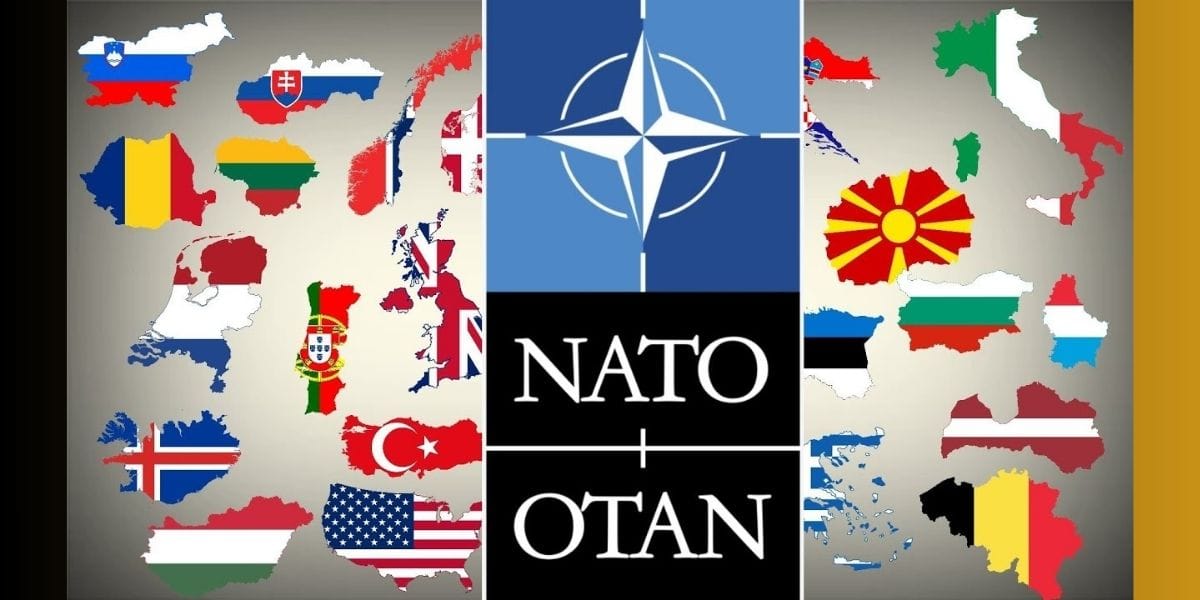
NATO Members Map: A nato members map is more than a colored graphic you glance at in a headline. It’s a compact way to understand security geography: which states are covered by collective defense, where NATO borders touch Russia or other flashpoint regions, why the Baltic Sea and the Black Sea matter, and how recent enlargement reshaped the map’s center of gravity.
This guide is built to be the one resource you return to whenever you need a nato members map that’s accurate, readable, and strategically meaningful. We’ll walk through who is in NATO today, how membership expanded over time, how to interpret common map styles, what “coverage” actually means in legal and operational terms, and how to avoid the most frequent misconceptions that lead people to misread NATO’s footprint. For official membership and NATO’s own interactive mapping, NATO provides a current list of member countries and a dedicated interactive “NATO on the Map” tool.
What a NATO Members Map Shows (and What It Doesn’t)
At its simplest, a nato members map highlights the sovereign states that belong to the North Atlantic Treaty Organization—currently 32 members from Europe and North America, as NATO itself states. In most mainstream maps, members are shaded in one color and non-members in another, which makes the alliance’s transatlantic shape instantly visible: two North American members anchored by a broad European membership that stretches from the High North to the Eastern Mediterranean.
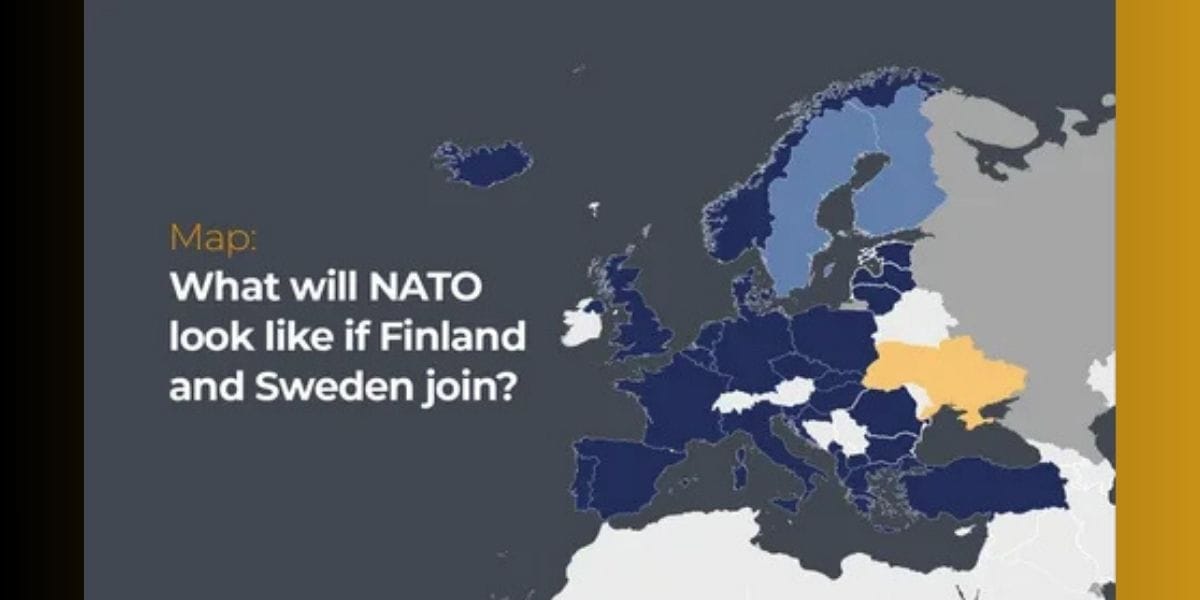
What a nato members map does not automatically show is just as important: it doesn’t reveal the size of each military, readiness levels, the location of NATO forces, or which specific contingency plans exist. It also doesn’t capture political nuance—like how consensus decision-making works, how contributions vary, or how national caveats affect deployments. The map is the “who and where,” not the “how fast” or “how much.”
The Official Starting Point: NATO’s Member Countries and NATO on the Map
If you want the cleanest “source of truth,” start with NATO’s official list of member countries. NATO’s own pages confirm there are currently 32 members and present members in an accessible format for verification. This matters because a nato members map is only as reliable as the membership list behind it, and outdated maps still circulate widely online—especially those that pre-date Finland’s and Sweden’s accessions.
For visual exploration, NATO also maintains “NATO on the Map,” an interactive tool that displays member countries (and partners) and layers in activities and institutional presence. When people ask for a nato members map that is both visual and explorable—rather than just a static image—this is typically the most authoritative place to send them.
NATO’s Footprint Today: The 32 Countries and the Alliance’s Geographic Logic
A modern nato members map highlights an alliance that is geographically diverse but strategically cohesive: it covers the North Atlantic space linking North America to Europe, with critical maritime zones (the Greenland–Iceland–UK gap conceptually, the Baltic, the Mediterranean) and important land borders on NATO’s eastern flank. NATO itself describes the alliance as a defensive political and military organization with members committed to protect one another, reinforcing that the footprint is designed around collective security.
The geographic logic is also about access and reinforcement. When you look at a nato members map, you’re seeing potential routes for logistics, air policing patterns, naval presence, and reinforcement corridors—especially relevant in Northern and Eastern Europe. Recent accessions also shift the geometry of deterrence: adding Nordic territory changes regional planning assumptions, increases depth in some areas, and creates new operational considerations in the High North and Baltic regions.
How NATO Expanded: Membership Waves You Can See on the Map
Many high-quality versions of a nato members map use multiple colors to show accession waves—founding members in one shade, Cold War additions in another, post–Cold War enlargement in later shades. This isn’t just historical trivia; it explains why NATO’s borders look the way they do today, why certain regions have denser interoperability experience, and why political narratives about “enlargement” can be so charged.
For quick reference, NATO’s official materials identify founding members and provide the core membership framework, while widely used compilations outline the enlargement timeline that brought in Central and Eastern European states over multiple rounds. When you use a nato members map that includes accession years, you can immediately distinguish long-standing members from newer allies—and that often helps readers make sense of defense investment surges, infrastructure upgrades, and shifting strategic focus.
Reading Borders Correctly: Why Coastlines, Seas, and “Chokepoints” Matter
A nato members map is easiest to misread when you ignore water. NATO geography is deeply maritime: the North Atlantic is the connective tissue, and the Baltic Sea and Mediterranean Sea are operationally central. A map that includes maritime context makes clearer why alliance planning pays intense attention to sea lines of communication, undersea cables, port capacity, and air/missile defense in coastal regions.
The same is true for strategic “chokepoints.” When people scan a nato members map, they often underestimate how geography channels movement: narrow seas, limited road and rail corridors, mountain ranges, and straits influence reinforcement timelines. Even without diving into classified details, the map alone helps explain why mobility and logistics have become recurring NATO themes in public policy debates and defense planning.
The “Coverage” Question: What Membership Means Under the Treaty
One reason the nato members map is so powerful is that it visually represents the states bound together under the North Atlantic Treaty. The treaty is the legal spine of the alliance, and NATO’s own documentation provides the official text and context for how membership is constituted. In plain language, membership signals that allies have committed to collective defense and consultation—turning national borders into shared security interests.
A well-constructed nato members map can prompt the right follow-up questions: what counts as an armed attack, how assistance decisions are made, and how deterrence works in practice. NATO’s public explanation of collective defense and Article 5 clarifies that allies assist a member under attack and that the commitment is central to NATO’s purpose. The key point is that the map shows members, while the treaty explains commitments.
Common Map Styles: Political Map, Enlargement Map, and “Operational” Map
The most common nato members map online is a simple political map: members highlighted, non-members greyed out. It’s perfect for quick orientation and basic education, but it can oversimplify. When you’re consuming news fast, this map style helps you answer “Is this country in NATO?” in half a second—which is often all readers need.
An enlargement map, by contrast, adds timeline meaning. It typically uses colors keyed to accession years—especially useful if you’re writing, researching, or teaching about how NATO evolved from 12 founding members to today’s 32. NATO’s official pages establish the founding membership context and the current member count, while supplementary references help readers visualize how additions accumulated over decades. A third style—often informally called “operational”—may overlay bases, missions, or deployments; those can be informative, but they’re the easiest to get wrong if sources aren’t current.
The Baltic and Nordic Shift: Why Finland and Sweden Changed the Visual Story
When you compare older versions of a nato members map with current ones, the Nordic region is where the difference jumps out fastest. Finland and Sweden’s membership reshaped the alliance’s northern geometry, affecting how people intuitively read the Baltic Sea region and the High North. NATO’s official materials confirm the current 32-member reality, which is the baseline needed before you draw any conclusions from the map.
Visually, Nordic membership reduces “gaps” in Northern Europe on many maps and encourages analysts to think in terms of regional defense ecosystems rather than isolated national borders. For readers, a nato members map updated for these changes is essential because outdated graphics can subtly mislead—especially when people are trying to understand why Baltic security discussions have intensified or why Arctic-related planning gets more attention.
Eastern Flank Reality: Why Proximity Drives Perception
A nato members map makes the eastern flank concept tangible: you can literally see which NATO members sit closest to potential flashpoints. That visibility affects how audiences interpret risk, and it influences what questions policymakers face—about air defense, troop presence, infrastructure, and rapid reinforcement. Even if you don’t know the details of any plan, the map explains why some capitals feel “frontline” in a way that others don’t.
At the same time, the map can tempt people into simplistic conclusions like “closer equals doomed” or “farther equals safe.” Geography matters, but deterrence is the product of many factors: capabilities, alliances, readiness, political will, and signaling. A nato members map is the starting layer, not the entire model.
Southern Exposure: The Mediterranean, Türkiye, and Strategic Depth
Many readers first encounter a nato members map that is Eurocentric—zoomed in on Central and Eastern Europe. That framing can accidentally minimize the Mediterranean dimension, where NATO geography touches the Middle East, North Africa, and critical maritime routes. Türkiye’s position alone reminds you that NATO’s southern geography isn’t a footnote; it’s foundational to how the alliance thinks about stability, air and missile defense, and regional security dynamics.
A broader nato members map—one that includes North America, Greenland’s strategic vicinity, and the Mediterranean basin—helps readers understand why NATO discussions often link multiple theaters. It’s not that NATO is “everywhere,” but rather that the alliance’s members sit at crossroads that connect multiple security challenges, from maritime security to cyber risk to energy corridors.
Partners vs Members: A Key Detail Many Maps Blur
One of the biggest mistakes people make is confusing NATO partners with NATO members. A nato members map should clearly differentiate membership (treaty allies) from partnership frameworks (cooperation without membership). NATO’s “NATO on the Map” explicitly includes both members and partners, which is useful—but only if the viewer reads the legend carefully.

This matters because membership carries specific legal and political commitments, while partnership is a flexible toolbox that can range from dialogue to training cooperation. If you’re using a nato members map in a presentation or article, always confirm whether the map is showing “members only” or “members plus partners,” because that single design choice can completely change how a reader interprets NATO’s reach.
A Table You Can Use: NATO Members by Accession Wave and Strategic Region
The table below is designed to be practical: it helps you translate a nato members map into a structured understanding of when countries joined and how they cluster by region for common analysis. Membership timelines and the current 32-member count are grounded in NATO’s official materials and widely referenced historical compilations.
| Accession wave | Members (examples, not exhaustive) | Why this matters when reading a nato members map | Typical map cue |
|---|---|---|---|
| Founding (1949) | United States, Canada, UK, France, Italy, Norway, Denmark, Netherlands, Belgium, Luxembourg, Portugal, Iceland | Establishes the original transatlantic core and maritime focus | Often the darkest “base” color |
| Early Cold War additions | Greece, Türkiye, Germany, Spain | Extends NATO into the Eastern Mediterranean and deepens central European defense | A second color band |
| Post–Cold War enlargement | Central & Eastern Europe additions across multiple rounds | Moves NATO’s border eastward and reshapes deterrence geography | Multiple colors by round/year |
| Recent Nordic accessions | Finland, Sweden | Changes Baltic/High North geometry and regional planning assumptions | Latest highlight color |
If you need a fully enumerated country-by-country list for a specific publication, the best practice is to cross-check against NATO’s current member list at the time of writing so your nato members map and your text stay aligned.
How to Verify a NATO Members Map in 30 Seconds
The fastest verification method is boring—but reliable. First, compare the map’s member list to NATO’s official roster and confirm it reflects the current 32 members. Second, check whether the map includes Finland and Sweden; if it doesn’t, it’s either outdated or using an older data snapshot. Third, look for a legend that distinguishes members from partners if the map appears to show more than just members.
If you’re publishing professionally, treat a nato members map like you’d treat financial data: cite the source, date it, and avoid “mystery maps” scraped from image search with no provenance. NATO’s own interactive map is useful for quick validation, because it’s maintained as a living reference rather than a static file someone uploaded years ago.
Misconceptions That Cause People to Misread the Map
A persistent misconception is that the map alone tells you “who will fight.” In reality, NATO decisions are made by consensus and national governments control their forces; the map shows membership, not automatic tactical outcomes. NATO’s public explanation of what NATO is—and who the allies are—reinforces that the alliance is a political and military framework for collective decisions, not a single centralized national military.
Another misconception is that NATO membership equals uniform military capacity. A nato members map doesn’t show defense spending, modernization, or readiness. Two countries can be the same color on the map and have very different force structures. That’s why better analysis pairs the map with context: budgets, industrial base, geography, and the specific security environment of each region.
Using a NATO Members Map for News, Research, and Classroom Clarity
For news readers, a nato members map is often about speed: it helps you decode a headline in seconds, especially during crises when country names flood your feed. If you’re trying to understand why certain incidents trigger alliance consultations or why certain regions dominate diplomatic attention, the map provides the baseline geography that makes those stories legible.
For researchers and educators, the map becomes a scaffolding for deeper questions. You can use a nato members map to teach enlargement history, alliance politics, and the logic of deterrence—then layer in case studies, policy debates, and regional security dilemmas. The best teaching move is to treat the map as the “cover page” of a bigger conversation: it anchors the audience before you introduce complexity.
A Quote That Explains Why the Map Matters
A nato members map is powerful because it visually represents a shared security promise. The North Atlantic Treaty captures that idea in a single, widely cited line: “an armed attack against one… shall be considered an attack against them all.”
That sentence is why the map is never just a map. It’s a graphic shorthand for collective defense, political solidarity, and strategic signaling. When the map changes—when membership expands or when the alliance’s posture evolves—audiences intuitively understand that something fundamental has shifted, even if they can’t yet name every policy implication.
Conclusion: How to Read a NATO Members Map Like an Expert
A nato members map is the fastest way to see alliance geography, but the best way to understand it is to read it in layers: membership first, accession history second, maritime and border realities third, and then the political and operational context that sits behind the colors. The map answers “who and where,” while NATO’s official materials answer “what it means.”
If you’re using a nato members map for publishing, teaching, or analysis, keep it current, cite your source, and make your legend explicit—especially around members versus partners. Do that, and your map stops being decorative and starts functioning like a real analytical tool: a clear lens on how the transatlantic security architecture is arranged today.
FAQ: NATO Members Map
A nato members map can answer a lot quickly, but the same questions come up repeatedly. These short answers are written for speed and clarity.
How many countries are on the nato members map today?
NATO states that it currently has 32 member countries, so a current nato members map should reflect that total.
Where can I find an official nato members map?
For official references, use NATO’s member country list and NATO’s “NATO on the Map” interactive tool, both maintained by NATO itself.
Why do some maps show more countries than NATO has members?
Some maps combine members and partners; a nato members map should ideally label whether it’s showing members only or members plus partner countries.
How can I tell if a nato members map is outdated?
A quick check is whether the map matches NATO’s current member list and shows the modern 32-member reality; if it doesn’t, treat the nato members map as outdated for current affairs.