

Iran President Died: How Ebrahim Raisi Died, What Happened Next, and Who Leads Iran Now
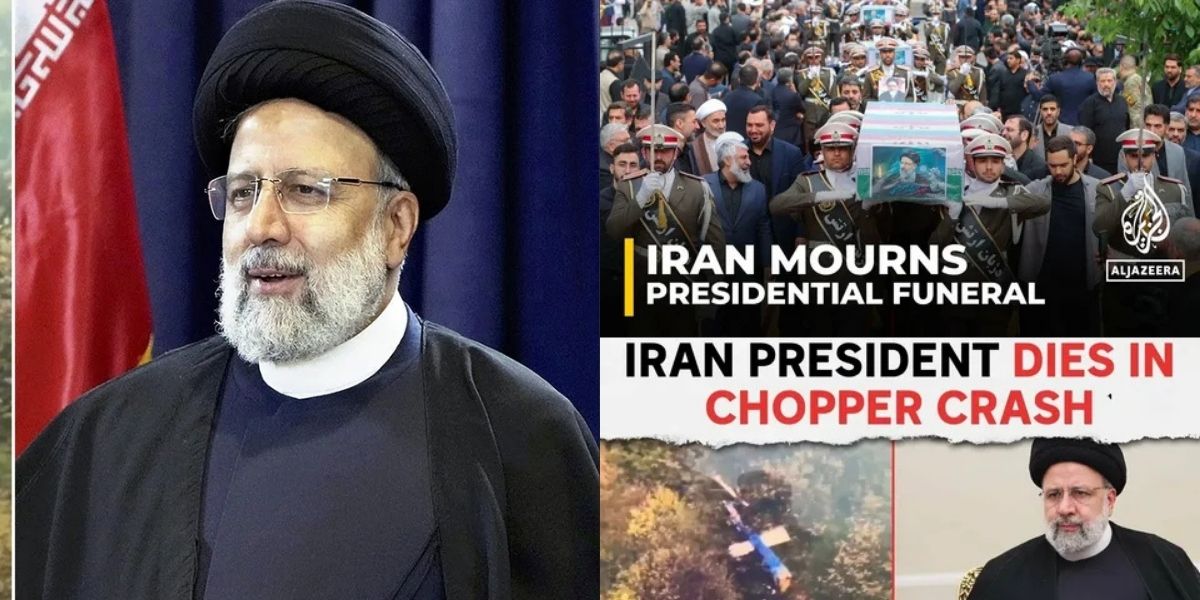
Iran President Died: When people search “iran president died,” they usually want a direct answer first, then the full context. The short answer is yes: Iran’s president Ebrahim Raisi died after a helicopter crash in northwestern Iran on May 19, 2024, with his death confirmed on May 20, 2024. Iran’s Foreign Minister Hossein Amirabdollahian and six other passengers and crew also died in the crash.
The broader answer is more important for readers and searchers. Raisi’s death was not just a breaking-news moment. It triggered Iran’s constitutional succession process, elevated First Vice President Mohammad Mokhber into an interim role, and led to a new presidential election that was eventually won by Masoud Pezeshkian in July 2024. As of early 2026, Pezeshkian is the sitting president of Iran.
That is why this topic keeps attracting search traffic long after the original headlines. Readers are not only asking whether the Iranian president died. They are also asking which president, how he died, whether it was an accident or an attack, what changed inside Iran afterward, and who is in charge now. This article answers those questions clearly and in the order most readers naturally ask them.
Which Iran president died?
The president who died was Ebrahim Raisi, a hardline cleric and politician who took office in 2021. Reuters described him as a hardliner and a close ally of Supreme Leader Ayatollah Ali Khamenei, and noted that he had long been seen by many observers as a potential successor to Khamenei because of his deep loyalty to the Islamic Republic’s ruling establishment.
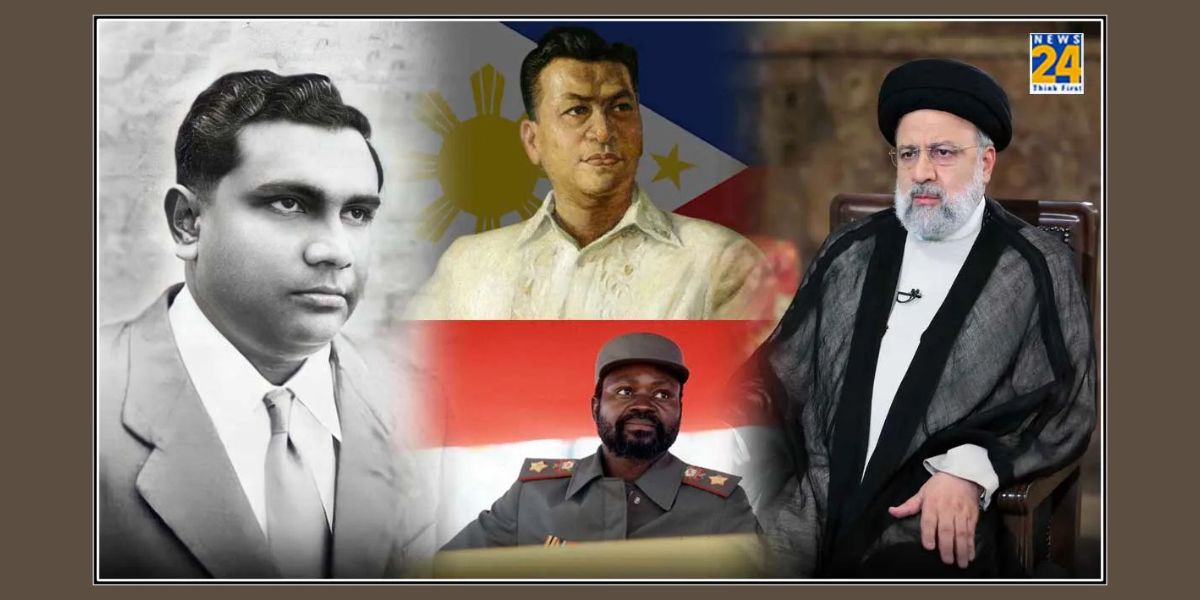
Raisi was an influential figure, but it is important to understand Iran’s power structure correctly. In Iran, the president is not the country’s ultimate authority. Reuters notes that the supreme leader has the final say in all matters of state, including core questions of strategy and foreign policy. That meant Raisi’s death was politically significant, but it did not create a total power vacuum at the top of the Iranian system.
For many readers, this distinction explains why the international reaction was serious but measured. A sitting president had died in office, which is rare and destabilizing, yet the Islamic Republic still had a constitutional mechanism to keep the executive branch functioning. In practical terms, the event was both dramatic and controlled: dramatic because the head of government died suddenly, controlled because the state quickly moved into a succession procedure already laid out in law.
How did Ebrahim Raisi die?
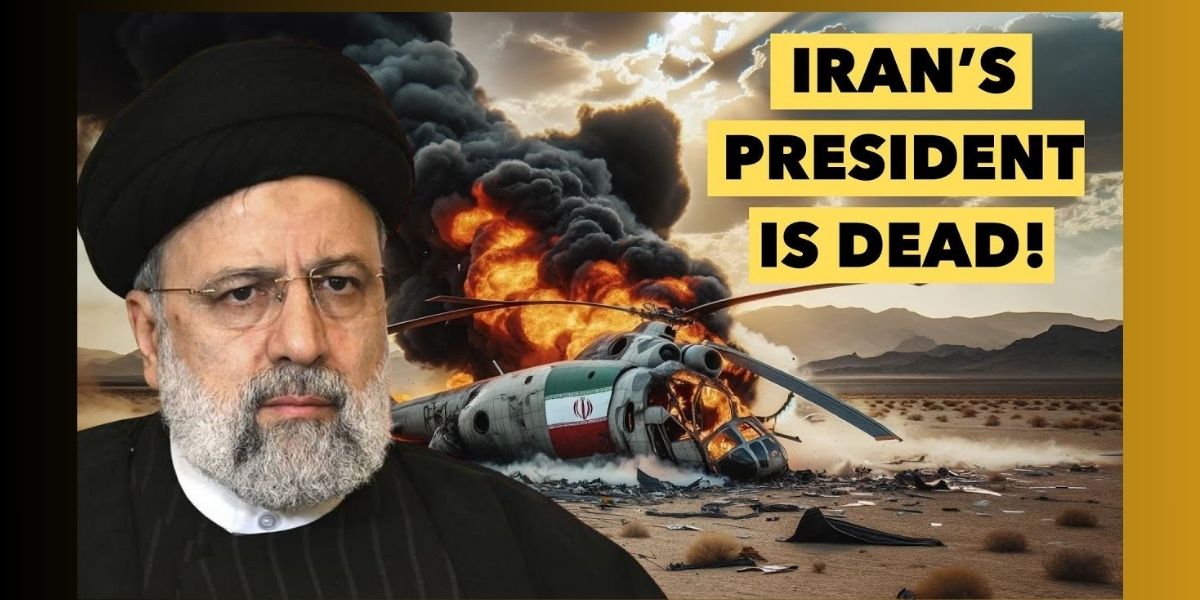
Ebrahim Raisi died in a helicopter crash while returning from a visit to Iran’s border with Azerbaijan. Reuters reported that the helicopter came down in mountainous terrain and heavy fog in Iran’s northwest, near the Azerbaijan border, after a trip connected to a dam inauguration with Azerbaijani President Ilham Aliyev. AP likewise reported that Raisi was returning from the border region after the ceremony when the crash occurred in East Azerbaijan province.
Search and rescue operations were slowed by extremely difficult conditions. Reuters said rescuers struggled through heavy fog and mountainous terrain to reach the site, while AP described a rugged area in Iran’s East Azerbaijan province. The wreckage was eventually found the following morning, and Iranian state media then confirmed there had been no survivors.
The helicopter involved was identified in Reuters reporting as a U.S.-made Bell 212. That detail became part of the wider discussion because Iran has long operated an aging aircraft fleet while facing sanctions, maintenance constraints, and broader aviation safety challenges. Although the aircraft type and weather conditions became central to public discussion, the immediate confirmed fact remained simple: the president died in a helicopter crash during a return flight in poor conditions.
Where did the crash happen, and who was on board?
The crash happened in East Azerbaijan province, in northwestern Iran, in a mountainous area near the Azerbaijan border. Reuters and AP both placed the incident in that region, with Reuters referring to mountainous terrain near the border and AP reporting that the crash occurred after Raisi’s visit to inaugurate a dam on the frontier with Azerbaijan.
The best-known passenger besides Raisi was Foreign Minister Hossein Amirabdollahian, who was also killed. Reuters reported that the helicopter was carrying Raisi, Amirabdollahian, and six other passengers and crew, all of whom perished. AP also reported that other Iranian officials were on board, including the governor of East Azerbaijan province.
That passenger list mattered politically. Losing a sitting president is itself a major event, but losing the foreign minister in the same crash raised the stakes further because it hit Iran’s executive leadership and diplomatic apparatus at once. It also intensified speculation abroad about what the deaths could mean for Iran’s regional posture, succession politics, and already difficult relations with the West.
Was it an accident, bad weather, or something more sinister?
This is one of the biggest search-intent questions around the phrase “iran president died.” Many readers want to know whether Raisi died in an accident or whether there was evidence of sabotage, missile fire, or assassination. The most defensible answer, based on reported findings, is that Iranian authorities said there was no evidence of foul play or attack, and later state reporting attributed the crash primarily to weather conditions, including thick fog.
Reuters reported in May 2024 that a preliminary military report found no sign of foul play or attack. AP similarly reported that Iran’s military said there was no evidence the helicopter had been attacked, no sign of missile fire, and no unusual communication before the crash; it also said the helicopter caught fire soon after impact. Those early findings did not assign blame, but they strongly pushed the public narrative away from assassination theories.
Later, Reuters reported in September 2024 that Iran’s final investigation said the main cause was complicated weather conditions, including thick fog, in the region. That became the clearest official explanation. There was also a separate August report by the semi-official Fars News Agency claiming the helicopter had been overloaded, but Reuters noted that Iran’s Armed Forces General Staff disputed that version as “completely false.” In other words, the broad official conclusion pointed to weather, while at least one secondary explanation was publicly challenged.
So for searchers looking for a crisp answer, the evidence-based summary is this: Raisi’s death was officially treated as a crash caused by adverse conditions, not a confirmed attack. That does not eliminate every rumor online, but it does separate verified reporting from speculation, which is exactly what many readers need when this topic resurfaces in search.
What happened immediately after the president died?
Iran moved quickly to project continuity. Reuters reported that Supreme Leader Ali Khamenei said there would be no disruption to state affairs, and shortly afterward he approved First Vice President Mohammad Mokhber as interim president while declaring five days of mourning. That response mattered because it signaled that the state wanted to reduce uncertainty both inside Iran and abroad.
Under Article 131 of Iran’s constitution, the first vice president takes over if a president dies in office, subject to the supreme leader’s confirmation. Reuters explained that a council made up of the first vice president, the speaker of parliament, and the head of the judiciary must then arrange a new presidential election within a maximum of 50 days. That is exactly the process Iran followed after Raisi’s death.
This succession framework is one reason the political system did not appear to unravel in public. Even though the death of a sitting president is extraordinary, the institutional path forward was clear. Mokhber represented the executive branch in emergency meetings immediately after the crash, and the government publicly emphasized that it would continue operating without interruption.
Who replaced Ebrahim Raisi?
In the immediate aftermath, Mohammad Mokhber became interim president, not permanent president. That distinction matters because many searchers confuse the acting period with the later election result. Mokhber’s role was temporary and constitutional: keep the presidency functioning while the country organized a new vote within the required timeline.
The eventual winner was Masoud Pezeshkian, whom Reuters described as a relative moderate. He won Iran’s presidential runoff in July 2024, and Reuters later reported that he was sworn in on July 30, 2024. That made him Raisi’s formal successor through the electoral process, rather than through permanent emergency succession.
As of early 2026, Reuters continues to identify Masoud Pezeshkian as Iran’s president, including in reporting on U.S.-Iran diplomacy and internal Iranian policy. That means the cleanest answer to “Who leads Iran now?” is Pezeshkian, even though the immediate interim handoff after Raisi’s death went first to Mokhber.
Why did Raisi’s death matter so much?
The first reason is obvious: a sitting president died suddenly in office. But the second reason is more strategic. Raisi was not just another elected official. Reuters repeatedly described him as a hardliner who was closely aligned with the ruling clerical establishment and widely viewed as a possible future successor to Khamenei. His death therefore mattered not only for the presidency, but also for long-term elite politics inside the Islamic Republic.
There was also intense international interest because Raisi had overseen Iran during a period of nuclear tension, sanctions pressure, domestic unrest, and regional confrontation. Reuters’ obituary said his tenure took a hard line toward national protests and nuclear diplomacy. AP’s coverage of Amirabdollahian likewise showed that the crash wiped out two of the most visible figures associated with Iran’s recent foreign-policy posture.
For domestic audiences, reactions were mixed. Reuters reported large official mourning ceremonies, but it also noted muted enthusiasm in some places and broader public discontent beneath the state’s highly choreographed memorial events. That split mattered because it reflected the political polarization surrounding Raisi’s record and the wider condition of Iranian society.
Any serious article on Iran president death also has to mention Raisi’s controversial past. Reuters reported that, according to rights groups, he sat on a Tehran panel involved in the 1988 executions of political prisoners. That history shaped how many people inside and outside Iran interpreted both his presidency and the reaction to his death. Supporters treated him as a pillar of the system; critics saw him as a symbol of repression.
Comparison table: before, during, and after the succession
The table below condenses the part most readers want to understand quickly: who was president, who took over temporarily, and who became the long-term replacement.
| Period | Who held the presidency | How they got the role | Why it matters |
|---|---|---|---|
| Before the crash | Ebrahim Raisi | Elected president in 2021. Reuters described him as a hardliner close to the ruling establishment. | He was the sitting president who died in office in May 2024. |
| Immediate aftermath | Mohammad Mokhber | Became interim president under Article 131 after Khamenei’s approval. | His job was to keep the executive branch functioning and help organize a new election within 50 days. |
| After the election | Masoud Pezeshkian | Won the July 2024 presidential runoff and was sworn in later that month. | He is Raisi’s elected successor and remains Iran’s president in Reuters reporting from 2026. |
Who is Iran’s president now?
This is the question that often follows the original query. Many people search “iran president died” after seeing an old headline, then immediately need to know whether the same person is still in office today. The answer is no. The president who died was Ebrahim Raisi in 2024, and the current president is Masoud Pezeshkian.
That distinction is especially important now because Iran remains central to major regional and nuclear-related news coverage. When newer headlines mention “Iran’s president,” they are referring to Pezeshkian, not Raisi. Reuters has identified Pezeshkian as president in reports from 2025 and 2026, including coverage of sanctions, diplomacy, and nuclear talks.
So if your search intent is practical rather than historical, the clean summary is this: Ebrahim Raisi is the Iranian president who died; Masoud Pezeshkian is the Iranian president now. That simple clarification resolves most confusion around old search results, social media clips, and recycled headlines.
Final answer and key takeaway
The reason this topic continues to rank well in search is that it combines a blunt headline with several unresolved reader questions. Yes, Iran’s president did die. The president was Ebrahim Raisi, and he died in a helicopter crash in May 2024 in poor weather near the Azerbaijan border. Iran’s reporting and later investigation pointed to weather conditions rather than a confirmed attack.
After his death, Mohammad Mokhber became interim president under Iran’s constitution, and Masoud Pezeshkian later won the election and became president. That is the full chain of events most readers actually need: who died, how it happened, whether it was foul play, what the constitution required, and who ended up leading Iran afterward.
FAQ
Was the Iran president who died Ebrahim Raisi?
Yes. The Iranian president who died was Ebrahim Raisi, whose death was confirmed on May 20, 2024, after a helicopter crash.
How did Iran’s president die
Raisi died in a helicopter crash in northwestern Iran after a trip to the Azerbaijan border region. Reuters and AP reported poor weather and mountainous terrain at the time of the crash.
Was Ebrahim Raisi assassinated?
There is no reported evidence of assassination in the preliminary military findings cited by Reuters and AP. Later reporting said the crash was primarily caused by weather conditions, including thick fog.
Who took over after Raisi died?
First Vice President Mohammad Mokhber became interim president under Iran’s constitutional process after approval by the supreme leader.
Who is the president of Iran now?
The current president of Iran is Masoud Pezeshkian, who won the 2024 election and is still identified by Reuters as president in 2026 reporting.
Why was Raisi’s death politically important?
It mattered because he was a sitting president, a hardline figure closely aligned with Iran’s ruling system, and someone long viewed by many as a potential future successor to Supreme Leader Ali Khamenei.