


Fallout 3 Remaster: 11 Stunning Game-Changing Exclusive Must-Read Updates You’ll Want Right Now
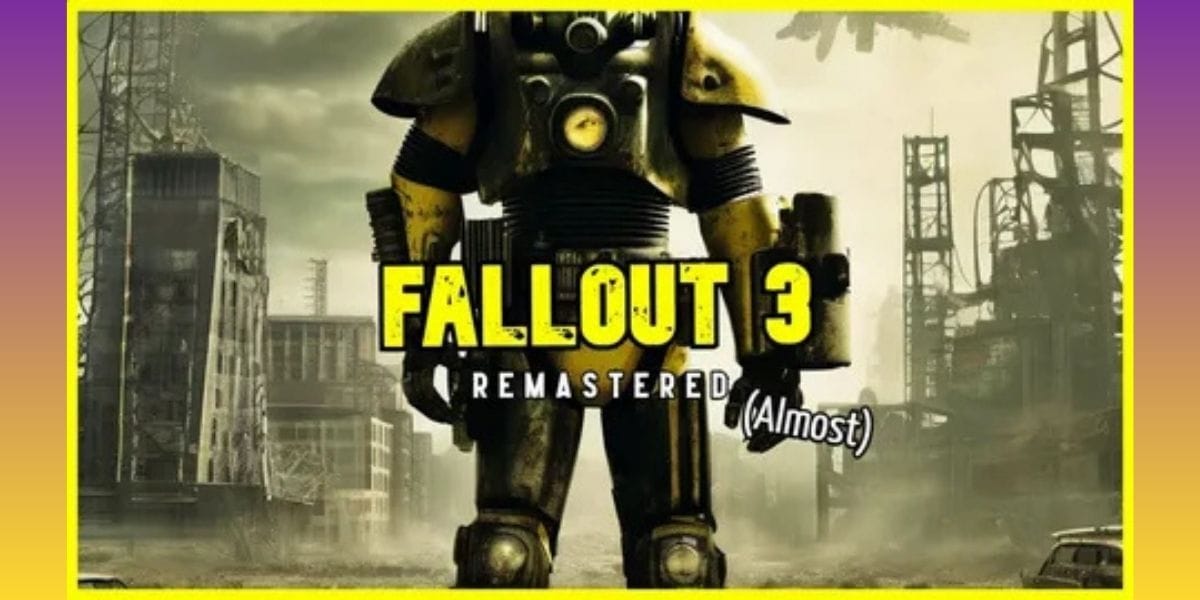
Fallout 3 Remaster: If you’ve searched fallout 3 remaster, you’re not chasing a random rumor anymore—you’re tracking a story with multiple “signal events” spread across years: a documented roadmap leak, repeated industry reporting, and fresh merchandising chatter that name-drops the project directly. The problem is that the internet collapses those signals into one noisy headline, so everything feels either “confirmed” or “fake,” with no useful middle ground.
This article gives you that middle ground. You’ll get a clear picture of what’s actually been reported, what’s still speculation, why a remaster makes business sense right now, what an “Oblivion-style” upgrade would realistically mean for Fallout 3’s tech and design, and how to separate credible information from wishcasting. Throughout, we’ll keep the tone practical: not hype, not doom—just the best evidence-based view of where a fallout 3 remaster likely stands today.
What We Know vs What We Think We Know
The most important framing: there is still no official announcement from Bethesda that a fallout 3 remaster is launching on a specific date. That means anything claiming a firm release day is speculation until Bethesda (or a platform holder storefront) says otherwise. But “not officially announced” is not the same as “not real.” Some of the strongest signals come from sources that aren’t the usual rumor mill, including documentation that surfaced during the FTC vs Microsoft proceedings and was widely reported by major outlets.

So the correct way to read the situation is probabilistic. There’s a credible paper trail that Fallout 3 was, at minimum, planned as a remaster project at one point, and there’s a steady drumbeat of reporting that it remains in some form of development. What we do not have is the key final step: a definitive confirmation of scope, studio, platforms, and timing.
The FTC Roadmap Leak That Put Fallout 3 Remaster on the Map
When people say “it leaked,” they often mean a screenshot on social media. In the case of fallout 3 remaster, one of the most widely referenced sources is a set of Microsoft/Zenimax-related documents that became public as part of FTC v. Microsoft disclosures and were covered by major tech press. Those documents included references to planned remasters such as Oblivion and Fallout 3, among other projects.
The key nuance is that these were internal-style planning materials from years earlier, which means dates and scopes can change dramatically—especially after acquisitions, platform strategy shifts, and staffing realities. The leak is still valuable because it established the concept was not merely fan fiction. It’s less valuable as a calendar. Treat it as “proof of intent at that time,” not “a promise of imminent release.”
The 2026 Merch Leak Moment: Why a Toy Listing Matters
Fast-forward to very recent chatter, and the most interesting “fresh” signal isn’t a cryptic tweet—it’s merchandising. Multiple outlets reported a McFarlane Toys listing that explicitly referenced “Fallout 3 Remastered” tied to a T-45B “Nuka Cola” figure, which immediately reignited speculation because merchandising often gets visibility before formal marketing campaigns.
That said, merchandising leaks are not bulletproof. Retail listings can include placeholder titles, internal codenames, or categorization errors, and at least one report noted uncertainty because the item appeared with a Fallout 76 base or was listed under Fallout 76 in some places. The right takeaway is not “it’s confirmed,” but “this is a non-trivial signal that the brand language exists in a commercial pipeline.” It adds weight when combined with the earlier roadmap leak and ongoing reporting.
Industry Reporting: The “Still in Production” Thread
Beyond the FTC documents and the toy listing, there’s a third pillar: ongoing reporting from games media that points to a Fallout 3 remaster being in active development or “in production,” often in the context of Bethesda’s broader Fallout strategy. For example, GamesRadar has covered the idea that Fallout 3 is being remastered and discussed it alongside Todd Howard’s remarks about Bethesda’s internal manpower devoted to Fallout projects.
Here’s why that matters strategically. Bethesda has a live-service pipeline (Fallout 76), long-horizon projects (The Elder Scrolls VI), and a renewed mainstream audience after the Fallout TV series. In that environment, a remaster functions like a bridge product: lower risk than a new numbered entry, faster to market than a full remake, and capable of pulling new fans into the older single-player catalog.
What “Oblivion-Style” Could Mean for Fallout 3
A lot of discussion about a fallout 3 remaster references the idea of an “Oblivion-style” treatment—meaning a modernization pass that can significantly improve visuals and UX while keeping the underlying game structure recognizable. While “Oblivion Remastered” chatter is often used as a comparison point, the important concept is the spectrum: a remaster can range from “higher resolution + frame rate” to “major rendering/lighting overhaul, improved assets, and systemic quality-of-life improvements.”
The realistic expectation, based on how publishers typically approach legacy RPG remasters, is that the core quest structure, level design, and gameplay loops remain intact while presentation and usability get the biggest upgrades. Think: modern controller tuning, clearer UI, accessibility options, improved stability, better asset fidelity, and potentially a smoother path to play on current platforms without community patch gymnastics. Even in the best-case remaster, Fallout 3 will still “feel like Fallout 3”—and for many fans, that’s the point.
The Tech Reality: Why Fallout 3 Is Harder Than It Looks
Fallout 3 isn’t difficult to remaster because of graphics alone. It’s difficult because the game’s age intersects with engine-era constraints, platform quirks, and long-tail bugs that the community has historically patched around. A serious fallout 3 remaster would likely need a stability and compatibility mandate: reliable performance on modern hardware, fewer crash scenarios, and better handling of edge cases that longtime modders already know by heart.
This is also why scope rumors swing wildly. If the project is a straightforward remaster, it could focus on modernization and packaging. If it becomes closer to a “remake-lite,” costs rise fast because you’re dealing with deeper systems and content integration issues. The market signals we’ve seen so far align more naturally with a remaster strategy: high nostalgia value, big audience, manageable production risk.
The Business Case: Why the Timing Makes Sense
A fallout 3 remaster makes business sense for three overlapping reasons. First, Fallout has renewed cultural momentum, and catalog products benefit disproportionately from franchise heat. Second, remasters are comparatively predictable in ROI terms: the audience is known, the content is known, and the marketing message is simple. Third, platform ecosystems (including subscriptions) reward recognizable, high-hours RPGs that keep players engaged.
This is why remaster talk persists even when Bethesda is quiet. Silence isn’t proof of cancellation; it can be a sign of disciplined marketing timing. Publishers often want the reveal window close enough to launch that it converts hype into sales without long “delay fatigue.” The toy listing chatter, in particular, is consistent with the idea that merchandising and licensing pipelines may already be aligning for something—though it still doesn’t guarantee near-term release.
What Fans Actually Want: The Non-Negotiables
When players ask for a fallout 3 remaster, they usually want the same core bundle of outcomes: modern performance (stable frame rate and loading), modern visuals (cleaner lighting, higher fidelity textures, better draw distances), and modern usability (UI readability, improved control feel, accessibility toggles). They want the Capital Wasteland atmosphere preserved—especially its distinctive green-gray mood—without the friction that makes replaying a 2008 RPG feel like a chore on current systems.
There’s also a “soft want” that matters: respectful preservation. Fallout 3 is a product of its era, and fans tend to fear unnecessary rewriting more than they fear imperfection. A good remaster should feel like your memory of Fallout 3—minus the technical hassles and with a higher baseline of polish. That preservation-first expectation is one reason remastering (rather than fully remaking) is appealing: it upgrades the experience without rewriting the identity.
A Quote That Frames Bethesda’s Current Posture
One of the better-reported indicators of ongoing Fallout activity came through interviews where Todd Howard referenced the scale of work happening across Fallout projects. GamesRadar summarized a GQ interview in which Howard suggested that “hundreds of people” are working on Fallout-related efforts, including “some other things.”
That line is revealing because it doesn’t confirm a fallout 3 remaster outright, but it does support the broader logic that multiple parallel Fallout initiatives may exist at once. In a modern AAA publisher structure, that’s how it works: live service maintenance, content updates, franchise strategy, and catalog modernization can all run concurrently if the business case is strong.
Release Window Signals: Why Specific Dates Are Mostly Noise
It’s tempting to look for a single “release date leak.” But in the fallout 3 remaster rumor ecosystem, the best approach is to ignore day-and-month claims and focus on pipeline indicators: merchandising, ratings board filings, storefront backend changes, and coordinated reporting from credible outlets. Toy listings can be a soft indicator; ratings board filings and storefront metadata tend to be harder indicators.
The FTC roadmap leak is commonly cited as implying earlier dates that clearly didn’t materialize in that form, and that’s a useful reminder: roadmaps slip. If a Fallout 3 remaster exists, it will release when marketing, platform strategy, and production readiness align—not when an old slide deck once suggested.
What Could Be Included: DLC, Bundles, and “Definitive Edition” Packaging
A commercially smart fallout 3 remaster would almost certainly be packaged as a “complete” or “definitive” experience, because that’s what modern audiences expect from catalog RPG refreshes. Fallout 3’s expansions are a major part of how people remember the game’s best moments and build variety into replays. Bundling also simplifies marketing: “this is the version to buy” is a strong message.

The more interesting question is not whether DLC is included, but how it’s integrated. Quality remasters reduce friction: clearer quest entry points, better progression pacing, and less confusion about where expansion content begins. Even small UX choices—like a better log, clearer map readability, or modernized item sorting—can dramatically change how new players perceive the experience.
PC Modding vs Official Remaster: How to Compare the Two
One reason the fallout 3 remaster conversation is so intense is that PC players already have “unofficial remaster” pathways through mods, community patches, and curated modlists. Modding can deliver impressive visuals and quality-of-life improvements, but it also requires setup effort, troubleshooting tolerance, and often a willingness to accept that your build is unique and sometimes fragile.
An official remaster should, in theory, provide a baseline: stable installs, modern OS compatibility, predictable performance, and a single “supported” experience for mainstream players. For modders, a remaster can be either exciting (new base to build on) or worrying (tools and compatibility resets). The best-case scenario is that an official remaster is stable and moddable—giving casual players an easy path and enthusiasts a strong foundation.
Platforms and Ecosystems: Where It Would Likely Land
Without an official announcement, platform talk is inference. But given Microsoft’s ownership of Zenimax/Bethesda and the way first-party ecosystems operate, it’s reasonable to expect that a fallout 3 remaster—if it launches—would appear on Xbox platforms and PC, and likely be positioned as a high-value catalog addition in storefronts and potentially subscription ecosystems.
The more delicate question is PlayStation availability. Bethesda titles have increasingly been treated as strategic levers, and releases can vary depending on internal decisions at the time of launch. Because we don’t have official confirmation, the best practice is to frame platforms as “probable” rather than “guaranteed,” and to wait for the first true hard indicators: store listings, official press releases, or ratings board entries.
What to Expect from Visual Upgrades: The Realistic Ceiling
Players often imagine a fallout 3 remaster as a full modern remake with current-gen open-world density and cutting-edge rendering. A remaster rarely goes that far. The more realistic ceiling is a strong uplift in lighting, textures, effects, and presentation clarity while maintaining the original level design and systemic structure.
If you want a practical mental model, think “your favorite old film in a well-done 4K restoration.” The scene composition is the same, the performances are the same, but the picture is cleaner, the colors are more stable, and the experience feels less constrained by the era’s technical limits. That kind of uplift can be transformative without rewriting the game.
Gameplay Quality-of-Life: Where a Remaster Can Quietly Win
The most valuable changes in a fallout 3 remaster might not be graphical at all. They might be “friction removers”: improved UI scaling for modern screens, better inventory sorting, clearer quest markers, more responsive aim and movement tuning, modern controller dead-zone options, and accessibility features like subtitle customization and contrast controls.
These upgrades matter because Fallout 3’s core loop—explore, scavenge, roleplay, fight, progress—still works. What ages is the interface between the player and the loop. A remaster that modernizes that interface can make the same underlying content feel dramatically more welcoming to new players who didn’t grow up with 2008-era UI assumptions.
A Structured Snapshot Table: Rumor Signals and How to Weight Them
Below is a practical table for anyone tracking fallout 3 remaster developments. It’s designed to help you assign “signal strength” so you don’t overreact to weak indicators or ignore strong ones.
| Signal Type | Example in This Story | Why It Matters | How to Weight It |
|---|---|---|---|
| Legal/official documents | FTC-related leaks reported by major outlets | Shows prior internal planning existed | Strong, but dates may be outdated |
| Reputable reporting | Ongoing coverage suggesting the project is in development | Indicates persistent industry chatter | Medium to strong depending on sourcing |
| Merchandising listings | McFarlane toy listing naming “Fallout 3 Remastered” | Can reveal marketing pipeline terms | Medium; can be mistaken or placeholder |
| Social/creator claims | Random “shadow drop” dates, unofficial trailers | Easy to fake, hard to verify | Weak unless corroborated |
| Hard launch indicators | Storefront listing, ratings board filing, official trailer | Precedes real releases | Very strong when it appears |
Common Misconceptions That Keep Spreading
The biggest misconception is that the fallout 3 remaster is “confirmed for a specific date.” It’s not. The strongest public evidence supports the idea that a remaster has been planned and may still be in the pipeline, but timing remains unconfirmed. The second misconception is that a remaster automatically means “new engine and rebuilt content.” Most remasters do not take that route because it converts a manageable project into a multi-year redevelopment.
Another misconception is that silence means cancellation. In modern publishing, silence often means “not ready to market.” If a remaster is intended to ride broader Fallout momentum, the reveal could be timed to align with franchise beats, platform showcases, or internal windows that maximize conversion. Until Bethesda speaks, the correct stance is disciplined curiosity, not certainty.
How to Prepare If You Want to Replay the Capital Wasteland
If you’re eager to replay Fallout 3 while waiting for fallout 3 remaster news, you can prepare in a way that pays off either way. Refresh your memory on build styles you enjoyed, make a list of quests you want to revisit, and decide whether you want a “vanilla nostalgia” run or a “systems-first” run focused on roleplay constraints.
If you’re on PC and considering mods, keep your approach conservative: stable community patches and small quality-of-life changes before heavy overhauls. That way, you avoid turning your replay into a technical project. If the remaster is announced later, you’ll be able to compare experiences cleanly and decide whether the official version delivers enough value to justify a second playthrough.
Conclusion: The Smart Way to Track Fallout 3 Remaster
The most honest summary is this: the fallout 3 remaster is supported by multiple credible signals, including the widely reported FTC roadmap leak and fresh merchandising chatter that explicitly uses the “remastered” label. It is also still unannounced in the only way that counts—officially—so any claims about exact release timing should be treated as speculation until storefronts, ratings boards, or Bethesda marketing makes it concrete.
If you want to stay ahead without getting whiplash, watch for hard indicators: official teaser language, platform showcase mentions, and store metadata shifts. Until then, treat every new “hint” as part of a pattern, not a promise. When a fallout 3 remaster becomes real, the signal will get louder fast—and the credible sources will converge.
FAQ
Is Fallout 3 Remaster officially confirmed by Bethesda?
No official announcement has confirmed a fallout 3 remaster release date or scope, but major outlets have reported the project appeared in FTC-related documents and has been repeatedly rumored since.
Why do people think a Fallout 3 Remaster is coming now?
The fallout 3 remaster conversation surged again due to a reported McFarlane toy listing that explicitly used “Fallout 3 Remastered,” which can be a meaningful pipeline hint when combined with prior leak history.
What did the FTC leak actually show?
Reporting on FTC v. Microsoft disclosures described internal-style materials that referenced planned Zenimax/Bethesda remasters, including Fallout 3, suggesting the concept existed on a roadmap at that time.
Would Fallout 3 Remaster be a remake or a graphics update?
Most reporting frames fallout 3 remaster expectations as a remaster-style upgrade rather than a full rebuild; remasters typically modernize visuals and usability while preserving core structure.
Will Fallout 3 Remaster include the DLC?
There’s no official confirmation, but many catalog remasters ship as “complete” packages; until Bethesda announces details, DLC inclusion for fallout 3 remaster remains an educated expectation, not a confirmed feature.
What’s the most reliable way to follow Fallout 3 Remaster news?
Track reputable outlets covering verified signals—document-based reporting and corroborated pipeline indicators—rather than single-source date claims; the strongest recent signal set includes FTC leak coverage and multiple reports on the toy listing.