



Benchmark Meaning: The Complete Guide to Benchmarks in Business, Finance, Metrics, and Benchmark International

Benchmark Meaning: If you’ve ever asked “what’s the benchmark meaning?” you’re really asking how professionals compare performance without guessing. A benchmark is a reference point—a standard you measure against—so decisions can be based on evidence, not vibes. In business, it can be a KPI target; in finance, it can be an index or rate; in analytics, it can be a baseline dataset; in product, it can be a competitor metric or internal historical best.
This guide breaks down benchmark meaning in plain language, but with enterprise-grade depth. You’ll learn how benchmarks are built, how they’re misused, which types exist across industries, and how to turn benchmarking into a repeatable system. We’ll also clarify what Benchmark International is, and why it shows up in searches alongside the word “benchmark.”
Benchmark Meaning in Plain English
At its core, the benchmark meaning is “a point of comparison.” You set (or choose) a reference standard, then evaluate your results against it to understand whether you’re performing well, underperforming, or improving. Think of it as a yardstick: without a yardstick, “good” and “bad” are subjective; with one, performance becomes measurable and discussable.
In quality and performance management, the process of benchmarking is often defined as comparing products, services, and processes against leaders to identify gaps and improvements. The American Society for Quality describes benchmarking as measuring against organizations known to be leaders in aspects of their operations. This is where the term “benchmark” becomes more than a number—it becomes a discipline.
What a Benchmark Is Not: Common Misconceptions That Break Decisions
One of the fastest ways to misunderstand benchmark meaning is to treat a benchmark as a universal truth. Benchmarks are context-bound: the “right” benchmark depends on market, segment, geography, seasonality, business model, measurement method, and risk tolerance. A great benchmark for an e-commerce store may be irrelevant for B2B SaaS; a benchmark for a mature market may mislead a startup in hypergrowth.
Another misconception is thinking benchmarking is only competitive spying. Competitive benchmarks are useful, but internal benchmarks—your own historical performance, cohort-based baselines, or process capability targets—are often more actionable. Misusing benchmarks tends to create two pathologies: chasing vanity numbers that don’t translate into outcomes, or setting targets so aggressive they incentivize gaming metrics instead of improving reality.
How Benchmarks Create Clarity: The Real Job They Do in Organizations
The most practical benchmark meaning in enterprise work is “alignment.” Benchmarks give teams a shared language for what success looks like, and they reduce argument-by-opinion. Instead of debating whether a conversion rate is “fine,” you can compare against a baseline (last quarter), a peer group (industry), or a goal threshold (board plan).
Benchmarks also turn improvement into a system. Once a benchmark is set, you can run cycles: measure → compare → diagnose → intervene → re-measure. This is how mature organizations keep performance conversations grounded. Benchmarking doesn’t replace strategy, but it forces strategy to show up in numbers, tradeoffs, and operational reality.
Types of Benchmarks You’ll See in Business and Analytics
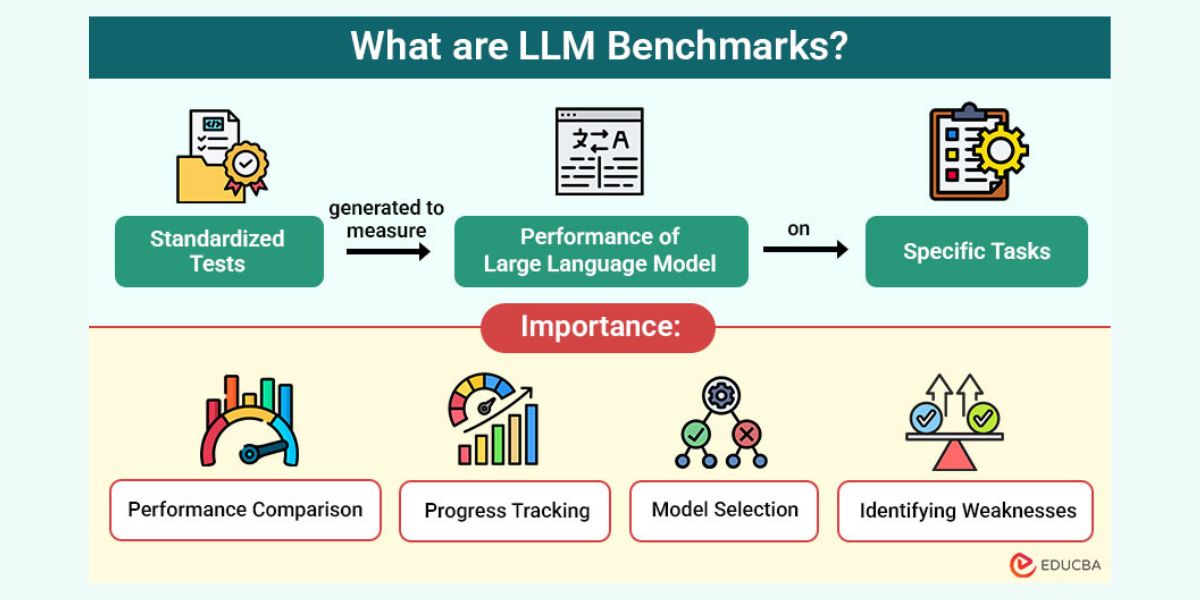
Understanding benchmark meaning gets easier when you categorize benchmarks by what they’re anchored to. Internal benchmarks compare you to yourself over time: rolling averages, prior-year performance, or best-in-class internal teams. External benchmarks compare you to others: competitors, peer sets, or published industry standards. Hybrid benchmarks blend both by normalizing external data to your operating context.
In analytics, you’ll also see baseline benchmarks (pre-change control periods), cohort benchmarks (users acquired in a specific time window), and model benchmarks (a standard algorithm or dataset used to evaluate performance). These are not interchangeable. A cohort benchmark answers “are new users behaving differently?” while a baseline benchmark answers “did the change shift outcomes relative to the prior state?”
Benchmark vs Target vs KPI: The Terms People Confuse
A big reason “benchmark meaning” is searched so often is that benchmark, target, and KPI get mashed together. A KPI is a measure you track (like churn rate). A target is where you want that KPI to land (like churn under 2%). A benchmark is the reference point you use to interpret the KPI (industry churn average, your last-quarter churn, or top-quartile churn in your segment).
This distinction is not academic—it prevents bad incentives. When teams treat a benchmark like a target, they may copy competitors rather than pursue strategic advantage. When they treat a target like a benchmark, they may assume their goal is realistic without checking evidence. Good organizations keep these roles separate: KPIs measure, targets drive, benchmarks contextualize.
Benchmark Meaning in Finance: Indexes, Reference Rates, and Performance Yardsticks
In finance, the benchmark meaning often points to a market reference used to price or evaluate instruments. A classic example is an investment benchmark: an index used to compare portfolio returns. Britannica describes financial benchmarks as typically an index or set of assets used to measure performance of other assets or portfolios. The entire concept of “outperformance” only exists because a benchmark exists.
Interest-rate benchmarks (also called reference rates) matter in lending, derivatives, and mortgages. The European Central Bank explains that interest rate benchmarks are regularly updated, publicly accessible rates used as a basis for many kinds of financial contracts. If you’ve ever wondered why two loans price differently, the benchmark rate plus a spread is often the hidden structure behind the scenes.
Benchmarking in Quality and Measurement: Accuracy, Precision, and Reference Values
Outside business and finance, benchmark meaning shows up in measurement science as the idea of a reference value or method used to judge results. This is where benchmarking becomes less about competition and more about scientific validity. The ISO framework distinguishes concepts like trueness and precision in describing measurement accuracy, emphasizing the relationship between observed results and accepted reference values.
For organizations in manufacturing, labs, or regulated environments, a benchmark is not a motivational target—it’s part of control. If your reference standard shifts, your trendlines can lie. If your measurement method changes, your benchmark may become incomparable. That’s why mature benchmarking includes documentation: how the metric is calculated, how data is cleaned, and what constraints apply.
A Practical Framework: How to Build a Benchmark You Can Trust
The operational benchmark meaning in high-performing teams is “a comparison you’re willing to bet decisions on.” To get there, start by defining the decision the benchmark will influence. Then define the metric (formula, time window, segmentation). Then define the comparison class: internal history, peer group, competitor set, or published industry reference.
Finally, stress-test the benchmark for bias. Ask whether seasonality skews it, whether the sample is representative, and whether the benchmark can be gamed. If it can be gamed, it will be. The benchmark itself should motivate the right behavior—otherwise you’ve built a scoreboard that rewards the wrong game.
Benchmark International: What It Is and Why It Appears With “Benchmark Meaning”
Many users searching “benchmark meaning” also search benchmark international, which refers to Benchmark International, a global mergers and acquisitions advisory firm. Their official site positions the company as an M&A specialist supporting business owners in growth strategies, exit planning, and related advisory services. In other words, it’s a company name that includes the word “Benchmark,” not a special definition of benchmarking.
This matters for SEO and user intent. A reader might arrive expecting a dictionary definition and instead want the firm; or they might want the concept and get branded results. A strong resource resolves both: it explains benchmark meaning clearly, and it clarifies that Benchmark International is a proper noun tied to corporate advisory services, not a technical standard-setting body.
The Benchmark Table: Choose the Right Benchmark for the Right Question
The easiest way to misuse benchmark meaning is to answer the wrong question with the wrong benchmark. Use this table as a selection guide so your benchmark matches the decision you’re trying to make.
| Your Question | Best Benchmark Type | What It Tells You | Common Mistake |
|---|---|---|---|
| “Are we improving over time?” | Internal historical benchmark | Trend and momentum | Ignoring seasonality |
| “Are we competitive?” | Peer/competitor benchmark | Market position | Comparing to mismatched segments |
| “Did this change work?” | Baseline (pre/post) benchmark | Causal signal (with controls) | Forgetting external shocks |
| “Are we top-tier?” | Top-quartile benchmark | Excellence threshold | Setting targets without feasibility |
| “How did we do vs the market?” | Financial index benchmark | Relative performance | Choosing an index that doesn’t match risk |
A good benchmark isn’t the most impressive number—it’s the one that makes your next decision clearer. Once you internalize that, benchmark meaning becomes an operating tool rather than a buzzword.
Benchmarking Without Burning Time: What “Good Enough” Looks Like
Benchmarking can become a time sink if you chase perfect data or endless peer comparisons. In most business contexts, “good enough” benchmarks are those that are directionally correct, consistently measured, and tied to actions. You’re not trying to win a debate—you’re trying to reduce uncertainty so you can move.
A strong practice is to treat benchmarks like products: define the user (decision-maker), define the use case (resource allocation, pricing, product roadmap), define the SLA (how often updated), and define the governance (who owns the metric). This professionalizes the benchmark meaning into an internal service, which is exactly how enterprise teams keep benchmarking from becoming chaos.
How to Write and Speak About Benchmark Meaning With Authority
If your goal is content that ranks and converts, you need to reflect how professionals actually use the term. The benchmark meaning changes slightly by domain, but the semantic spine remains consistent: a reference point used for comparison. Then your content should branch into high-intent subtopics: business benchmarking, KPI benchmarking, performance benchmarks, financial benchmarks, reference rates, and benchmarking frameworks.
It also helps to address the “why now” trend. Teams are benchmarking more because markets are volatile, acquisition costs fluctuate, and AI-driven measurement has increased the number of metrics available. The modern challenge isn’t collecting metrics—it’s choosing the right benchmark to interpret them. That’s why “benchmark meaning” content can win search: it’s not trivia; it’s operational literacy.
Conclusion: The Real Benchmark Meaning Is Better Decisions
The simplest, most useful benchmark meaning is this: a benchmark is a reference point that turns raw numbers into insight. Without benchmarks, metrics are noise. With benchmarks, metrics become direction—showing whether you’re growing, slipping, or simply moving with the market.
Used well, benchmarks create alignment, reduce wasted debate, and make improvement measurable. Used poorly, they create false confidence, bad incentives, and copycat strategy. The difference is method: define the decision, choose the right benchmark type, document the measurement, and update it consistently. Do that, and benchmarking becomes a compounding advantage.
FAQ
What is the simplest benchmark meaning?
The simplest benchmark meaning is a standard reference point you compare against to judge performance, quality, or change over time.
Is a benchmark the same as a KPI?
No—benchmark meaning refers to a comparison reference, while a KPI is the metric itself; you use a benchmark to interpret whether a KPI is strong or weak.
Why do financial professionals use benchmarks?
In finance, benchmark meaning commonly refers to an index or reference rate used to evaluate returns or price contracts, such as comparing a portfolio to a market index.
How do I choose the right benchmark for my business?
Choose a benchmark that matches the decision you need to make; the best benchmark meaning in practice is “a comparison you can act on,” not just an impressive statistic.
What is Benchmark International in relation to benchmark meaning?
Benchmark International is a company name—an M&A advisory firm—so it’s related to the word “benchmark” by branding, not by changing the core meaning.
Can benchmarks be misleading?
Yes benchmark meaning depends on context, and benchmarks mislead when they’re mismatched to your segment, measured inconsistently, or used as targets without validating feasibility.