



Alysa Liu: Comeback Timeline, World Title, Olympic Momentum, and the Skating Skills Behind It
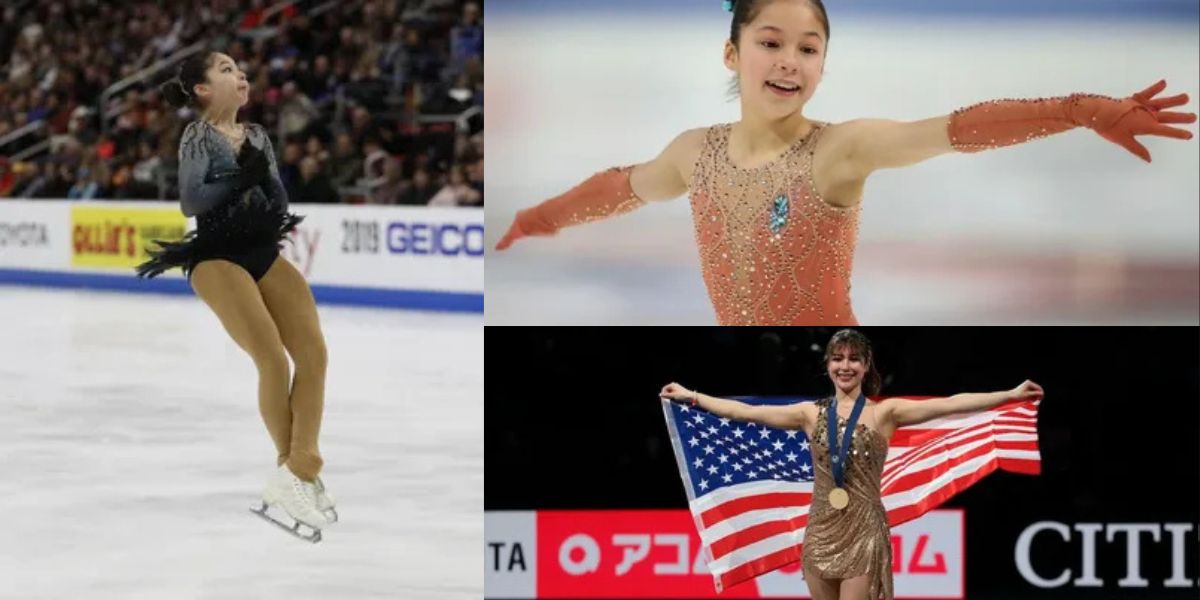
Alysa Liu: Alysa Liu is one of those rare athletes whose résumé is easy to summarize but harder to truly understand. On paper, you see records, podiums, and a headline-making return. In reality, her story is about timing, athlete autonomy, technical evolution, and the modern figure-skating ecosystem—where pressure, identity, and judging incentives are always in motion.
This article is built for readers who want more than a quick bio. You’ll get a clear timeline, a practical breakdown of what made her skating different, and the strategic context that explains why her comeback has mattered beyond any single event.
Why Alysa Liu Matters in the Modern Figure-Skating Conversation
The significance of Alysa Liu isn’t just that she won early and often. It’s that she rose during a transitional era: social-media visibility amplified every competition, technical content was accelerating, and U.S. women’s singles was searching for consistent international leverage in a field dominated by deep pipelines abroad. That combination made her results feel like a bellwether for where American skating could go next.
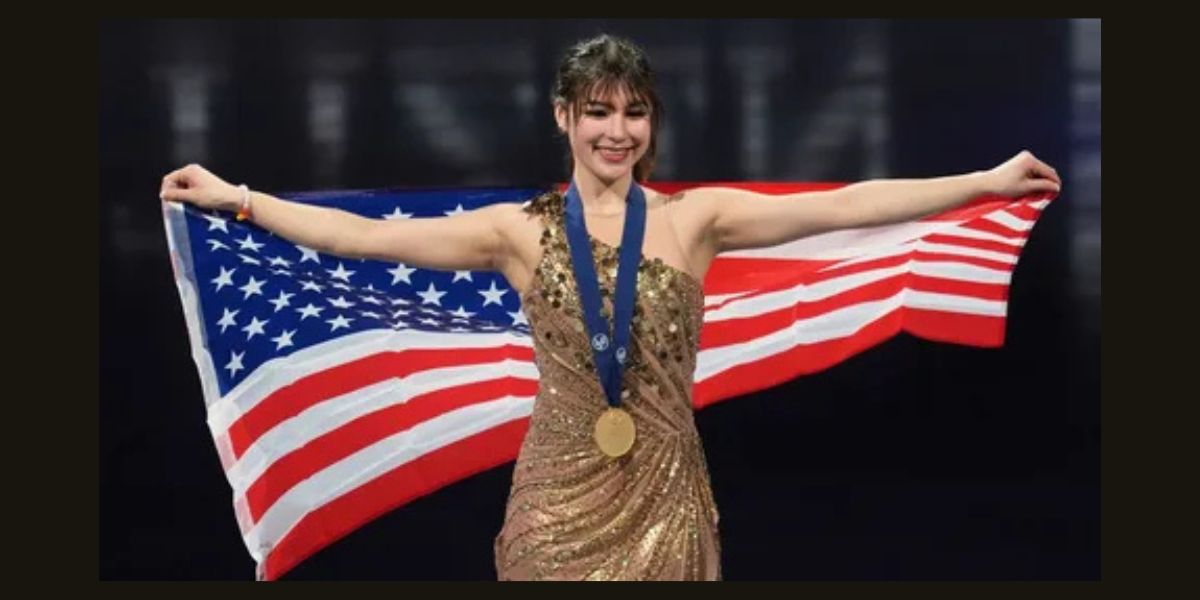
She also matters because Alysa Liu become a shorthand for a broader shift: elite athletes increasingly want careers built on choice rather than obligation. The public often reduces the narrative to “prodigy, burnout, return,” but the deeper value is what her path teaches about sustainable training, motivation, and how a skater can re-enter the sport with a different psychological contract.
The Prodigy Phase: Records, Firsts, and a Nationals Shockwave
Her early competitive ascent landed with unusual force because it wasn’t just a “young champion” story—it arrived with verifiable difficulty. Alysa Liu became the youngest U.S. women’s national champion and followed it with another title, achievements that U.S. Figure Skating continues to list among her signature career accomplishments.
That early era also shaped expectations in a way that’s easy to underestimate. When a skater breaks age records, audiences start projecting a decade-long arc by default: multiple Olympics, a long reign, and a steady upward slope. But figure skating doesn’t behave like that, especially in women’s singles, where growth spurts, injury risk, judging trends, and mental fatigue can bend the timeline quickly.
The Jump Conversation: Triple Axel, Quads, and What “Fully Rotated” Really Means
If you want to understand why Alysa Liu stood out technically, you have to understand what the sport rewards. A triple Axel is not “one more rotation”; it’s a different takeoff family, and it forces precision in axis control, timing, and landing mechanics. Quads, meanwhile, shift the risk profile of an entire program because they raise base value while increasing downgrade and under-rotation exposure.
Her reputation as an aggressive technical skater was built on that frontier spirit—attempting and landing elements that were, for a period, strongly associated with the sport’s next phase. The key nuance is that technical ambition is only valuable when it’s strategically placed: not every difficult jump pays off equally under the ISU Judging System, and smart layouts protect points by minimizing where errors can compound.
Results That Define Her Peak: Worlds, Olympics, and High-Stakes Consistency
A useful way to read her career is through “anchor results”—performances that prove Alysa Liu can deliver when stakes are highest. At the 2022 World Championships, official ISU results show her finishing third in the women’s free skate segment, which helped secure her overall world bronze medal that season.
Then there’s the comeback-era validation: her ISU athlete profile lists her as the 2025 World champion, a result that repositions her not as a former prodigy returning for nostalgia, but as an active title-holder in the current field. Those two points—medaling before stepping away, then winning after returning—are why analysts treat her arc as a true competitive reinvention rather than a brief reappearance.
Retirement at 16: Burnout, Identity, and the Part Fans Often Miss
When a skater steps away young, the public instinct is to treat it as a surprise exit from a career that “should have” kept rising. But the more realistic view is that elite skating can become totalizing: schedule, schooling, travel, and body management can leave very little of life untouched. Team USA has noted that Alysa Liu finished the 2022 season and retired from competitive skating at 16.
The bigger story is what retirement can do strategically. Time away can reduce chronic injury risk, reset motivation, and create emotional distance from external expectations. For certain athletes, leaving becomes the first authentic act of ownership—an internal decision that later makes a return possible because it’s no longer performed to satisfy other people’s timelines.
The Comeback Announcement: What “Return” Actually Looked Like
Her return wasn’t vague or speculative; it had a clear public marker. U.S. Figure Skating announced on March 1, 2024, that Alysa Liu was returning to competitive figure skating and aiming for the 2024–25 season, including a quote from her about taking time off and finding a new perspective.

One line captures the philosophy shift without turning it into melodrama: “It was good for me to take time off from skating… with my newly found perspective.” That’s the kind of statement that matters in elite sport because it signals process, not just ambition—an athlete returning with a different relationship to training, competition, and pressure.
What Changed on the Ice: Maturity, Power, and a Different Kind of Confidence
Comebacks in figure skating usually fail for predictable reasons: timing is off, jump consistency erodes, and competitive nerves return before muscle memory does. What made her return credible is that the conversation quickly shifted from “Is she back?” to “How is she scoring like this now?”—a subtle but meaningful difference in how the field reacted.
Media interviews around the 2026 cycle have emphasized a calmer, self-directed approach, with reporting noting how she’s competing with enjoyment and a sense of control that wasn’t always visible in her earlier years. Technically, “maturity” in skating often shows up as better edge quality and timing: fewer rushed takeoffs, more intentional speed management, and programs that look like decisions rather than survival.
Coaching and Support Systems: The Quiet Mechanics of Elite Stability
High-level skating is often framed as individual brilliance, but stability is usually built off-ice: coaching alignment, training load management, and the ability to make changes without blowing up confidence. A return works best when the skater can focus on a few controllables—clean rotations, consistent run-throughs, smart program construction—without turning every session into a referendum on identity.
Another subtle factor is social environment. When a skater has permission to evolve—style, music taste, personal expression—the “performance” becomes less about pleasing an external template and more about communicating something real. That matters because program components reward clarity of movement and commitment, and it’s hard to sell either when the athlete feels trapped inside a persona that no longer fits.
How Scoring Works Now: A Practical Guide to Winning Points
To understand why certain skaters rise quickly, you need a functional view of the ISU Judging System: base value sets the ceiling, execution quality decides how close you get, and components (skating skills, transitions, performance, composition, interpretation) separate clean skates from medal skates. The trick is that risk has to be priced correctly—one shaky high-base jump can cost more than it earns if it triggers under-rotation calls or disrupts the rest of the layout.
That’s why program design is a business decision as much as an artistic one. Smart teams build “recovery space” into layouts, protecting later elements with sequencing that preserves speed and confidence. When a skater is returning, this matters even more: the goal is to keep scoring stable across competitions so momentum grows, rather than chasing a perfect technical statement that only works once.
Structured Milestones: The Cleanest Way to Read Her Career
If you want a skimmable overview, the most useful approach is to separate “early breakthrough,” “pre-retirement validation,” and “post-return dominance.” U.S. Figure Skating’s athlete bio lists major accomplishments that map well onto these phases, including her world titles and U.S. championship results.
| Career Phase | What It Proved | Representative Milestones (high-level) | Why It Matters for Legacy |
|---|---|---|---|
| Breakthrough years | She could win domestically under pressure | U.S. national titles and record-setting youth achievements | Built name recognition and expectations early |
| Pre-retirement peak | She could deliver on the world stage | World bronze in 2022 (ISU results confirm free skate placement that helped secure bronze) | Validated her beyond “prodigy” framing |
| Comeback era | She returned as a title contender, not a curiosity | ISU profile lists 2025 World champion and major season bests | Rewrote the narrative into reinvention |
The practical insight here is that her story has two peaks separated by a deliberate pause. That structure is increasingly relevant in modern sport, where longevity is less about continuous grinding and more about knowing when to stop, reset, and come back with a plan.
The Business Layer: Media Cycles, Sponsorship Value, and Search Demand
Marketability in figure skating is a blend of results, recognizability, and story clarity. A skater who can be explained quickly—records, retirement, return, titles—generates stronger media packaging, which leads to more consistent coverage, which drives search loops. That’s why her name stays evergreen: each competition season creates natural “update moments” that audiences can attach to.
The other factor is authenticity branding. The modern audience rewards athletes who speak plainly about pressure and motivation, especially when it’s paired with elite performance. When that authenticity is backed by medals, it doesn’t read as coping—it reads as leadership. From a content standpoint, this is why articles that combine timeline, technique, and context tend to outperform simple bios: they answer multiple user intents in one visit.
Milano Cortina 2026: What We Know, What It Suggests, and What to Watch
Recent Olympic reporting has shown her positioned among the leaders in the women’s short program at Milano Cortina, with strong scores and a visibly composed approach that commentators have highlighted. That context matters because it reframes expectations: she isn’t treated as a feel-good return; she’s treated as a real medal threat in a deep field.
The smartest way to watch her in 2026 is through three lenses: technical risk pricing (how aggressive the layout is), component trajectory (whether speed and edges remain strong late), and emotional management (whether mistakes, if they happen, stay isolated). Those are the variables that usually decide Olympic podiums—not hype, not reputation, and not what a skater did at 16.
Conclusion: The Best Way to Understand Alysa Liu’s Career Arc
The cleanest interpretation is that Alysa Liu built a rare two-act elite career: an early rise that proved her technical ceiling, and a comeback that proved her competitive maturity. That combination is why she’s become such a useful reference point for where women’s singles is going—toward more athlete agency, smarter training cycles, and programs built to win points without destroying the person skating them.
If you’re following her now, the most productive mindset is to stop treating her story as an exception and start treating it as a model. In the current sports economy, stepping away can be strategic, returning can be transformative, and the athletes who last are often the ones who learn to make the sport fit inside their lives—not the other way around.
FAQs
Who is Alysa Liu in U.S. figure skating?
Alysa Liu is a U.S. women’s singles figure skater known for record-setting national success, major international medals, and a high-profile return to competition ahead of the 2026 Olympic cycle.
Why did Alysa Liu retire so young?
Alysa Liu retired after the 2022 season at age 16, a decision widely associated with stepping away from the sport’s constant pressure and reclaiming balance before later returning on her own terms.
When did Alysa Liu announce her comeback?
Alysa Liu’s comeback was formally announced on March 1, 2024, when U.S. Figure Skating shared her return to competitive skating and her plan to aim for the 2024–25 season.
What are Alysa Liu’s biggest competitive achievements?
Key achievements for Alysa Liu include a 2022 world bronze medal and a 2025 World Championship title, with her accomplishments listed across official skating sources and confirmed in ISU records.
How is Alysa Liu doing at the 2026 Olympics?
Olympic reporting has described Alysa Liu as one of the leaders after the women’s short program at Milano Cortina, reflecting both strong scoring and a composed competitive approach.