



Walmart Stock Split: What It Means for Your Shares, Walmart Stock Today, and the Walmart Stock Forecast

Walmart Stock Split: A walmart stock split sounds dramatic, but the core idea is simple: the company increases the number of shares outstanding so each share trades at a lower price, while the total value of the company does not change just because of the split. What changes is the “unit size” investors buy and sell, and that affects everything from how your brokerage displays your position to how options contracts are adjusted. For long-term holders, a split is usually more about accessibility and optics than about economics.
This guide breaks down the split mechanics, dates, and real-world implications using clear examples, and then connects that to how people evaluate walmart stock today, the phrase walmart stock price today live that dominates search queries, and what a responsible walmart stock forecast looks like in practice. Nothing here is personal financial advice; it’s an educational framework so you can interpret headlines with confidence.
What a Stock Split Actually Is and What It Is Not
A walmart stock split is a corporate action that increases the number of shares and reduces the share price proportionally. If the split is three-for-one, you end up with three times as many shares, and each share is roughly one-third of the prior price, assuming the market price is otherwise unchanged. Importantly, the split does not create new business value by itself; it reshapes the share count and the per-share price.
What a split is not is a dividend, a buyback, or a change in the company’s cash flows. Investors sometimes confuse a split with a payout because they “receive” additional shares, but those shares are simply the result of re-denominating the equity units. The company’s market capitalization is not automatically higher after a split; any move you see is driven by trading and sentiment, not arithmetic.
The Walmart Stock Split You’re Hearing About: The 2024 3-for-1
The recent walmart stock split was a 3-for-1 forward split announced in late January 2024. Walmart’s official announcement explained that eligible shareholders would receive two additional shares for every one share held, resulting in three shares for each pre-split share.
Walmart also published an investor Q&A stating that the split became effective and shares were distributed as of the close of business on February 23, 2024, for shareholders of record on February 22, 2024, and that trading began on a post-split basis at market open on February 26, 2024.
Key Dates: Announcement, Record Date, Distribution Date, and First Post-Split Trading
If you’re trying to reconcile brokerage timestamps with news articles, the date sequence matters. Walmart’s filings and Q&A confirm the record date as February 22, 2024, the distribution after market close on February 23, 2024, and the start of split-adjusted trading on February 26, 2024.
A short quote that captures the operational moment of the split is from Walmart’s 8-K: “Trading in the Common Stock is expected to commence on a split-adjusted basis on February 26, 2024.”
The Math of a 3-for-1 Split Using Simple Examples
The easiest way to understand a walmart stock split is to treat it like changing a $10 bill into three smaller bills that add up to the same total. If you owned 10 shares before the split, you would own 30 shares after. If the stock traded around $180 before the split, it would trade around $60 afterward, all else equal.
Your total position value stays about the same immediately after the split, ignoring normal market movement. A 10-share position at $180 is $1,800; a 30-share position at $60 is also $1,800. This is why serious analysis focuses on fundamentals and valuation, not on the post-split price looking “cheaper” on a chart.
Why Companies Like Walmart Split Their Stock
Companies typically do a walmart stock split when they want to keep the trading price in a range that feels accessible for retail investors and employees. Walmart’s communications emphasized accessibility, particularly for associates who may buy shares through company programs or prefer smaller-dollar purchases.
There’s also a market-structure angle. Lower per-share prices can modestly increase participation from smaller accounts, sometimes improving liquidity. That doesn’t change the intrinsic value of the company, but it can influence the “microeconomics” of trading by making it easier to buy round lots or build positions over time.
What Changes in Your Brokerage Account After a Stock Split
Right after a walmart stock split, your brokerage should automatically update your share count and cost basis. Many investors notice a temporary “placeholder” period where the share count updates before the average cost updates, or where both update but historical charts appear odd for a day or two. This is usually a back-office synchronization issue, not a problem with your holdings.
Your account statements may show the distribution of additional shares, and your tax lots may be re-labeled to reflect the split ratio. The critical check is that the market value of your position is consistent with the split-adjusted price and new share count, subject to normal price fluctuations.
Cost Basis and Taxes: The Part People Get Wrong
A walmart stock split is generally not a taxable event by itself in the U.S. context; you’re not realizing a gain simply because the share count changed. Instead, your cost basis per share is adjusted downward proportionally so that the total cost basis of the position remains the same. This matters later when you sell, because your realized gain is calculated using the adjusted per-share basis.
Where people get tripped up is when they look at an old purchase price and compare it to the new post-split price without adjusting. If you bought pre-split at a higher number, that number must be divided by the split ratio for apples-to-apples comparisons. If you keep records manually, update your spreadsheet so you don’t misread your performance.
Dividends After a Stock Split: What Actually Happens
Investors often ask whether a walmart stock split “reduces dividends.” The correct framing is that dividends per share are typically adjusted in line with the split ratio, while the total dividend value you receive stays broadly similar, assuming the company keeps the same total payout level. This prevents the split from accidentally tripling the total dividend payment obligation.
What changes is the optics. You may see a smaller dividend per share because you now own more shares. If you care about dividend growth, focus on Walmart’s payout policy, earnings power, and free cash flow, not the post-split dividend figure in isolation.
Options and Derivatives: How Contracts Are Adjusted
If you held options through the walmart stock split, you likely saw your contract terms adjusted so the economic exposure stayed comparable. The Options Clearing Corporation typically adjusts deliverables and strike prices to reflect the new share count and price levels. That can result in non-standard contracts temporarily, depending on how the split is implemented and how brokers display those adjustments.
The practical takeaway is that an options position is not supposed to become “free money” because of a split. The math is designed to preserve equivalence. If something looks strange, read your broker’s corporate actions notice and confirm the contract deliverable, especially if you’re near expiration.
Walmart’s Stock Split History and What It Signals
Walmart has a long history of stock splits, and its investor relations site lists past split dates and ratios, including the February 2024 3:1 split and multiple earlier 2:1 splits across decades.
A historical split record is not a forecast, but it often reflects a pattern: companies with long-term growth and sustained investor demand sometimes split periodically as prices rise. Still, today’s market has changed—fractional shares are common—so the “need” to split is less mechanical than it once was. It’s more about signaling accessibility and maintaining a familiar trading range.
The Behavioral Finance Angle: Why Splits Can Move Prices Anyway
In theory, a walmart stock split should be neutral because it doesn’t change cash flows. In practice, markets are not purely theoretical. Splits can change sentiment, broaden retail participation, and create headline momentum. Some investors view a split as management confidence, even when management is simply rebalancing the share price range.
This is why you sometimes see price movement around a split announcement, record date, or first post-split session. Those moves are not guaranteed and should not be treated as a rule. The right approach is to understand the mechanics so you’re not surprised by normal volatility disguised as “split impact.”
How to Read Walmart Stock Price Today Live Without Misleading Yourself
People search walmart stock price today live because they want a real-time answer, but the trick is interpreting it correctly. Intraday prices reflect liquidity, news flow, and macro sentiment, not just Walmart’s fundamentals. If you refresh a quote every minute, you’re often measuring noise rather than value. The better habit is to pair the live price with context: volume, day range, and the catalyst driving the move.
As of February 19, 2026, the live quote from the market feed shows Walmart trading around $129.31 with notable intraday movement. If you’re comparing that to pre-2024 levels, make sure you’re looking at split-adjusted charts; otherwise, you’ll misread the trendline and overestimate the “drop” that is simply arithmetic.
Walmart Stock Today: What Headlines Are Actually Moving the Tape
To understand walmart stock today, you need to separate company-specific news from broader market risk-on or risk-off behavior. On February 19, 2026, major coverage focused on Walmart’s earnings, guidance, and business momentum, including continued strength in e-commerce and advertising, alongside a more cautious forward outlook.
That blend strong current performance but careful guidance is common for mature mega-cap retailers operating in uncertain consumer conditions. It’s also why a “good quarter” doesn’t always equal a big price jump. Markets price not just what happened, but what management suggests will happen next.
Fundamentals That Matter More Than Any Stock Split
A walmart stock split does not change Walmart’s revenue, margins, or competitive position. The real drivers are operational: grocery share, omnichannel fulfillment efficiency, advertising growth, marketplace execution, and cost discipline. Recent reporting emphasized Walmart’s scale and continued online momentum, while also highlighting how retail competition is evolving, especially with Amazon’s growing sales lead in some measures.
If you’re building a long-term view, focus on measurable levers. Those include same-store sales, e-commerce penetration, delivery speed and costs, shrink management, and the mix shift toward higher-margin businesses like ads and membership programs. These are the inputs that shape earnings power, which shapes valuation over time.
A Practical Framework for a Walmart Stock Forecast
A responsible walmart stock forecast starts with scenarios, not certainties. In a base scenario, Walmart continues to gain share in essentials, grows digital advertising, and improves fulfillment economics. In a bull scenario, higher-margin segments scale faster and operating leverage improves. In a bear scenario, margin pressure, wage inflation, or competitive discounting erodes profitability even if revenue stays strong.
You can anchor these scenarios with analyst expectations, but treat them as reference points rather than truth. The market often reflects a consensus view already. What matters is whether the next set of results consistently beats, meets, or misses the narrative embedded in the price.
What Wall Street Price Targets Suggest, and Their Limits
Many investors use price targets to shape a walmart stock forecast, but targets vary widely and can change quickly after earnings. Some aggregators show average targets in the low-to-mid $130s with a spread up to around $150 on the high end, reflecting generally constructive analyst sentiment at the time of publication.
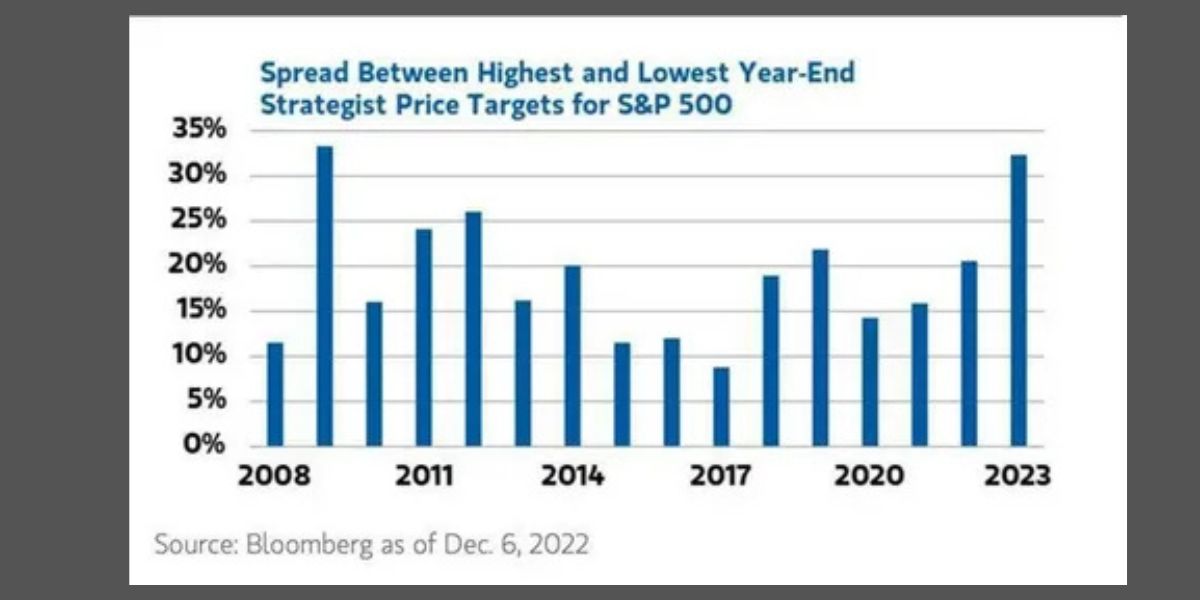
The limit is that targets are often reactive. Analysts update models after guidance, margin commentary, or macro shifts, and they can herd around consensus. Use targets to understand what the market expects, then focus on the few variables that can surprise those expectations: margin trajectory, e-commerce profitability, and the pace of advertising growth.
Stock Split vs Buyback: Two Very Different Share Count Stories
A walmart stock split increases the number of shares without changing ownership percentages. A buyback reduces shares outstanding and can increase earnings per share if earnings hold steady. These actions are often confused because both relate to “shares,” but they have different economic meanings.
Recent coverage noted Walmart announcing a substantial share repurchase authorization alongside earnings commentary. A buyback can be value-accretive or value-destructive depending on the price paid and the company’s alternatives for capital. The split, by contrast, is primarily a structural and psychological adjustment.
The Table Investors Actually Need: Split Mechanics and Investor Implications
Below is a structured breakdown you can use as a quick-reference guide whenever the walmart stock split topic resurfaces in the news.
| Topic | What changed in the 3-for-1 split | What did not change | Investor takeaway |
|---|---|---|---|
| Share count | Each pre-split share became three shares | Your ownership percentage | More shares, same slice of the company |
| Share price | Adjusted to roughly one-third, all else equal | Market cap due to the split itself | “Cheaper” price is not “cheaper” valuation |
| Cost basis | Per-share basis divided by three | Total basis of the position | Track split-adjusted basis to avoid mistakes |
| Dividends | Typically adjusted per share | Total dividend value (assuming policy constant) | Focus on payout policy, not per-share optics |
| Options | Strikes and deliverables adjusted | Economic exposure | Verify deliverables in brokerage statements |
| Charts | Historical prices shown split-adjusted | Long-term trend | Always use split-adjusted charts for comparisons |
This table is also a quick way to avoid the most common confusion: the split changes units, not value. When you interpret walmart stock today, you want clarity on whether the change you’re seeing is arithmetic, sentiment, or fundamentals.
Common Misconceptions About the Walmart Stock Split
A frequent misconception is that a walmart stock split makes the stock “more affordable” in an economic sense. It makes each share cheaper, but it does not make the company cheaper relative to earnings, cash flow, or assets. Valuation is about multiples and growth expectations, not the sticker price per share.
Another misconception is that “splits always lead to rallies.” Sometimes they do, sometimes they do not, and the direction depends on broader market conditions and concurrent company news. If the market is already nervous about consumer spending, a split headline won’t override macro pressure. Treat the split as context, not a catalyst you can count on.
How to Compare Pre-Split and Post-Split Prices Correctly
If you are analyzing walmart stock today versus older historical prices, you must use split-adjusted data. Many charting platforms automatically adjust prior prices so the chart is consistent. If you’re using a manual dataset or a screenshot from an old article, adjust it yourself so you don’t draw false conclusions.
This matters when you see older references like “WMT at $175.” That number may reflect the pre-split market price around the time of the 2024 split, and Walmart’s own split history table references a market price of $175.56 in that period. Post-split, that “level” corresponds to roughly a third, before considering subsequent market movement.
Walmart’s Business Model in 2026: What Actually Powers the Stock
For a meaningful walmart stock forecast, you need a mental model of the business. Walmart is no longer just a big-box retailer; it’s an omnichannel logistics engine with expanding digital revenue streams. Recent coverage highlighted strong online growth, improving delivery utilization, and growing advertising revenue, which tends to be higher margin than core retail.
That shift matters because valuation often improves when the market believes a retailer can become a platform. Platforms have stickier customers, richer data, and more monetization routes. The question investors debate is how far Walmart can push that model without sacrificing its value proposition and without losing margin to fulfillment costs.
Earnings, Guidance, and the Market’s “Expectation Game”
Even when earnings beat estimates, guidance can dominate the reaction. That dynamic showed up in February 2026 reporting where Walmart delivered solid results but set a cautious outlook that some observers considered below expectations.
For anyone tracking walmart stock today, this is the recurring lesson: the market trades the delta between what happened and what was expected. A walmart stock split headline may get attention, but quarterly guidance and margin commentary usually decide whether the stock reprices meaningfully.
Macro Risks That Can Override Company Strength
No walmart stock forecast is complete without macro reality. Walmart is often viewed as resilient in economic slowdowns because consumers trade down and seek value, but that doesn’t mean the stock is immune. Wage inflation, transportation costs, and currency impacts can pressure margins. Consumer weakness can shift mix toward lower-margin categories even if traffic increases.
In 2026, coverage also pointed to a cautious consumer environment in certain income groups, even as Walmart gained share and served more high-income shoppers. The nuance is that “more customers” is not always “more profit” if baskets shrink or promotions intensify.
Technical Signals Traders Watch After Major Corporate Actions
While a walmart stock split is not a technical indicator, major corporate actions can change how charts look to traders. Post-split, prior price levels get rescaled, and psychological “round numbers” appear at different points. That can affect how some market participants place orders, set stops, or interpret support and resistance.
If you care about trading, focus on liquidity, volume spikes, and whether moves are driven by news or by broader sector rotation. If you care about long-term investing, treat short-term technicals as context, not as the core decision driver.
A Mini Case Example: Two Investors, Same Split, Different Outcomes
Imagine two investors who both owned Walmart before the walmart stock split. One checks walmart stock price today live constantly, sees the post-split lower number, and feels as if the stock “dropped,” even if the portfolio value stayed similar. The other understands the split math, ignores the nominal price change, and focuses on whether Walmart’s margins and growth drivers are improving.
The difference is not intelligence; it’s a framework. When investors misinterpret corporate actions, they often make emotional decisions that have nothing to do with fundamentals. A solid split understanding is one of the simplest ways to protect yourself from headline-driven mistakes.
How Long-Term Holders Should Think About Splits and Compounding
Long-term holders should view a walmart stock split as a structural adjustment that can support participation and liquidity, but not as a reason to change a thesis. The thesis should be about earnings power, competitive positioning, and capital return strategy through dividends and buybacks.
If you’re building wealth over time, the win condition is not predicting short-term moves. It’s owning strong businesses at reasonable valuations and letting compounding work. A split can make it psychologically easier to add shares gradually, but the discipline remains the same: buy based on fundamentals, not on nominal price.
What to Watch Next If You’re Following Walmart Stock Today
If you’re monitoring walmart stock today, keep your watchlist focused. Track revenue growth, operating margin, e-commerce growth, and advertising momentum. Pay attention to management commentary about consumer trade-down or trade-up patterns, because that signals mix and profitability. In the current news cycle, observers emphasized online sales strength and expanding higher-margin segments like ads.
Also watch capital allocation. Buybacks, dividends, and reinvestment in automation and delivery capacity can all change the long-run earnings trajectory. These are the forces that matter far more than the headline memory of a walmart stock split that occurred in 2024.
Conclusion: The Walmart Stock Split Was the Easy Part
The walmart stock split is straightforward once you internalize the math: more shares, lower price per share, same ownership and roughly the same position value immediately after. The deeper work is separating that mechanical change from what actually moves Walmart’s valuation: earnings, guidance, margin trends, and the company’s evolving role as an omnichannel and advertising platform.
If you came here for walmart stock price today live, use it as a snapshot, not a verdict. If you came for a walmart stock forecast, treat forecasts as scenario tools, not promises. And if you’re still thinking about the walmart stock split, the most useful takeaway is this: the split was a unit change; the investment case is a business story.
FAQs
What was the walmart stock split ratio and when did it take effect?
The walmart stock split was a 3-for-1 forward split that became effective with share distribution as of February 23, 2024, for shareholders of record on February 22, 2024, with split-adjusted trading starting February 26, 2024.
Did the walmart stock split change the value of my investment?
A walmart stock split does not inherently change your investment value; it increases share count and lowers per-share price proportionally, leaving the overall position value roughly the same immediately after, aside from normal market movement.
How do I interpret walmart stock price today live if I remember pre-split prices?
When you check walmart stock price today live, make sure you’re comparing split-adjusted charts; pre-2024 prices must be adjusted by the split ratio or you may mistake simple arithmetic for a real gain or loss.
What’s a realistic way to form a walmart stock forecast after the split?
A walmart stock forecast should be scenario-based and driven by fundamentals like margin trends, e-commerce profitability, and advertising growth, not by the fact that a walmart stock split changed the nominal share price.
Why do people search “walmart stock today” around earnings and guidance?
People track walmart stock today closely around earnings because price reactions usually reflect guidance and future expectations more than the past quarter, even when results beat estimates.