


Wordle Hint Today: The Definitive, No-Spoiler Strategy Guide to Solving Faster and Keeping Your Streak
Wordle is one of those deceptively simple games that can feel like a confidence boost one day and a brick wall the next. You open it with coffee, fire off a “safe” first guess, and suddenly you’re staring at a grid of gray tiles wondering how your brain forgot every five-letter word it has ever learned.
That’s exactly why “wordle hint today” has become such a high-intent search. People don’t always want the answer—they want a nudge that preserves the fun, protects the streak, and still lets them feel like they solved it.
This guide is built to do that: practical, repeatable, and spoiler-aware. You’ll learn how to choose hint intensity, convert tile feedback into constraints, avoid classic traps, and build a daily routine that steadily improves your solve rate over time.
Why people search “wordle hint today”
Most players aren’t looking for a magic trick—they’re looking for a reliable process. A good hint doesn’t replace thinking; it reduces chaos. When you’re stuck, the problem usually isn’t vocabulary, it’s uncertainty: too many possible words, not enough structure, and the clock in your head screaming “don’t lose the streak.”
The real goal is to make Wordle feel consistent. The best hints don’t tell you the word; they tell you what kind of word it is, what it can’t be, and which move creates the most information next. That’s how you keep the game satisfying while still getting help that actually moves you forward.
How Wordle works in one minute
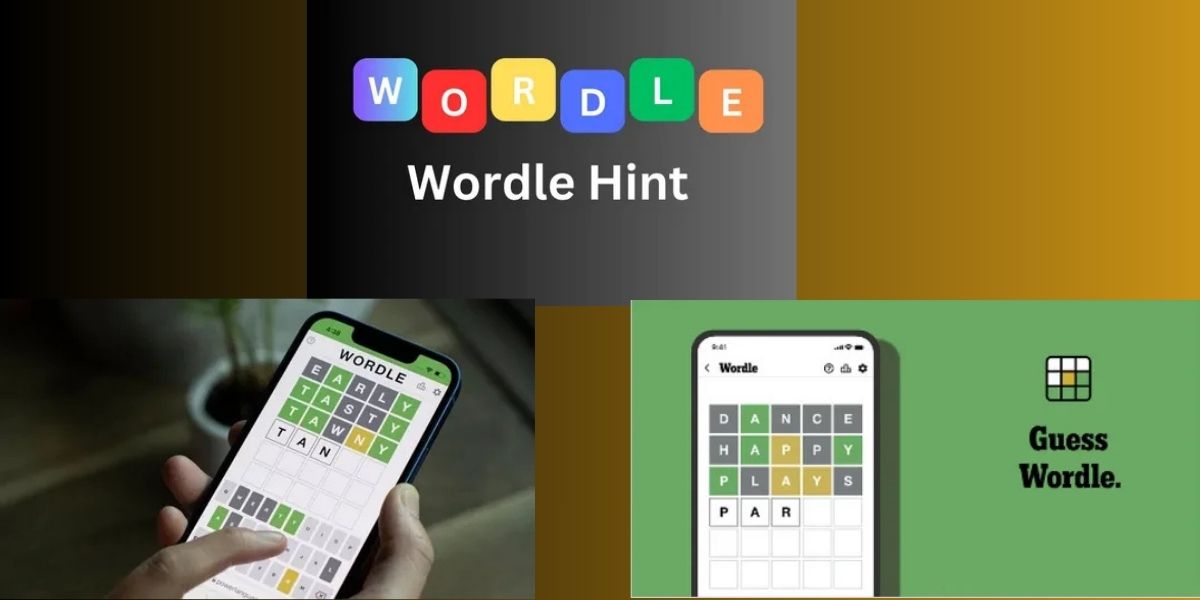
Wordle’s core loop is stable: you guess a five-letter word, and the tiles tell you what matches. Green means a correct letter in the correct position, yellow means the letter exists but is in the wrong spot, and gray means it’s not in the answer (with an important nuance for duplicates). A new puzzle arrives daily, and everyone is solving the same target word.
A few features matter strategically. Wordle includes an optional Hard Mode that forces you to reuse revealed information in later guesses, and it offers accessibility options like color adjustments. Those details are more than settings—they change how you should think about risk, probing, and when to prioritize information over “going for it.”
The “spoiler ladder”: choosing the right level of help
Not all hints are equal, and treating them as equal is how people accidentally spoil the puzzle for themselves. Think in levels: broad category (noun/verb), then letter count confirmations (already known), then a single anchor like “starts with,” then a stronger nudge like “contains two vowels,” and only then the near-spoiler zone (exact letters in exact places you didn’t earn).
Here’s a simple principle that puzzle-makers often repeat in one form or another:
A useful hint narrows the search space without stealing the “aha.”
If your hint removes choice, it removes satisfaction. If it removes noise, it preserves the game. Aim for noise reduction first.
A daily solving routine that keeps your streak alive
Consistency beats brilliance. The fastest way to improve is to run the same mental checklist every day, so you’re not reinventing your approach at guess three with pressure rising. Start with a balanced opener, interpret tiles as constraints, choose an information-rich second guess, and only then shift into “candidate solving” mode.
When you feel stuck and reach for a wordle hint today, plug it into your routine instead of letting it replace the routine. Use the hint to strengthen constraints—confirm a vowel pattern, eliminate a risky ending, or lock one letter position—then continue as if you discovered that detail yourself. The routine is what makes improvement stick.
Start with coverage, not vibes: letters, vowels, and balance
Great first guesses aren’t “lucky,” they’re well-designed. You want common letters and at least two vowels because early turns are about mapping the terrain. A strong opener reduces the solution set quickly, which means fewer coin-flip endings later.
This is where many players unintentionally sabotage themselves: they chase “smart-sounding” words with rare letters too early. Rare letters are valuable later, when you suspect them. Early on, your job is coverage—broad, high-frequency sampling that tells you what kind of word you’re dealing with.
Turn tiles into constraints: think like an editor
Treat your grid like a contract. Green letters are locked positions. Yellow letters are required, but banned from their current positions. Gray letters are excluded—unless duplicates complicate the story. This mental model turns Wordle from “guessing words” into “solving a constrained system.”
If you want to feel instantly more in control, start writing an internal rule set after each guess: required letters, forbidden letters, and positional bans. Editors do this instinctively when they check copy: what must be true, what can’t be true, and what remains possible. Wordle rewards the same discipline.
Pattern awareness: endings, blends, and common traps
Once you have even one or two greens, Wordle becomes a pattern game. English spelling has habits: common endings, frequent consonant clusters, and typical vowel placements. Recognizing those habits helps you generate better candidates faster, especially when the board suggests multiple near-identical options.
The trap is overcommitting to one pattern too soon. Many losses happen because players find a plausible pattern and then keep feeding it guesses that share the same risky structure. Pattern awareness should widen your options, not narrow them prematurely.
Duplicate letters and the “gray lie” problem
Duplicates are where otherwise-solid players get tricked. If you guess a letter twice and the answer contains it once, Wordle may mark one instance as gray even though that letter exists in the word. That can feel like the game lied, but it’s actually giving quantity feedback: extra occurrences beyond the answer’s count won’t be rewarded.
The practical takeaway is simple: when a guess includes repeated letters, interpret the feedback as “how many,” not just “whether.” If you’re unsure, choose your next guess to test quantity with cleaner letter distribution. This prevents you from wrongly eliminating a letter that is genuinely part of the solution.
Hard Mode strategy without self-sabotage
Hard Mode is not just “harder”; it changes the optimal play. Because you must reuse revealed letters, you can’t freely play probe words that test multiple new letters. That means you need to think ahead and avoid stepping into a situation where many words share the same frame and you’re forced into a lottery.
The best Hard Mode players “control the funnel.” They delay committing to ambiguous frames until they’ve reduced the candidate list enough to avoid brute-forcing. If you enjoy Hard Mode, your priority is preventing the classic trap of having four possible answers and only two guesses left.
Using WordleBot and solvers as training wheels
There’s a smart way to use analysis tools and a streak-destroying way. The smart way is post-game review: compare what you did to what a strong solver would do, then extract one lesson. Over time, you internalize the logic and need outside help less often.
The unhelpful way is outsourcing thinking mid-game. If you’re going to use a wordle hint today from a tool, treat it like a coach, not a substitute: ask for a nudged concept (like “try a probe word that tests these letters”) rather than a direct candidate list that collapses the puzzle into a scroll-and-pick exercise.
Starter words: what the research-like approach actually means
“Best starter word” debates are fun, but the truth is less dramatic. A good starter word is one that consistently returns information. That means common letters, good vowel coverage, and avoiding repeated letters early. The exact word matters less than the principles behind it.
Your personal best starter is also shaped by your habits. If you tend to tunnel into one pattern, choose an opener that pushes you toward broader exploration. If you tend to overprobe and waste turns, choose an opener that often locks at least one position. Strategy should correct your bias, not reinforce it.
Second guess discipline: the “information-rich” follow-up
Most Wordle games are won or lost on guess two. After your opener, your second guess should usually maximize new information while respecting what you already learned. That means you often avoid repeating too many unknown letters from guess one unless you have a reason.
A high-quality second guess also reduces the chance of the dreaded “many candidates, few turns” endgame. By guess three, you want to be choosing among a small set of plausible answers, not discovering that you still haven’t tested half the alphabet.
When to burn a “probe” word and why it’s not cheating
A probe word is a deliberate non-solution guess used to test letters and positions. Some players avoid probes because they feel like “wasting” a guess. In reality, probes can save guesses by preventing you from walking into an avoidable trap.
The key is timing. Probe when the candidate set is large and the frame is ambiguous, especially if multiple answers share the same ending. Don’t probe when you’ve already narrowed the solution to a tiny set and you can finish with confident placement. Probe is a tool, not a lifestyle.
Where to find reliable hints online
Reliability is about two things: spoiler control and clarity. The best hint sources let you stop at the level of help you want—gentle clue, partial letter guidance, then answer only if you choose. This “progressive reveal” format protects your experience and keeps you from accidentally ruining the puzzle with a stray scroll.
Also look for sources that explain why a hint works. If a site just drops letters, it helps today but teaches nothing. If it explains patterns, elimination logic, and why certain guesses are strong, you’re building skill. In other words, your ideal hint source makes tomorrow easier, not just today solvable.
What changed after Wordle joined NYT Games
Wordle began as a project by Josh Wardle and later moved under The New York Times Games, which has published it since 2022. That matters because NYT Games also built a broader ecosystem around daily puzzles, analysis tools, and structured access across platforms.
One major shift was the formal introduction of an archive experience for past puzzles. NYT announced a Wordle archive rollout with subscriber access to a large set of previous games, turning Wordle from a purely “one-and-done” daily ritual into something closer to a practice library.
Wordle hint today cheat sheet table
If you want help without regret, decide in advance what kind of hint you’re allowed to use. The fastest way to protect the fun is to standardize your “hint diet,” so you don’t jump from “tiny nudge” to “full spoiler” just because guess four feels stressful.
| Hint style | What it gives you | Best time to use | What you still must do | Spoiler risk |
|---|---|---|---|---|
| Category hint | Noun/verb/adjective vibe | Early confusion | Build candidate set | Low |
| Vowel guidance | Count or type of vowels | Guess two or three | Place letters logically | Low |
| Anchor letter | First letter or one confirmed letter | When options feel endless | Solve positions | Medium |
| Pattern hint | Ending family or common cluster | When frame emerges | Choose between candidates | Medium |
| Elimination hint | “Not one of these letters” | When you keep looping | Re-plan probes | Medium |
| Near-spoiler | Multiple letters and positions | Late-game panic | Minimal—mostly fill in | High |
| Full answer | The solution | Only if you’re done | None | Total |
Once you adopt a fixed ladder, you’ll notice something: you need fewer hints over time because your decision-making improves. The table isn’t just a reference—it’s a training plan disguised as a cheat sheet.
Helping friends: share hints without spoiling
If you play with friends or family, the social side of Wordle is half the fun—until someone blurts out a letter and the whole group groans. The solution is to share process hints rather than content hints. Talk about strategy moves (probe vs. commit), letter-frequency thinking, or how to interpret duplicates, and you’ll help without stealing the moment.
When someone explicitly asks for a wordle hint today, agree on the hint level first. Offer a category clue, then pause. If they want more, move one rung up the ladder. This keeps the puzzle collaborative while still respecting each person’s preferred difficulty.
Conclusion
Wordle rewards calm, structured thinking more than vocabulary flexing. If you treat each grid like a set of constraints—and you commit to an information-first routine—you’ll solve more consistently, with fewer frantic late guesses and far fewer streak-ending coin flips.
The best part is that improvement compounds. A wordle hint today should be a gentle steering wheel, not an autopilot. Use hints to narrow uncertainty, keep your process intact, and you’ll find that “today’s” puzzle feels less like a daily ambush and more like a daily win.
FAQ
How do I use a wordle hint today without spoiling the answer?
Pick a hint level before you look: start with category or vowel guidance, then only escalate to an anchor letter if you’re still stuck, keeping the answer hidden unless you truly want it.
What’s the most effective first guess strategy for Wordle?
Use a starter with common letters and at least two vowels, because early turns are about gathering information quickly rather than chasing a clever-looking word.
Is Hard Mode actually harder, or just different?
It’s different in a way that can feel harder: you must reuse revealed letters, so planning matters more and you can’t freely play probe words to test new letters.
Why do I keep losing when I have the right pattern like _EAT or _OUND?
Those patterns often have many valid candidates, so you need a probe guess to eliminate multiple options at once instead of burning turns on near-identical guesses.
Where can I find a reliable wordle hint today that’s spoiler-controlled?
Look for sources that use progressive hints you can stop reading at any point, so you get help in layers and avoid accidentally seeing the full solution.