


NBA Trades: The Definitive Guide to How Deals Really Happen Why They Work, and How to Read Rumors Like a Pro
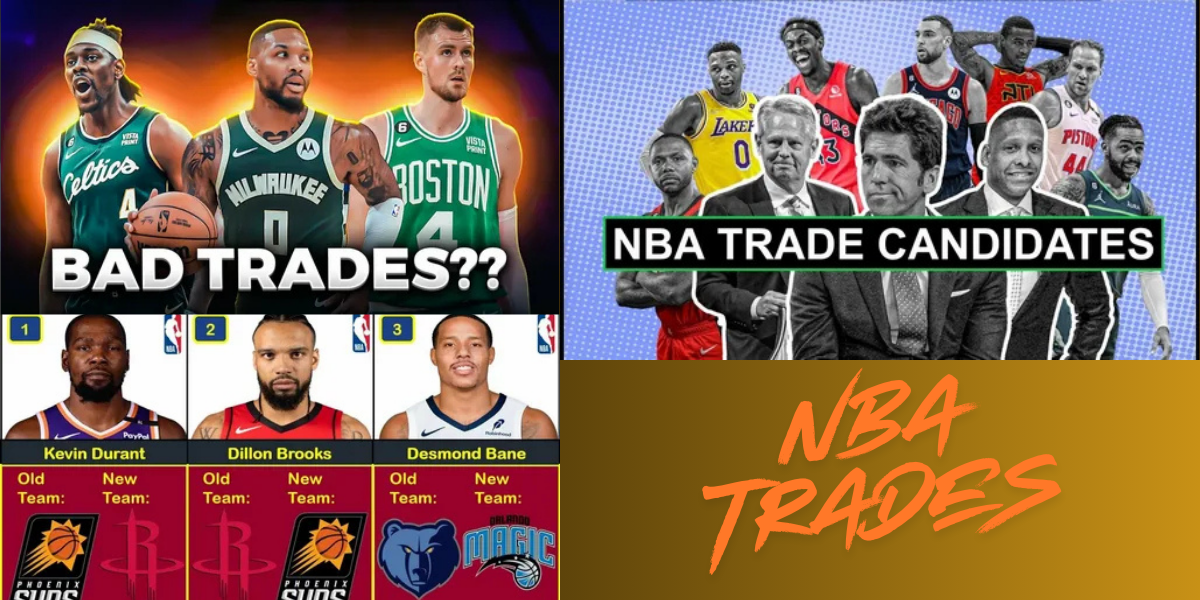
NBA trades are the league’s most powerful roster-building tool and its loudest storytelling engine. One week you’re watching a team “build patiently,” the next you’re reading a four-team transaction and wondering how the cap math even works. That confusion is normal—because the modern CBA is designed to shape behavior, not to be intuitive, and front offices increasingly treat roster construction like a portfolio, not a lineup.
This guide turns nba trades into a clear system: the real rules that drive deals, the economic incentives behind timing, the mechanics that make “impossible” trades possible, and the practical way to separate credible reporting from trade-machine noise. For live context and an authoritative record of what actually happened this season, the league’s official trade tracker is the cleanest public reference point.
Why NBA Trades Happen in the First Place
At a strategic level, nba trades happen because teams are chasing one of three outcomes: increasing championship equity, improving future flexibility, or resetting the roster’s risk profile. A contender might trade a pick-heavy package to fix a playoff weakness; a rebuilding team might trade veterans to increase its draft and cap optionality; and a “stuck” team might trade to change its contract mix and reopen paths it had closed.
The modern twist is that the CBA’s apron structure makes “staying the course” costly for some teams. When you’re near an apron or hard-cap trigger, you may have the talent to compete but not the transactional freedom to add. That pushes teams toward earlier decisions, more creative constructions, and multi-team routing that turns a simple need into a complex exchange.
The One Deadline Rule That Shapes the Entire Market
If you want to understand nba trades, you need one calendar anchor: the trade deadline. For 2025–26, the NBA lists the deadline as Feb. 5, 2026, at 3 p.m. ET, and that single moment compresses months of negotiation into a day-long sprint.
The deadline’s power isn’t just urgency—it’s liquidity. More teams are still “in it,” more contracts are still movable, and the incentives are clearest because teams can see their season outcomes more accurately. After the deadline, the market doesn’t disappear, but it changes shape: it becomes more about offseason sign-and-trade mechanics, draft-night movement, and long-term cap planning.
Trade Trackers: How to Separate “Official” From “It’s Going Viral”
The fastest way to avoid misinformation is to start with official or high-standard transaction logs. The NBA’s trade tracker provides deal summaries, while NBA.com’s transaction pages and reputable outlets’ trackers help confirm what’s real when social media starts remixing details.
This matters because nba trades are unusually vulnerable to “telephone effect.” A rumor about talks becomes a rumor about agreement, then becomes a rumor about final terms, and by the time you see the third screenshot you’re reading a different deal entirely. Anchoring to official trackers lets you interpret why a deal happened instead of wasting time arguing about whether it happened.
Salary Matching: The Hidden Physics Behind Most Deals
Fans often judge nba trades by talent exchange, but teams are constrained by salary matching rules that can make a logical trade illegal. Matching rules change depending on cap position, and the newer CBA layers in apron-related restrictions that tighten how much salary certain teams can take back. When you see “extra players thrown in,” that’s often not basketball logic—it’s compliance logic.
If you want a reliable place to learn the matching framework and the exceptions that interact with it, Larry Coon’s CBA FAQ remains one of the most-cited public explainers in the cap community.
Aprons and Hard Caps: Why Some Teams ‘Can’t’ Make the Trade You Want
The apron system is one of the biggest reasons nba trades feel different now than they did a decade ago. Apron placement can limit the types of exceptions a team can use, how it aggregates salaries, and whether it can take back more money than it sends out—meaning two teams can want the same deal and still be blocked by rule triggers.
For readers who want a practical view of apron thresholds and team status, cap-tracking sites summarize apron rules and team positioning in ways that help you understand why one front office is aggressive while another stays quiet.
Trade Exceptions: The Tool Most Fans Hear About but Rarely Understand
A traded player exception (TPE) is essentially a permission slip that can allow a team to acquire salary later without sending matching salary back, but it comes with strict limits. TPEs are size-limited, time-limited, and heavily shaped by how the trade is structured. That’s why you’ll see teams talk about “creating flexibility” in a deal that looks lopsided in the moment.
NBA.com’s own explainer content covers trade-related mechanisms like exceptions at a high level, which is useful for connecting the term you hear on broadcasts to the actual roster-building intent behind it.
Multi-Team Trades: Not Chaos, Just Efficient Routing
The explosion of multi-team nba trades is not just teams being dramatic. It’s a direct result of constraints: one team has a player, another has the picks, a third has cap space or a trade exception, and a fourth has a positional need. Multi-team routing lets each participant solve a different problem while moving the same central pieces.
You can see this trend reflected in how modern seasons are documented: transaction logs increasingly include three-team and larger structures, because they’re often the cleanest way to satisfy matching, apron rules, and incentive alignment at once.
Draft Picks in Trades: Protections, Swaps, and Why ‘First-Rounder’ Isn’t One Asset
Draft capital is the most flexible currency in nba trades, but it’s also the most misunderstood. A “first-round pick” can be unprotected, lightly protected, heavily protected, or tied to conveyance rules that turn it into seconds if the pick doesn’t transfer. A pick swap can be low-value for years and then suddenly become a franchise-level advantage if the other team declines.
If you’re writing or publishing trade content, this is where you build authority: explain protections clearly and describe outcomes, not just labels. The moment you show readers that picks have probability and conditionality, you’ll outperform generic “three firsts” headlines.
What ‘Fair Value’ Actually Means in NBA Trades
“Fair value” in nba trades is rarely symmetrical in player talent. It’s symmetrical in objectives. A rebuilding team values future optionality; a contender values present on-court impact; a tax team values cost and flexibility; and a capped-out team values any path that doesn’t trigger new restrictions. The same player can be worth wildly different packages depending on who’s buying and why.
That’s why trade grades age poorly. A deal can be “lost” on day one and “won” two years later if the picks land high, if the cap environment changes, or if the acquiring team uses the move as a stepping-stone to a second deal.
How Front Offices Talk About Deals When They’re Being Honest
The most revealing quotes around nba trades aren’t the dramatic ones; they’re the ones about process. One GM-style sentiment you’ll hear repeatedly is that teams “work the phones” but don’t want to move out of panic, because the opportunity cost of a bad deal is years of lost flexibility. Sacramento’s GM Scott Perry expressed that mentality directly—always exploring improvements, but staying prudent and opportunistic rather than acting out of panic.
When you interpret rumors through that lens, you start to see why so many teams stand pat. Silence doesn’t mean inactivity; it often means the market price didn’t justify the long-run cost, especially under stricter apron and matching environments.
The Rumor Economy: How NBA Trades Get Distorted Before They Happen
Rumors are a feature, not a bug, of nba trades. Agents use media to shape leverage, teams leak to test market reaction, and third parties amplify anything that sounds plausible. The result is that “talks” can be real while still being meaningless—because talks happen all the time, and most of them end with “no.”
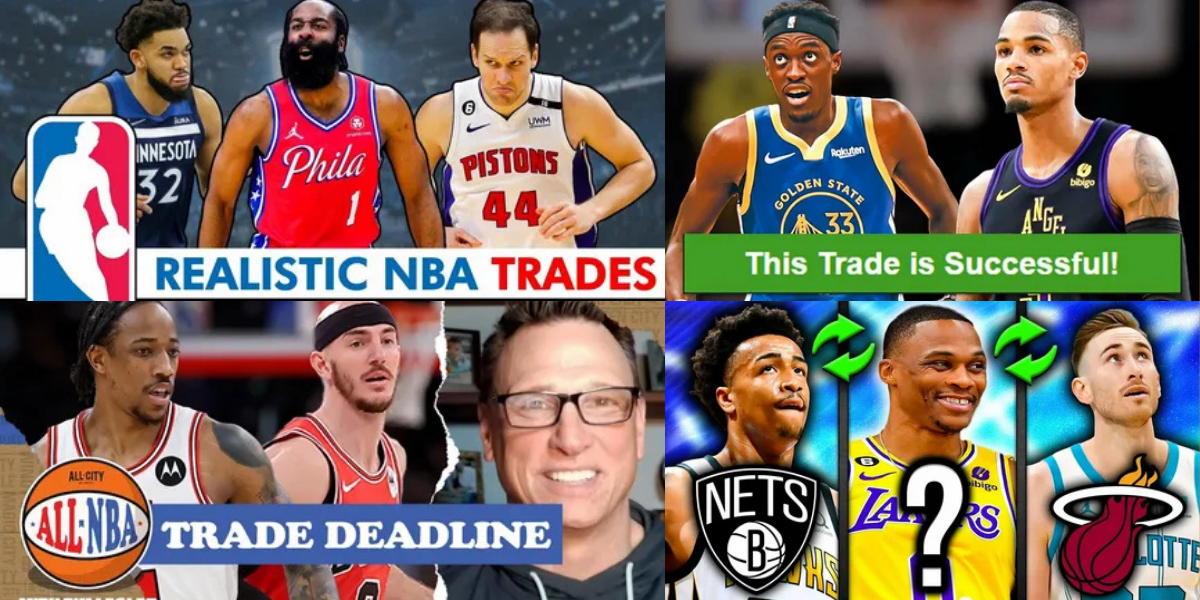
Your advantage as a reader or publisher is to ask one question: what is the incentive alignment? If the rumor doesn’t explain why both teams would accept the risks—cap constraints, roster holes, long-term pick exposure—it’s usually engagement-first content.
A Practical Table: The Core Types of NBA Trades and What They Usually Signal
The easiest way to make nba trades feel understandable is to categorize them by intent. The table below is designed for fast interpretation without losing nuance.
| Trade Type | Primary Team Goal | Typical Cost | Common Misread |
|---|---|---|---|
| Consolidation (star chase) | Raise playoff ceiling | Multiple firsts + salary ballast | “Overpay” without acknowledging scarcity |
| Rebalancing (fit/role) | Fix lineup issues | Mid-tier player + seconds | “No big names, so it’s pointless” |
| Salary/Tax management | Avoid restrictions | Rotational talent for expirings | “Dumping talent” without cap context |
| Rebuild liquidation | Increase optionality | Veterans for picks | “Tanking” rather than asset cycling |
| Draft-night movement | Improve pick quality | Future picks/seconds | “Random” instead of board-driven |
A strong trade breakdown shows readers which category a deal fits, because category explains motive—and motive explains why a team paid what it paid.
How to Read a Trade Like a Basketball Analyst, Not a Comment Section
The basketball layer of nba trades is about role fit, not raw points. The first question is always, “What problem does this solve in a playoff series?” That could be rim pressure, shooting gravity, defensive matchups, secondary creation, or bench stability. If the acquiring team can’t describe the solved problem, it probably bought a name, not a solution.
The second question is continuity cost. Every incoming player consumes touches, minutes, and chemistry bandwidth. That’s why some teams skip the deadline: the on-court downside of disruption can be larger than the marginal talent gain, especially if the roster is already winning.
How to Read a Trade Like a Cap Expert Without Getting Lost
The cap layer of nba trades is about constraints and future pathways. You’re tracking whether a team triggered a hard cap, whether it preserved exceptions, how it shaped its future salary sheet, and whether it kept its ability to aggregate contracts later. This is where “minor” trades can be major because they open or close future moves.
If you want a simple habit that improves accuracy fast: always ask what the team’s next transaction is. Many deadline deals are not endpoints; they’re setup moves for the offseason, a draft-night jump, or a later consolidation.
Where NBA Trades Are Heading Next
The league is moving toward more complexity, not less. Apron effects encourage creativity, and the ongoing premium on versatile wings and two-way creators keeps prices high. Meanwhile, more teams are adopting portfolio thinking: protect optionality, diversify pick outcomes, and avoid all-in bets unless the path to contention is real.
That’s why nba trades will continue to cluster into big moments—deadline day, draft night, early free agency—because those are the moments when constraints loosen, information is freshest, and markets are most liquid.
Conclusion
NBA trades are not random chaos—they’re structured problem-solving under a dense rulebook. When you focus on incentives, constraints, and category intent, you can predict which rumors are likely to die, which teams are structurally stuck, and which deals make sense even if they feel uneven on talent at first glance.
For creators and publishers, the winning strategy is to teach the system while covering the drama. Use official trackers for facts, use cap explainers for mechanics, and use basketball fit for narrative clarity—because the best trade content doesn’t just tell readers what happened, it shows them how to understand the next one.
FAQs
What counts as an “NBA trade”?
An nba trades transaction is an exchange of player contracts, draft rights, and/or picks between teams that must comply with CBA rules like salary matching, roster limits, and timing restrictions.
Why do some NBA trades include extra players who barely play?
Many nba trades include “salary ballast” players primarily to satisfy matching rules and apron constraints, not because the acquiring team needs them on the court.
Where can I verify trades without relying on social media?
For official confirmation of nba trades, the NBA’s official trade tracker is one of the cleanest sources, and major outlets maintain updated deal logs for cross-checking.
What is a trade exception and why does it matter?
In nba trades, a traded player exception can allow a team to acquire salary later without sending matching salary back, but it’s limited by size, timing, and CBA rules.
Why do trade rumors explode right before the deadline?
Because the deadline concentrates incentives and liquidity, nba trades rumors spike as teams use leaks, exploratory calls, and market tests to discover real prices before time runs out.
How can I quickly tell if a trade rumor is low quality?
If nba trades rumor content has no credible sourcing, ignores salary matching/apron constraints, and can’t explain both teams’ incentives, it’s usually engagement-first speculation rather than actionable reporting.