



Phoenix Suns vs Timberwolves Timeline: 25 Dramatic, Jaw-Dropping, Rivalry-Defining, Can’t-Miss Turns

Phoenix Suns vs Timberwolves Timeline: The phoenix suns vs timberwolves timeline is more compelling than it first appears, because it is not built on one long, uninterrupted feud. It is built on changing eras, different basketball identities, and a dramatic reversal in power that turned a historically one-sided matchup into one of the West’s more intriguing modern stories. Phoenix entered the league in 1968 and built decades of relevance, including Western Conference titles in 1976, 1993, and 2021. Minnesota, by contrast, officially began play in 1989, developed more slowly, and needed time before it could become a true postseason threat. That gap in organizational age and success shaped the early relationship between the franchises.
What makes this matchup worth studying now is the contrast between the long view and the recent one. Phoenix still owns the overall regular-season edge, with 85 wins to Minnesota’s 48 in 133 regular-season meetings, but the playoff history belongs entirely to the Timberwolves after their 4-0 first-round sweep in 2024. Add in the 2025-26 season, when the teams split four regular-season meetings through March 18, 2026, and you get a rivalry that suddenly feels less like a footnote and more like a live Western Conference subplot with real emotional memory attached to it.
What Is the Full Timeline of Phoenix Suns vs Minnesota Timberwolves Rivalry?
At the broadest level, the rivalry unfolds in distinct phases rather than one continuous arc. The opening chapter belongs to Phoenix, which was already an established franchise when Minnesota entered the NBA. The Suns were competitive early, reached the 1976 NBA Finals, became a steady playoff team in the late 1980s and early 1990s, then surged again in the Charles Barkley and Steve Nash eras. Minnesota, meanwhile, spent its first years trying to establish an identity, then found its first true franchise center of gravity in Kevin Garnett before later rebuilding around Karl-Anthony Towns and Anthony Edwards. That difference in institutional maturity is the key to understanding why Phoenix built the larger historical win total while Minnesota’s most memorable blow came later.

The modern appeal of the rivalry comes from the way those phases now overlap. The older story says Phoenix is the more accomplished, more established franchise. The newer story says Minnesota has delivered the matchup’s single biggest statement with the 2024 sweep, then followed it with a competitive 2025-26 season series split through March. So when people ask for the full history, they are really asking two questions at once: who owned the past, and who seized the emotional center of the matchup most recently? The answer is that both franchises can credibly claim a different part of the timeline.
The rivalry begins with an expansion team and an established Western power
The first meetings show how uneven the relationship was at the beginning. Minnesota’s history page notes that the Timberwolves’ first game was played on November 3, 1989, after the club had been named in 1986 and officially brought into the league ahead of its inaugural season. Less than two months into that debut campaign, Phoenix beat Minnesota 118-101 on December 29, 1989, and then won again 120-99 on March 23, 1990. Those results mattered not because they were instantly rivalry-defining, but because they established the original hierarchy: Phoenix was a seasoned Western club; Minnesota was an expansion side learning what NBA life looked like.
That opening imbalance influenced the next several seasons. Expansion teams almost always begin with roster limitations, shallow continuity, and organizational trial-and-error, while Phoenix already had structure, coaching stability, and a competitive base that had recently pushed into the conference finals. In practical terms, that meant the Suns often approached Minnesota as a game they expected to control, while the Timberwolves were still trying to prove they belonged. That is why the earliest portion of the phoenix suns vs timberwolves timeline feels less like a rivalry in the emotional sense and more like a record of one franchise testing the patience and resilience of another that had only just arrived.
Why the early 1990s mostly belonged to Phoenix
Phoenix had the stronger basketball ecosystem in the early 1990s, and that showed up both in standings relevance and in the tone of the matchup. Britannica’s franchise history notes that the Suns, powered by Kevin Johnson and Tom Chambers, reached the conference finals in 1989 and 1990 and then extended that momentum into a run of 13 consecutive playoff berths. Teams with that kind of continuity usually turn matchups with younger organizations into habits, and that is essentially what happened here. Phoenix was not just more talented at the top; it was more coherent, more experienced, and more predictable in the good sense of the word.
That context matters because rivalries are rarely born from logo versus logo. They are born from timing. When one team is stable and the other is experimental, the games can still be competitive on a given night, but the rivalry usually lacks mutual menace. For much of the early decade, Phoenix represented the Western Conference mainstream while Minnesota was still trying to graduate from novelty to legitimacy. Even today, the all-time regular-season record reflects that imbalance, with Phoenix maintaining a significant advantage despite the Wolves’ modern resurgence.
The Barkley years gave Phoenix a higher ceiling and a bigger shadow
When Phoenix traded for Charles Barkley in 1992, it raised the franchise from strong to championship-level. Britannica notes that Barkley won MVP in his first season with the Suns, helped Phoenix reach the 1993 NBA Finals, and pushed the team into a higher tier of league relevance. NBA historical coverage still frames the 1993 Suns as one of the best title contenders of that decade not to finish the job. That matters to this matchup because it deepened the perception that Phoenix belonged among the West’s serious powers, while Minnesota was still several years away from finding its own generational anchor.

In rivalry terms, Barkley’s Suns cast a long shadow. They were not just winning games; they were shaping the emotional expectation around the franchise. Phoenix’s standard became “contend or disappoint,” while Minnesota’s standard was still “improve and survive.” When two teams carry different emotional benchmarks, their head-to-head meetings do not feel equal, even if both are technically conference rivals. That asymmetry is one reason older fans often remember the Suns as the matchup’s natural authority figure and the Wolves as the late-arriving disruptor. It took years for Minnesota to build enough internal weight to change that perception.
Kevin Garnett changed Minnesota from expansion project to real threat
Minnesota’s side of the rivalry cannot be understood without Kevin Garnett. NBA archival coverage notes that by his second year he was an All-Star headed to the playoffs, and over time he became the player who gave the Timberwolves legitimacy, edge, and national relevance. Official NBA coverage of Minnesota’s conference-finals history highlights 2004 as the defining Garnett season, when he won MVP and led the Wolves to their first Western Conference finals. Even before that peak, Garnett had already changed the way opponents felt about playing Minnesota. The team was no longer a developmental curiosity; it had an emotional engine.
That development altered the phoenix suns vs timberwolves timeline in a subtle but important way. Phoenix may still have owned more of the record book, but Minnesota finally had a franchise face who could make any meeting feel heavier. Garnett brought not only production but identity: defensive menace, emotional intensity, and a refusal to let Minnesota feel like a soft opponent. Rivalries often need a personality before they need a statistic, and Garnett provided exactly that. Even if the Suns remained the older and often more accomplished organization, the Wolves stopped feeling peripheral once Garnett arrived at full force.
Steve Nash and the Suns changed how the matchup looked and felt
The Steve Nash era matters because it changed not just Phoenix’s quality, but its visual identity. Britannica notes that Phoenix reacquired Nash in 2004, paired him with Amar’e Stoudemire and Shawn Marion, and turned into an exciting, high-scoring team built on pace and offensive creativity. That version of the Suns did not win a title, but it left a massive stylistic footprint on the league. It also made Suns games, including those against Minnesota, feel like events built around flow, shot-making, and tempo rather than brute half-court control.
That shift matters in rivalry history because style affects memory. Fans do not only remember who won; they remember how the games felt. The Nash Suns made the matchup more watchable, more fluid, and more associated with offensive artistry. Minnesota, depending on the season, often looked more rugged, more interior-driven, or more improvisational by comparison. Those stylistic contrasts helped preserve interest in the rivalry even when it was not nationally central. The game may not always have carried playoff stakes, but it often carried a visible clash of basketball philosophies.
The rivalry cooled in the 2010s, but the foundations quietly changed
Not every rivalry grows in a straight line, and the 2010s were proof of that. Phoenix’s history shows a sharp swing from the Nash years to a rebuilding phase, including a strong but playoff-missed 2013-14 season, followed by three consecutive 20-win seasons. Minnesota’s path was similarly uneven: after the Garnett era closed, the franchise rebuilt around Kevin Love, later around Karl-Anthony Towns, and ended a 14-year playoff drought in 2017-18 before slipping again. In other words, the decade contained talent, but not enough simultaneous stability for the rivalry to fully ignite.
Yet this quieter decade did important unseen work. It set up the stars and organizational resets that would later revive the matchup. Phoenix found Devin Booker and eventually re-entered contender territory. Minnesota drafted Anthony Edwards into a structure that already included Towns and later added Rudy Gobert. Rivalries often need dormant periods because those periods allow both franchises to reinvent themselves without the pressure of an active feud. By the end of the 2010s, the old Suns-Wolves storyline had lost heat, but the ingredients for a sharper new chapter were already in place.
Devin Booker and modern Phoenix restored the franchise’s big-stage ambition
Phoenix’s modern resurgence gave the matchup fresh stakes because it restored the Suns’ sense of urgency. Britannica notes that the Suns nearly made the playoffs in 2019-20, then took a major leap after acquiring Chris Paul, reaching the 2021 NBA Finals and later posting a franchise-record 64 wins in 2021-22. Official NBA playoff coverage confirms that Phoenix returned to the Finals in 2021 for the first time since 1993. That run re-established the Suns as a top-tier Western franchise rather than a nostalgic name living off old eras.
Booker’s importance here is not just statistical. He symbolizes Phoenix’s continuity from rebuild to contention. When a rivalry features a player like Booker on one side, every meeting gains an identifiable emotional center. Fans are no longer discussing uniforms or geography; they are discussing whether a current star can bend the game. That is part of why the matchup became more meaningful again in the early 2020s. Phoenix was no longer an organization trying to find itself. It was an organization with expectations, a postseason clock, and a star whose reputation rose or fell under playoff-level scrutiny.
Anthony Edwards and the new Wolves gave Minnesota a modern star axis
Minnesota’s new era took shape around Anthony Edwards. Britannica’s team history notes that Edwards and Towns drove the Wolves back to relevance in 2021-22, while official NBA coverage of Minnesota’s conference-finals history shows how much stronger the team looked by 2023-24, when it went 56-26, posted the second-most wins in franchise history, and featured major award-level performances from Rudy Gobert and Naz Reid. Edwards’ own NBA bio emphasizes how large his offensive role had already become by the end of 2023-24.
This is where the rivalry stopped being mostly retrospective. Minnesota now had a star who could dominate not only regular-season highlights but playoff narrative. That distinction matters. Plenty of players make a matchup interesting; far fewer make it feel dangerous. Edwards did that, especially once the Timberwolves’ defense, physicality, and confidence sharpened around him. The Wolves began to look less like a talented but inconsistent roster and more like a group that could impose terms on elite opponents. That shift made future meetings with Phoenix feel less decorative and much more consequential.
The 2023-24 regular season became the trailer for a dramatic postseason
Before the playoff shock came the regular-season warning signs. ESPN’s 2023-24 team comparison page shows that Phoenix beat Minnesota all three times in the regular season: 133-115 on November 15, 97-87 on April 5, and 125-106 on April 14. The final one was especially meaningful because Bradley Beal scored 36 points and the result helped set up the first-round playoff rematch. On the surface, that 3-0 sweep suggested Phoenix had solved Minnesota’s problems and entered the postseason with psychological leverage.
But this is exactly why the rivalry became so fascinating. The regular season created one expectation, and the playoffs destroyed it. Phoenix’s clean sweep of the season series made the Wolves look vulnerable to the Suns’ spacing, shot-making, and late-season rhythm. It also encouraged a common reading that playoff basketball would simply magnify the same matchup advantages. Instead, Minnesota flipped the script almost immediately. In hindsight, those three Suns wins matter not because they predicted the playoff result, but because they made the eventual reversal feel much more violent and memorable.
The 2024 playoff sweep rewrote the rivalry’s emotional center
No event has changed this matchup more than the 2024 first-round series. Official NBA playoff coverage shows Minnesota sweeping Phoenix 4-0, capped by a 122-116 Game 4 win in which Anthony Edwards scored 40 points. NBA.com also noted that the victory delivered the Timberwolves their first playoff series win in 20 years. Just as important as the result was the symbolism: Phoenix, the historically more decorated and often more stable franchise, was not merely beaten. It was dismissed without a single win.
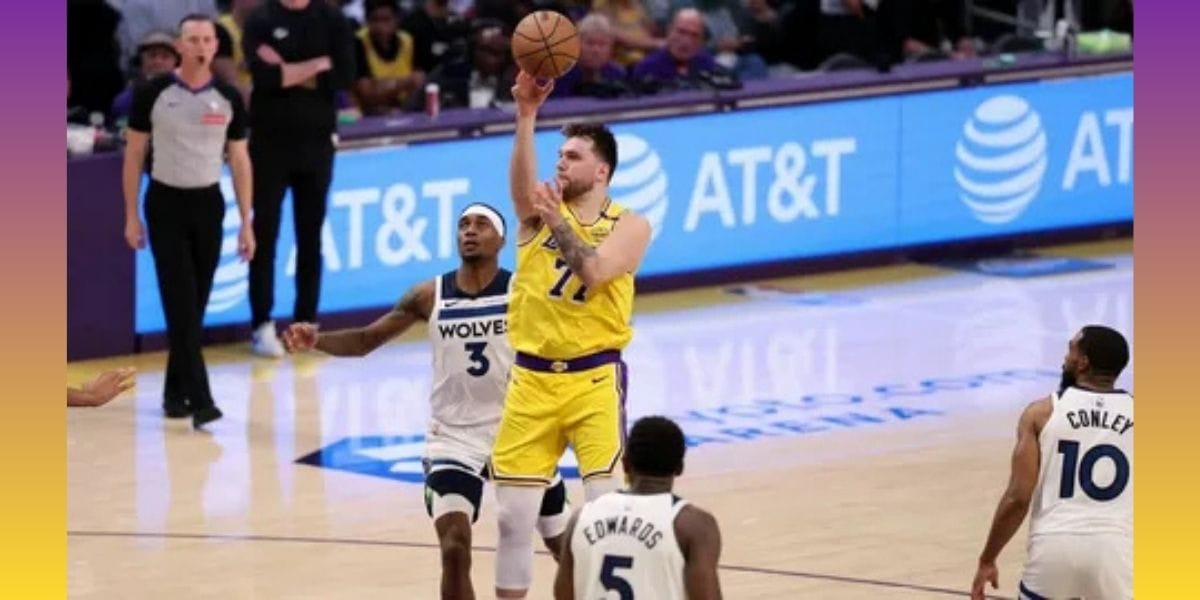
That is why the phoenix suns vs timberwolves timeline now feels divided into before and after. Before April 2024, the history was mostly about Phoenix’s broader advantage and Minnesota’s search for defining traction. After April 2024, every discussion had to account for the Wolves’ cleanest, loudest, least ambiguous statement in the matchup. NBA’s series page even amplified the mood by centering the idea that Edwards had proven he was “the dude” for Minnesota. That phrase matters because rivalries often crystallize when one player stops participating in the story and starts owning it.
The sweep was not random; it exposed a tactical and emotional shift
Minnesota’s sweep mattered because it was not driven by luck or one strange hot-shooting night. The series scores themselves tell the story: 120-95, 105-93, 126-109, and 122-116. Those are not coin-flip margins; they are the profile of a team that consistently controlled tone, physicality, and adjustment windows. The Wolves defended with force, played downhill, and repeatedly made Phoenix chase them instead of the other way around. That gave the series a lopsided emotional feel even when individual stretches were competitive.
Phoenix’s failure in that series also revealed a common misconception about playoff basketball. Talent concentration is not enough if the opponent is deeper in its rotations, more connected defensively, and more stable possession to possession. Minnesota looked younger, hungrier, and more structurally coherent. Phoenix looked dangerous in fragments but unreliable across full games. That distinction is why the sweep aged into a referendum rather than a surprise. It became evidence that the Wolves were not merely arriving; they had arrived with a style that translated directly to playoff pressure.
The aftermath changed how both franchises were discussed nationally
After the series, the conversation around Minnesota changed from “promising” to “serious.” NBA’s conference-finals history page frames 2024 as one of the franchise’s landmark seasons, noting the 56-win campaign and the major contributions from Gobert, Reid, Edwards, and Towns. The Suns, meanwhile, were left with the opposite effect: the playoff exit became a lens through which people re-evaluated roster balance, chemistry, and whether a star-heavy construction could hold up against a bigger, more aggressive team. The rivalry’s narrative weight increased because one side had clearly gained belief while the other had clearly lost certainty.
That kind of result lingers longer than a normal playoff loss because it restructures expectation. From that moment on, Phoenix could not rely on history alone in this matchup. The old all-time edge remained statistically real, but the emotional leverage had moved. Minnesota no longer felt like the franchise trying to match Phoenix’s stature; for a moment, it looked like the franchise dictating where the rivalry might go next. Those shifts are exactly what transform a routine conference matchup into something fans revisit, search for, and debate months later.
The 2025-26 meetings showed that the next chapter is more balanced
Through March 18, 2026, the teams had already produced a useful sequel to the 2024 playoff story. Phoenix beat Minnesota 114-113 on November 21, 2025, when Collin Gillespie hit a go-ahead jumper with 6.4 seconds left. The Suns then won again on December 8, 2025, 108-105, overcoming Anthony Edwards’ 40 points. Minnesota answered on January 29, 2026, with a 121-113 win behind 33 points from Edwards and 28 from Julius Randle, then took the March 17, 2026 meeting 116-104 as Randle scored 32 and the Wolves closed hard in the second half. Through those four games, the season series stood even at 2-2.
That split matters because it suggests the rivalry is entering a less predictable stage. Minnesota still owns the most memorable recent result, but Phoenix has shown it can win close, late-possession games against the Wolves. Conversely, Minnesota has shown it can still impose itself physically and win even when missing Anthony Edwards, as it did on March 17. The result is a healthier rivalry structure: one side carries the bigger historical resume, the other carries the freshest playoff scar, and both are capable of taking games off each other in different ways. That is how conference rivalries stay alive.
How Has the Phoenix Suns vs Minnesota Timberwolves Timeline Evolved Over the Years?
The clearest answer is that the rivalry evolved from hierarchy to tension. In the beginning, Phoenix was the established brand and Minnesota was the newcomer. In the middle years, Phoenix often had the higher status while Minnesota occasionally had the more intense emotional identity, especially in the Garnett period. In the modern version, the teams have become mirrors of each other in a useful way: both are built around star perimeter pressure, both have gone through aggressive roster construction, and both have carried the burden of trying to prove they belong in the West’s inner circle. That is a very different dynamic from the one-sided feel of the early years.

There is also a statistical evolution underneath the emotional one. Phoenix’s all-time regular-season lead remains substantial, but recent results show a different trend line. Land of Basketball’s recent-series summary says Minnesota has won 8 of the last 10 meetings. That does not erase decades of Phoenix control, but it does explain why contemporary fans often talk about the matchup differently than historical data alone would suggest. The rivalry has evolved not by replacing the old story, but by complicating it. That complexity is exactly what makes it interesting in 2026.
A quick-reference table of the rivalry’s defining eras and moments
The easiest way to understand this matchup is to think in eras rather than in one long uninterrupted narrative. Each era has a different emotional owner, a different basketball identity, and a different reason it still matters when fans search for old scores, highlight packages, or series recaps. The table below condenses the broader story into the most useful rivalry checkpoints.
| Era | What defined the period | Rivalry meaning |
|---|---|---|
| 1989-90 beginnings | Minnesota enters the NBA; Phoenix wins the first two meetings, 118-101 and 120-99 | Establishes early Suns control |
| Early 1990s | Phoenix is a stable playoff team; Minnesota is still building | Rivalry is more hierarchy than feud |
| Barkley era | Suns reach 1993 Finals with Barkley as MVP | Phoenix’s stature grows and shadows the matchup |
| Garnett era | Wolves become credible, physical, emotionally charged | Minnesota gains identity and respect |
| Nash era | Suns become an elite, up-tempo offensive machine | Matchup gains stylistic contrast and watchability |
| 2010s reset | Both teams cycle through rebuilds and incomplete climbs | Rivalry cools, foundations shift |
| 2023-24 regular season | Phoenix beats Minnesota 3-0 | Creates false sense of Suns control before playoffs |
| 2024 playoffs | Minnesota sweeps Phoenix 4-0 | Definitive modern turning point |
| 2025-26 season so far | Four meetings split 2-2 through March 18, 2026 | Suggests a live, balanced next chapter |
The broader insight is that this is no longer a matchup you can summarize with one sentence. “Phoenix leads historically” is true, but incomplete. “Minnesota owns the recent emotional high ground” is also true, but incomplete. When both statements can coexist without contradiction, you have the profile of a rivalry that has become richer over time instead of flatter. That is a strong sign that future Suns-Wolves meetings will keep attracting more attention than the raw all-time record alone might imply.
Why Is the Phoenix Suns vs Minnesota Timberwolves Timeline So Important in NBA History?
The historical importance of this matchup is not that it has produced the NBA’s longest or loudest rivalry. Its importance comes from how well it captures Western Conference evolution across generations. One team represents older expansion success, multiple Finals runs, and several stylistic eras that helped define the league’s offensive imagination. The other represents a newer franchise that had to fight for every level of legitimacy, first through Garnett and later through the Edwards-era rise. In one rivalry, you can trace how status, style, and postseason credibility are built differently across time.
It also matters because it is a good correction to the idea that only classic, decades-long blood feuds deserve historical attention. NBA history is also made through asymmetrical matchups that suddenly produce a turning-point series. Phoenix’s older institutional strength and Minnesota’s later playoff breakthrough created exactly that. The 2024 sweep did not just decide a first-round matchup; it reset how both franchises were discussed. That is the kind of moment that can retroactively make an entire timeline feel more important than it seemed while it was unfolding.
Common misconceptions about this matchup still distort the full picture
One common misconception is that this has always been an even rivalry because both teams play in the West and have had star talent. The numbers do not support that reading over the long run. Phoenix still owns the larger regular-season share of the history, and much of the early and middle timeline was tilted toward the Suns because they were the more established organization. That does not reduce Minnesota’s modern success, but it does mean the rivalry’s balance is relatively new rather than timeless.
A second misconception is that the 2024 sweep erased everything that came before it. It did not. What it did was change what matters most in the present tense. History and memory are not the same thing. Historically, Phoenix still has the broader edge. Emotionally, Minnesota owns the matchup’s loudest modern victory. Strong rivalries often work this way: one side owns the ledger, the other owns the scar. Understanding both truths at once is the only way to read the timeline accurately rather than selectively.
The next chapter could be the one that turns this into a true modern rivalry
What happens next is likely to determine whether this remains an excellent timeline topic or becomes a deeper rivalry with annual urgency. If Phoenix and Minnesota meet again in the playoffs, the emotional stakes would be immediate. Phoenix would be trying to answer the 2024 humiliation with a clean rebuttal. Minnesota would be trying to prove that the sweep was not one brilliant week but a real transfer of power. Few narratives are more reliable in the NBA than revenge meeting credibility.
Even without another immediate playoff series, the matchup already has enough narrative fuel to stay important. Phoenix still has the franchise history, star expectation, and larger long-view resume. Minnesota has the more recent signature postseason memory and a roster that has shown it can win this matchup in different ways. Through March 18, 2026, the season series split suggests neither side is operating from complete control. That uncertainty is valuable. Rivalries become real when neither fan base feels comfortable.
Conclusion
In the end, the phoenix suns vs timberwolves timeline works so well as a search topic because it rewards both casual fans and serious NBA followers. Casual readers get a clear story: Phoenix owned more of the past, Minnesota landed the biggest modern punch, and the current chapter is competitive again. Serious readers get the deeper version: organizational age mattered, stars changed the emotional shape of the games, and the 2024 sweep was not an accident but the culmination of a structural shift in how the two teams matched up.
That is why this timeline is more than a list of dates and scores. It is a case study in how NBA rivalries are made, lost, and remade. The Suns brought stature, continuity, and decades of relevance. The Timberwolves brought newer energy, a defining playoff breakthrough, and a modern star capable of changing the emotional temperature of the entire matchup. Put those together, and you get one of the most interesting evolving rivalry stories in the Western Conference.
FAQ
The most useful way to approach the remaining questions is to separate history from recency. The history still tilts toward Phoenix in the regular season, while the most memorable postseason chapter belongs to Minnesota. That two-layer structure is why this matchup generates so much search interest now.
As of March 18, 2026, the right answer to most Suns-Wolves questions is “it depends on the timeframe.” If you mean all-time regular-season record, Phoenix leads. If you mean playoff memory, Minnesota leads. If you mean the current chapter, the series looks much more balanced than it once did.
Who leads the all-time regular-season series between the Suns and Timberwolves?
Phoenix leads the all-time regular-season series, with Land of Basketball listing the Suns at 85 wins and the Timberwolves at 48 through 133 regular-season meetings.
Have the Suns and Timberwolves ever met in the NBA playoffs?
Yes. Their only playoff meeting so far came in the 2024 Western Conference first round, and Minnesota won the series 4-0.
What was the biggest turning point in the rivalry?
The 2024 playoff sweep was the biggest turning point because it gave Minnesota the matchup’s clearest signature moment and changed how both franchises were viewed afterward.
How did the 2023-24 regular season compare with the 2024 playoffs?
Phoenix swept the 2023-24 regular-season meetings 3-0, but Minnesota then reversed the story entirely by sweeping Phoenix 4-0 in the playoffs.
Is this rivalry more balanced now than it used to be?
Yes. The long-term history still favors Phoenix, but recent results show far more balance, including Minnesota’s recent playoff success and a 2-2 split in the 2025-26 season series through March 18, 2026.
Why do fans search for this timeline so often now?
Fans search for it because the matchup combines old history with fresh stakes: Phoenix has the deeper franchise resume, while Minnesota has the newer playoff authority and a stronger recent emotional claim on the rivalry.