


Joe Kent: 11 Stunning Exclusive Must-See Updates Behind the Headlines

Joe Kent: If you’ve seen the name Joe Kent popping up across headlines, social feeds, and political commentary, you’re not alone. He’s one of those modern American figures whose story sits at the intersection of military service, partisan politics, and the kind of national-security controversy that instantly becomes a cultural Rorschach test. Some people frame him as a hard-edged patriot with firsthand experience of war; others see him as a polarizing actor whose alliances and rhetoric invite scrutiny. Either way, his trajectory makes him relevant far beyond a single election cycle or agency title.
This article is designed to answer what most people are actually trying to figure out when they search this topic: who he is, what he did before politics, how he built a public identity, why his name is in the news right now, and what changed in 2026. Along the way, we’ll separate biography from narrative, highlight the key moments that shaped his public profile, and give you the context you need to interpret new developments as they happen.
Who is Joe Kent?
At the basic level, Joe Kent is an American political figure with a background in the U.S. Army and later work connected to the intelligence community. Public biographies describe him as a former Green Beret and a former CIA paramilitary officer who later became a Republican candidate for Congress in Washington state before entering an executive-branch national-security role.
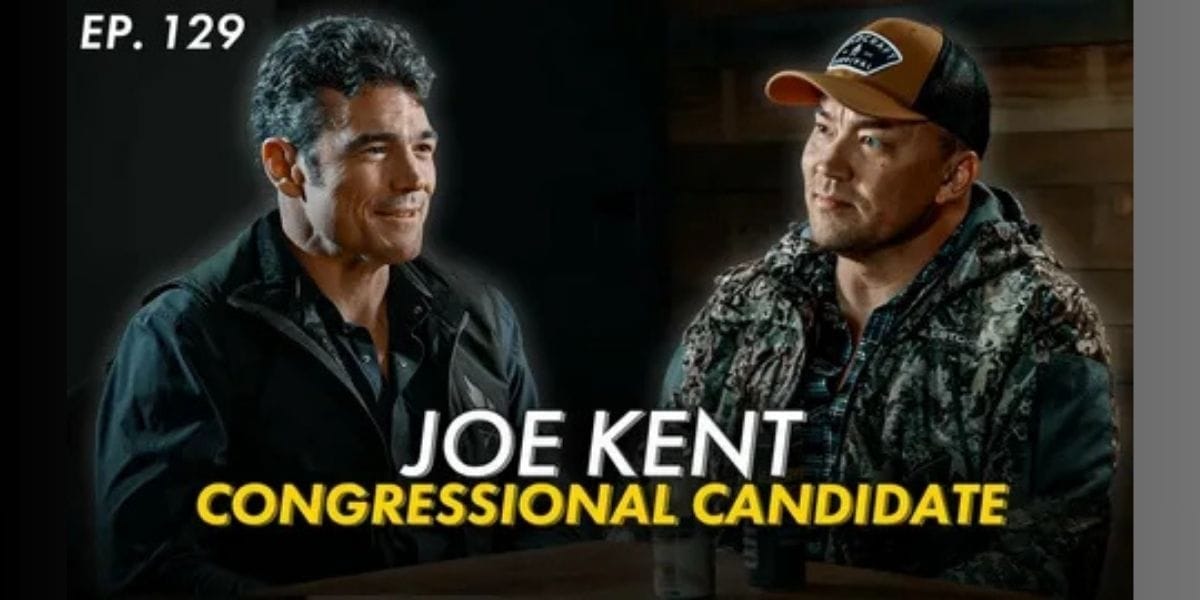
That résumé matters because it influences how audiences perceive him: supporters tend to interpret his service record as credibility and proof of seriousness; critics often focus on how national-security credentials can be used as political branding. Both readings can be true at once. The key is recognizing that his public identity isn’t built solely on what he did, but also on how those experiences were communicated, packaged, and deployed in political debates.
Why is Joe Kent in the news?
In March 2026, Joe Kent was in the news because he resigned as director of the U.S. National Counterterrorism Center, citing a disagreement over U.S. involvement in the war with Iran and asserting that Iran posed “no imminent threat.” That resignation, and the rhetoric surrounding it, immediately elevated what could have been a routine staffing story into a national controversy.
Resignations at that level become “sticky” stories because they signal internal fracture: they invite questions about intelligence, policy process, and political influence. They also create competing narratives overnight—one side frames the official as principled, another frames him as reckless or disloyal, and a third argues the entire event reflects deeper institutional dysfunction. Coverage of his departure highlighted exactly that dynamic, with sharply different reactions from political leaders and media outlets.
What is Joe Kent known for?
Before the 2026 resignation made him headline news, Joe Kent was known in political circles for his congressional campaigns in Washington’s 3rd Congressional District and for his alignment with Trump-era Republican politics. He became nationally notable after winning a high-profile primary and then losing competitive general elections in that district, which itself became a symbol of broader national polarization and the limits of “base-first” strategy in swing terrain.
He has also been known for controversy. Reporting and profiles have repeatedly focused on alleged associations with far-right figures and the reputational risk that creates for any candidate trying to expand beyond a loyal core audience. For supporters, those stories are often dismissed as guilt-by-association; for critics, they are a central part of the record because they shape coalitions and normalize certain networks. Whether you view the controversy as decisive or overstated, it is a recurring reason his name continues to surface.
A fast timeline of his public career
A useful way to understand Joe Kent is to look at the sequence of roles rather than treating him as a single “type” of figure. He moved from military service to politics, then into an appointed national-security position, and finally into a high-visibility resignation that reframed him again—this time as a dissenter inside an administration rather than an outsider campaigning against it.
That sequence matters because each phase attracts a different audience. Military and intelligence credentials speak to authority and “mission.” Campaign politics rewards message discipline and identity signaling. Executive-branch leadership shifts incentives toward bureaucratic management and coalition maintenance. A resignation reverses that again—suddenly the story is moral positioning, media framing, and who controls the narrative. Understanding those incentive shifts helps explain why the same person can look consistent to fans and contradictory to critics.
Military service and national-security credentials
Public accounts describe Joe Kent as having served many years in the Army, including service associated with elite units, and later working as a CIA paramilitary officer. In the American political imagination, those roles carry a kind of shorthand: competence under pressure, seriousness about threats, and an “earned” right to speak about war and security.

At the same time, national-security backgrounds don’t settle debates; they move them. Instead of arguing whether someone understands security, people argue what security means: intervention vs restraint, alliances vs independence, secrecy vs transparency. In Kent’s case, the reporting around his resignation emphasized that he positioned himself against a particular rationale for war, which shows how security credentials can be used to challenge intervention from inside the system—not just defend it.
Political rise through Washington’s 3rd District
When Joe Kent ran for Congress in Washington’s 3rd District, the race drew national attention because it combined intraparty conflict, national endorsements, and a district that could plausibly swing. Those contests matter in modern U.S. politics because they test a repeatable formula: can a candidate win a nomination by activating the base and then pivot successfully to a broader electorate?
The record described in mainstream political profiles shows he won a key primary but lost general-election matchups to Democrat Marie Gluesenkamp Perez. Those losses are often interpreted as evidence that campaign identity and coalition-building are inseparable—especially in districts where independents and cross-pressured voters decide outcomes. Even for readers who don’t follow Washington state politics closely, that storyline is instructive: it’s a case study in how national political brands collide with local electoral reality.
How he became a national figure beyond elections
It’s easy to assume candidates become nationally visible only by winning office. In practice, national visibility often comes from media ecosystem fit: being a “clean symbol” for something bigger. Joe Kent became that kind of symbol for multiple audiences at once—an avatar for “anti-establishment” anger in GOP primaries, a warning sign for critics concerned about extremism, and later a lightning rod inside national-security debates.
This is why his story travels beyond district lines. A congressional candidate can be treated as a local story; a national-security official with an abrupt resignation becomes a national story by definition. The audience expands from voters to institutions: journalists, foreign-policy analysts, donors, activists, and elected officials all have reasons to amplify or attack the meaning of the event.
His appointment to the National Counterterrorism Center
In 2025, Joe Kent was appointed as director of the National Counterterrorism Center, a role that sits near the nerve center of U.S. counterterrorism analysis and coordination. The appointment attracted attention because it brought a recently prominent political candidate—one with well-known controversies—into a high-stakes national-security post.
Appointments like this are usually judged on two axes at once: managerial capacity and trust. Can the official run complex processes, and will other agencies treat the person as legitimate? When the appointee arrives with a polarizing political identity, those questions become louder, not quieter, because internal confidence is part of operational effectiveness. Coverage of his tenure consistently framed it through that lens: competence, ideology, and institutional friction.
What happened to Joe Kent in 2026?
Here’s the central 2026 development: Joe Kent resigned on March 17, 2026, after publicly disagreeing with the administration’s justification for U.S. military action against Iran. Reporting described him as arguing there was no “imminent threat,” and his exit was widely portrayed as the first high-level break with the White House over the conflict.
The resignation did more than end a job—it redefined his public role. Overnight, he shifted from being a political appointee executing policy to being a narrator about policy. That’s a powerful position in modern media because dissent generates attention, and attention can be converted into influence. Whether that influence becomes a future campaign, a movement role, or a media career is uncertain, but the mechanism is familiar: resignation as brand reset, with the conflict itself as the accelerant.
The resignation letter and the narrative battle
The most important thing to understand about resignation politics is that it’s never just about leaving. It’s about framing why you left. In coverage of Joe Kent’s departure, the framing centered on the claim that the war’s rationale was shifting and that pressure from allies and domestic voices contributed to the decision to strike. That language pushed the story beyond bureaucratic disagreement into moral indictment.
The response from the White House side, as described in reporting, went straight at the credibility question—portraying him as “weak on security” and challenging the legitimacy of his assessment. When a resignation becomes a credibility war, it creates a long tail: every future headline about the conflict, intelligence claims, or threats becomes a chance to relitigate who was right and who was politically motivated.
A table that clarifies the key moments
To make the timeline scannable, here’s a structured breakdown of the moments most frequently referenced in coverage and profiles.
| Period | Role or Event | Why it mattered for public perception | Relevance to 2026 headlines |
|---|---|---|---|
| 1998–2018 | Army service | Built a “service-first” identity and credibility on security topics | Used to validate or challenge his judgment about threats |
| Post-military | CIA-linked work (as described in public bios) | Reinforced intelligence credibility; also raised stakes for scrutiny | Became part of why his resignation was treated as significant |
| 2022 & 2024 | Congressional campaigns (WA-3) | Made him a nationalized political figure, not just a veteran | Brought prior controversies back into focus during 2026 coverage |
| 2025 | Appointed NCTC director | Elevated him from candidate to governing authority | Turned a resignation into a top-tier national-security story |
| March 17, 2026 | Resignation over Iran war | Recast him as an internal critic rather than an internal operator | Sparked intense debate about intelligence, alliances, and war rationale |
A quote that captures the core dispute
A concise line attributed to his public stance became the headline hook in many writeups: “Iran posed no imminent threat.”
That sentence functions like a legal claim in the court of public opinion. If it’s true, it implies policy overreach. If it’s false or misleading, it implies irresponsible dissent. Either way, it’s the kind of statement that doesn’t fade quickly because it can be tested, reinterpreted, and weaponized as new facts emerge.
How supporters interpret his story
Supporters tend to see Joe Kent through a “duty and honesty” frame. In that view, a person with battlefield and intelligence experience is uniquely positioned to detect when threat claims are being inflated, when the country is sliding into another costly conflict, or when political incentives are overtaking strategic reality. His resignation is framed as choosing conscience over career.
This interpretation has a broader cultural home in post-Iraq skepticism: the belief that institutions can “sell” war through selective intelligence and persuasive messaging. When someone resigns and explicitly invokes the absence of imminent threat, supporters connect it to that historical memory. Whether that connection is justified is a separate question; the point is that the narrative lands because the audience is primed to believe it.
How critics interpret his story
Critics often begin from a different premise: that Joe Kent is an unusually polarizing figure whose alliances and rhetoric invite concern, and that his resignation should be read through the lens of political theater rather than purely principled dissent. In that reading, the event is not simply a policy disagreement but an attempt to reshape his brand, rally a base, or create a platform for future ambitions.

Critics also argue that even correct dissent can be delivered in corrosive ways especially if it echoes conspiratorial thinking, inflames social division, or undermines institutional trust without offering workable alternatives. The practical question they ask isn’t only “Was he right?” but “What does his influence do to democratic stability and to counterterrorism operations that depend on credibility and coordination?”
What the 2026 moment reveals about U.S. politics
The 2026 story is bigger than one person because it highlights a recurring modern pattern: national security has become partisan content. When a counterterrorism official resigns in protest, the public doesn’t receive it as a neutral institutional signal; they receive it through their media identity—who they trust, what they fear, and what they believe happened in past wars.
This is why the same event can produce opposite conclusions. One group sees a whistleblower. Another sees an extremist-adjacent opportunist. Another sees a system collapsing under contradictions. Understanding the pattern helps you evaluate future updates: when new claims emerge, ask what incentives each actor has, what evidence is offered, and what the institutional stakes are.
The practical way to evaluate new headlines about him
If you’re trying to stay grounded, treat each new claim about Joe Kent as a three-part puzzle. First: what is the claim, specifically—about intelligence, process, ethics, or outcomes? Second: who is making it and what do they stand to gain? Third: what can be independently verified in credible reporting or official documentation? This approach keeps you from being pulled into identity-based arguments that generate heat but not clarity.
Also, pay attention to time. Early coverage often moves fast and relies on partial information. Later coverage—especially investigative reporting—tends to clarify what was asserted, what was known internally, and what decision points looked like at the time. The 2026 resignation story is exactly the kind of event where the “first narrative” and the “final record” can diverge.
How this may shape future elections and appointments
High-profile resignations can become political capital. For Joe Kent, the 2026 episode could be used to justify a return to electoral politics (“I saw the inside and refused to go along”), or it could be used by opponents to argue he is unfit for responsibility (“He breaks ranks and inflames controversy”). Both lines will likely appear if he re-enters the campaign arena.
This matters beyond him personally because parties learn from these moments. They learn what kind of candidate brand mobilizes donors, what kind of messaging travels nationally, and what kind of controversy becomes a long-term liability. The question isn’t only whether he runs again, but whether his model—combat credential + media amplification + anti-establishment narrative—continues to be rewarded.
Common misconceptions people have about the story
One misconception is that a resignation automatically proves wrongdoing by someone else. In reality, resignations prove disagreement, not truth. Joe Kent’s claim about imminent threat is a serious assertion, but its accuracy depends on the underlying intelligence and the internal decision process—details that often emerge slowly and may remain contested.
Another misconception is that a national-security résumé makes someone apolitical. In modern America, national-security elites and veterans participate in politics like everyone else, and sometimes more effectively because the symbolism is powerful. The most productive way to read this story is to hold two ideas at once: credentials can be real, and narratives can still be strategic.
Conclusion
The search interest around Joe Kent is not a mystery when you zoom out. His life story places him in emotionally charged American arenas—war, loss, security, and partisan conflict—and his 2026 resignation placed him at the center of a defining policy fight.
If you take one takeaway from this guide, let it be this: the “meaning” of his 2026 moment will keep changing as new facts, reactions, and incentives unfold. The best way to stay informed is to separate biography from interpretation, focus on verifiable timelines, and watch how institutions respond—not just how social media reacts.
FAQ
Who is Joe Kent, and why do people search him so often?
Joe Kent is a former Army and CIA-linked national-security figure who ran for Congress and later led the National Counterterrorism Center, making his biography relevant to politics and security at once.
Why is Joe Kent in the news right now in 2026?
Joe Kent resigned on March 17, 2026, over disagreement with U.S. involvement in the Iran war and argued Iran posed no imminent threat, turning his exit into a major national story.
What is Joe Kent known for besides his resignation?
Beyond the resignation, Joe Kent is known for his congressional campaigns in Washington’s 3rd District and for controversies tied to his political networks and public rhetoric.
What happened to Joe Kent in 2026, in plain English?
In 2026, Joe Kent left a top counterterrorism post in protest, publicly challenging the stated rationale for war and triggering intense debate about intelligence and policy legitimacy.
Is Joe Kent likely to run for office again after 2026?
No one can say for sure, but the pattern is common: a high-profile resignation can become a platform for a future campaign, while opponents may use the same episode to argue he’s too divisive.
How should readers evaluate claims made during a resignation controversy?
Treat each claim as evidence-driven: check who said it, what documentation credible outlets report, and whether later reporting confirms or corrects early narratives—especially in fast-moving 2026 national-security coverage.