


U.S. Pulling Out of NATO: 11 Powerful Consequences the World Can’t Ignore
U.S. Pulling Out of NATO: The phrase “u.s. pulling out of nato” gets thrown around like it’s a single switch someone can flip. In reality, it’s a chain reaction: legal steps, force posture changes, market tremors, alliance politics, and adversary opportunism—all unfolding on different timelines. Even the talk of exit can move behavior because NATO is built as much on credibility as on capabilities.
This guide is designed to be the definitive, skimmable resource you’d bookmark if you needed to brief a client, a newsroom, or a leadership team. We’ll cover what withdrawal would actually require, what changes immediately versus over time, which risks are commonly misunderstood, and how Europe—and U.S. interests—could adapt if u.s. pulling out of nato becomes more than a headline.
What “U.S. Pulling Out of NATO” Really Means in Practice
When people say u.s. pulling out of nato, they often mash together three different things: leaving the North Atlantic Treaty (formal withdrawal), reducing participation while staying a member, or using NATO commitments as leverage in unrelated disputes. Those are not the same move, and they don’t produce the same outcomes—even if they can feel similar on TV.
Formal withdrawal would mean the United States is no longer bound by the treaty framework that includes collective defense commitments and NATO’s integrated planning structures. But a “not-quite-withdrawal” can still be strategically explosive: pulling personnel from NATO commands, scaling back exercises, or cutting readiness enablers can degrade deterrence without changing membership status—exactly why allies watch signals, not just signatures.
The Legal Exit Ramp: Article 13 and the One-Year Clock
NATO’s founding treaty includes a built-in exit clause. Under Article 13, after the treaty has been in force for twenty years, any member can cease to be a party one year after giving notice to the U.S. government (the depositary), which then informs other allies. That’s the international-law mechanism that makes u.s. pulling out of nato procedurally possible in a clean, formal way.
That “one-year waiting period” matters strategically because it creates a long runway for bargaining, reassurance, brinkmanship, market pricing, and adversary planning. In other words: even if withdrawal never finalizes, the notice period alone can reshape defense procurement, basing decisions, and crisis behavior across Europe and beyond.
U.S. Domestic Law: Can a President Withdraw Unilaterally?
Here’s where the real uncertainty—and real risk—lives. Even if international law allows withdrawal via notice, U.S. domestic law and constitutional separation-of-powers questions can complicate whether a president can complete u.s. pulling out of nato without Congress. That’s not just academic: ambiguity invites lawsuits, delays, and political escalation precisely when allies and adversaries are measuring credibility.
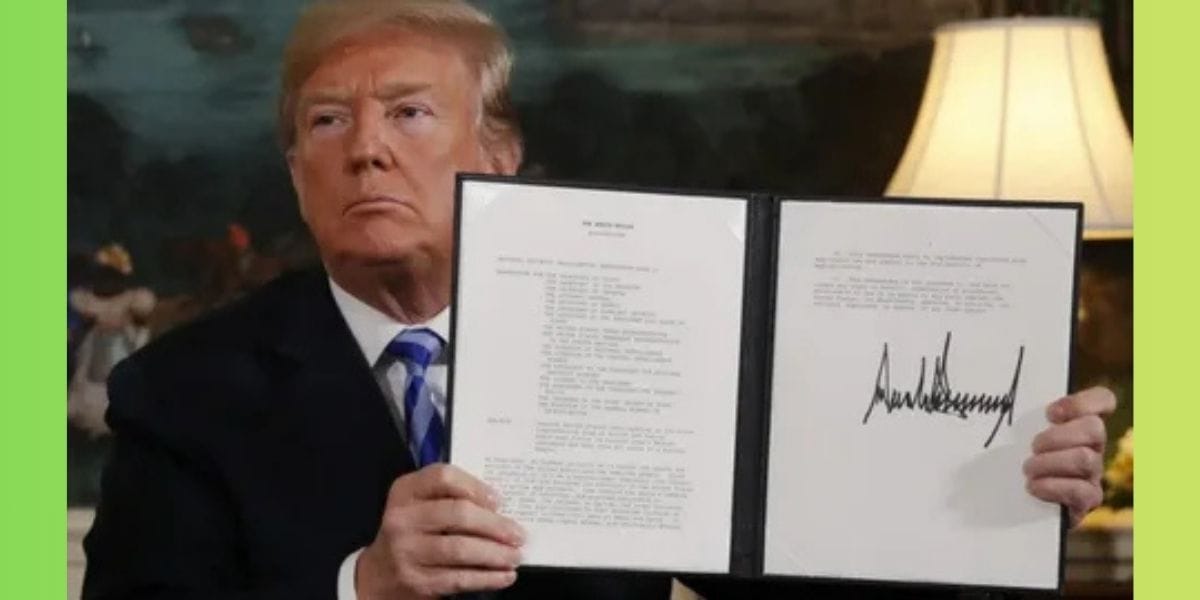
Recent congressional analysis has focused on how courts might treat a unilateral withdrawal claim—especially in light of statutory limits related to NATO membership. The Congressional Research Service has examined this scenario directly, outlining the legal framework and potential justiciability issues if a president attempts to withdraw “notwithstanding” congressional restrictions.
Collective Defense Reality Check: What Article 5 Does—and Doesn’t—Guarantee
A common misconception is that NATO automatically forces every member to fight the moment Article 5 is invoked. In reality, Article 5 commits allies to assist, but it leaves latitude over what “assistance” looks like—military action, logistics, cyber support, sanctions, intelligence, and more. That flexibility is a feature: it makes collective defense politically sustainable across very different democracies.
Still, the credibility of U.S. participation has historically been the alliance’s center of gravity. So even if the technical wording of Article 5 is flexible, the strategic effect of u.s. pulling out of nato would be to remove (or severely weaken) the most capable “backstop” force, the nuclear umbrella role, and the command-and-control mass that many allies implicitly plan around.
The Fastest Shock: Deterrence Signaling and Adversary Calculus
Deterrence is partly math (capabilities) and partly psychology (beliefs about response). The fastest impact of u.s. pulling out of nato is not a treaty paperwork change—it’s how quickly adversaries test seams, probe thresholds, or amplify disinformation to widen fractures. Even modest U.S. drawdowns can be read as “permission” to push harder at the margins.
This is why allied leaders often treat withdrawal talk as a security event in itself. If credibility wobbles, you can see accelerated hedging: more independent European planning, new bilateral security pacts, and faster munitions procurement. Those moves can be stabilizing long-term, but they can also be destabilizing in the transition window if deterrence dips before replacements are ready.
Europe Without the U.S. Backstop: Capability Gaps That Matter Most
Europe has formidable militaries, but the key issue is which capabilities are scarce, expensive, or slow to scale. The most consequential gaps typically show up in intelligence/surveillance/reconnaissance, strategic lift, integrated air and missile defense, high-end munitions stockpiles, undersea warfare enablers, and theater-wide command-and-control. These are the “connective tissue” capabilities that allow many national forces to fight as one.
If u.s. pulling out of nato became real, Europe could compensate over time—but the ramp is measured in years, not months. The transition risk is the gap between what Europe can field independently today and what it could field after sustained investment, industrial expansion, and doctrinal standardization.
Basing, Troops, and Commands: What Changes First on the Ground
Even without formal withdrawal, one of the earliest practical shifts can be changes in staffing at NATO command structures and repositioning of personnel that support allied planning. Reporting in early 2026 described U.S. plans to withdraw some American personnel from specific NATO structures—an example of how partial moves can still affect the system’s “nervous system.”
If u.s. pulling out of nato advanced, expect a messy sequencing problem: which units leave first, which sites are retained under bilateral agreements, what happens to prepositioned equipment, and how quickly host nations can assume functions. The risk isn’t just fewer troops; it’s the interruption of planning rhythms, interoperability routines, and crisis-response muscle memory.
Costs, Burden-Sharing, and the Myth of “Instant Savings”
It’s tempting to treat u.s. pulling out of nato as a clean budget win. But savings are not automatic, and some costs can rise. The U.S. might still choose (or feel compelled) to defend core interests in Europe via bilateral commitments, forward presence, or crisis deployments—often at higher marginal cost because you lose alliance efficiencies and shared infrastructure.
Meanwhile, allies would likely spend more, but spending more doesn’t instantly create capacity. Defense industrial bases have constraints: skilled labor, production lines, supply chains, and long procurement cycles. So the burden-sharing argument can become a timing trap—more money now, capability later, and a deterrence dip in between.
Global Ripple Effects: Indo-Pacific Strategy, China, and Credibility
Alliances are watched globally. A U.S. decision that validates u.s. pulling out of nato could be interpreted elsewhere as a signal that U.S. commitments are more conditional, more transactional, or more reversible than previously assumed. That perception can affect crisis stability in the Indo-Pacific even if nothing changes there on paper.
It can also reshape how partners allocate risk: do they align more tightly with the U.S., diversify toward regional coalitions, or hedge with accommodation? None of those outcomes is guaranteed, but the strategic environment becomes noisier—more actors guessing, fewer assumptions shared, and a higher chance of miscalculation during fast-moving crises.
A Practical Scenario Matrix: What “Pulling Out” Could Look Like
Below is a realistic way to think about outcomes, from “political threat” to “formal exit.” It’s useful because the world reacts differently at each rung—and because u.s. pulling out of nato often evolves through intermediate steps rather than one dramatic moment.
| Scenario | What the U.S. Does | What Allies Do | Biggest Risk | Most Likely Market/Political Signal |
|---|---|---|---|---|
| Rhetorical pressure campaign | Threatens exit, demands changes | Public reassurance + private hedging | Credibility erosion without clarity | Volatility in defense equities, currency jitters |
| Partial institutional drawdown | Reduces staffing in some NATO structures | Accelerates EU/UK bilateral planning | Slower crisis response + planning friction | “Alliance drift” narrative hardens |
| Capability pullback | Cuts enablers (lift, ISR sharing, munitions posture) | Buys capabilities, seeks substitutes | Deterrence dip before replacements arrive | Rising insurance risk premiums, procurement surge |
| “De facto exit” posture | Treats NATO obligations as optional | Builds alternative security architecture | Adversary testing and escalation | Increased border incidents, gray-zone ops |
| Formal treaty withdrawal | Sends Article 13 notice, one-year clock runs | Emergency strategy reset | Major credibility shock + transition instability | Structural repricing of European security risk |
The critical insight: the most dangerous period is often the “middle”—when signals are strongest but substitute capacity is not yet online. That’s the window where misread intentions can turn into hard tests.
The One Quote That Captures NATO’s Core Promise
NATO’s collective defense idea is simple enough to fit in a single sentence, which is part of why it has had such strategic power. In the treaty’s own framing: “an armed attack against one… shall be considered an attack against them all.”
That’s why u.s. pulling out of nato is not just a policy tweak. It’s a rewrite of what many states assume about the “cost of aggression” in Europe—and assumptions like that are the quiet architecture that keeps crises from happening in the first place.
What Businesses and Markets Should Watch if Withdrawal Risk Rises
For businesses, the question isn’t whether you have a view on NATO—it’s whether your risk models reflect geopolitical reality. The signals that matter are often unglamorous: defense procurement lead times, shipping insurance rates, energy price sensitivity to regional shocks, and cyber threat tempo against critical infrastructure. These are the operational footprints of strategic stress.
If u.s. pulling out of nato starts to look plausible, watch for three clusters: (1) concrete force posture moves (not speeches), (2) allied institutional adaptation (new command arrangements, new funding vehicles), and (3) adversary activity patterns (more gray-zone pressure, more coercive signaling). Those are the variables that tend to precede second-order impacts like supply-chain rerouting, capital cost changes, and investor risk-off behavior.
Conclusion: The Real Question Isn’t “Can It Happen?” It’s “What Happens While It’s Happening?”
Yes—under the treaty’s own rules, withdrawal is procedurally possible, and domestic U.S. legal debates could shape how cleanly u.s. pulling out of nato could be executed. But the most consequential effects arrive before the ink dries: credibility shifts, deterrence recalibration, accelerated European hedging, and adversary temptation to probe.
The smartest way to treat the topic is as a timeline problem. If the U.S. ever moves toward exit, the transition window becomes the main arena—where policies, markets, and security outcomes are made. Preparation, clarity, and credible interim arrangements can reduce the risk that “change” turns into “crisis.”
FAQ: U.S. Pulling Out of NATO
Can the U.S. legally leave NATO?
Yes. NATO’s treaty includes an exit mechanism (Article 13) that allows withdrawal after notice, with a one-year waiting period; that’s the international-law pathway for u.s. pulling out of nato.
Does Article 5 force every NATO country to go to war automatically?
No. Article 5 commits allies to assist if an ally is attacked, but each ally decides what actions it deems necessary—so responses can vary widely even without u.s. pulling out of nato.
Could a U.S. president withdraw without Congress?
That’s contested. Recent congressional analysis has examined how courts might handle a unilateral withdrawal attempt, especially where statutes purport to limit presidential authority—one of the biggest uncertainties around u.s. pulling out of nato.
Would Europe be defenseless without the U.S.?
No, but the transition would be risky. Europe has major capabilities, yet it would need time to scale certain high-end enablers; that gap period is why u.s. pulling out of nato could create instability even if Europe ultimately adapts.
What’s the fastest impact if the U.S. starts to pull back?
Deterrence signaling. Even partial moves—like reducing staffing in NATO structures can shift perceptions and planning, making u.s. pulling out of nato feel “real” to allies and adversaries before formal withdrawal.